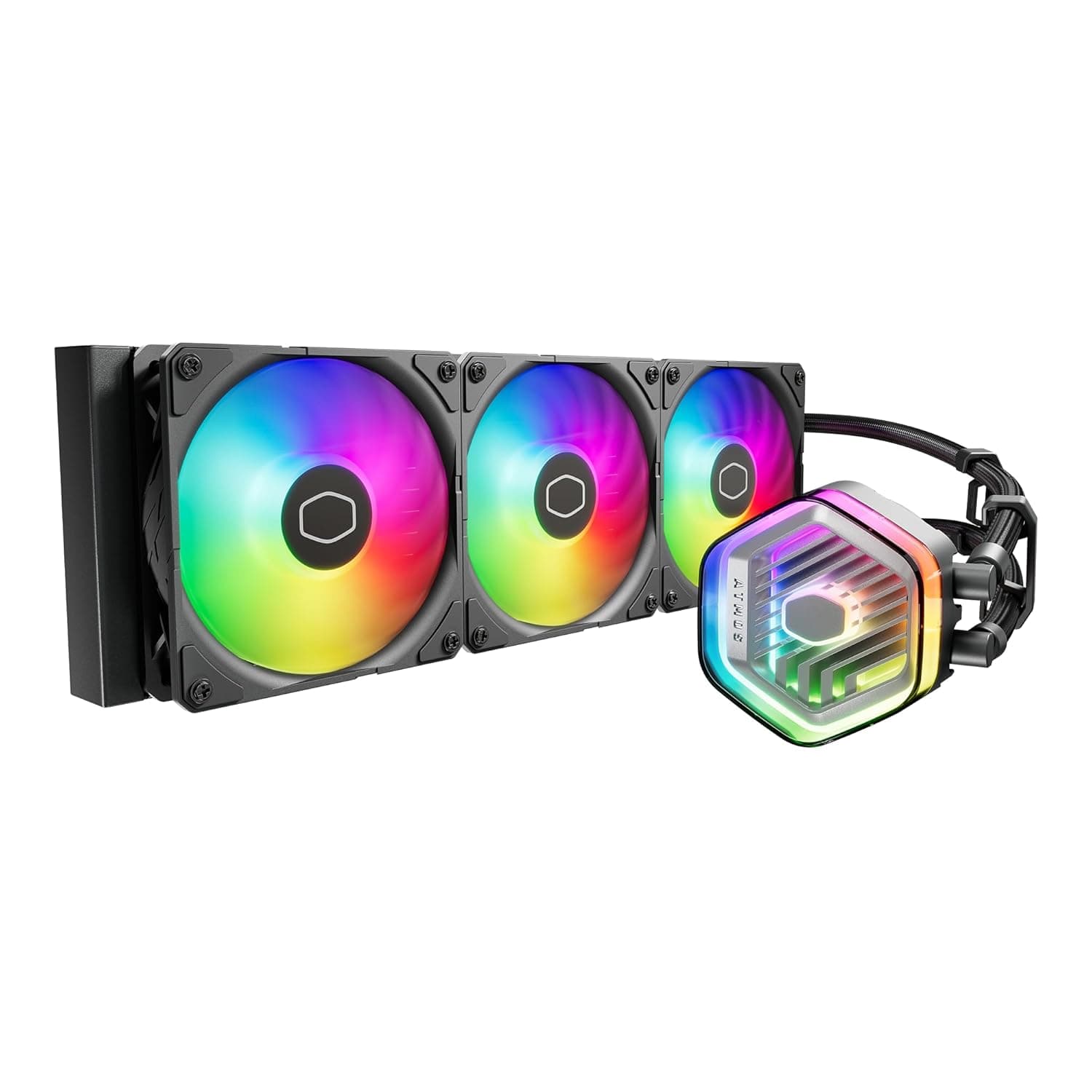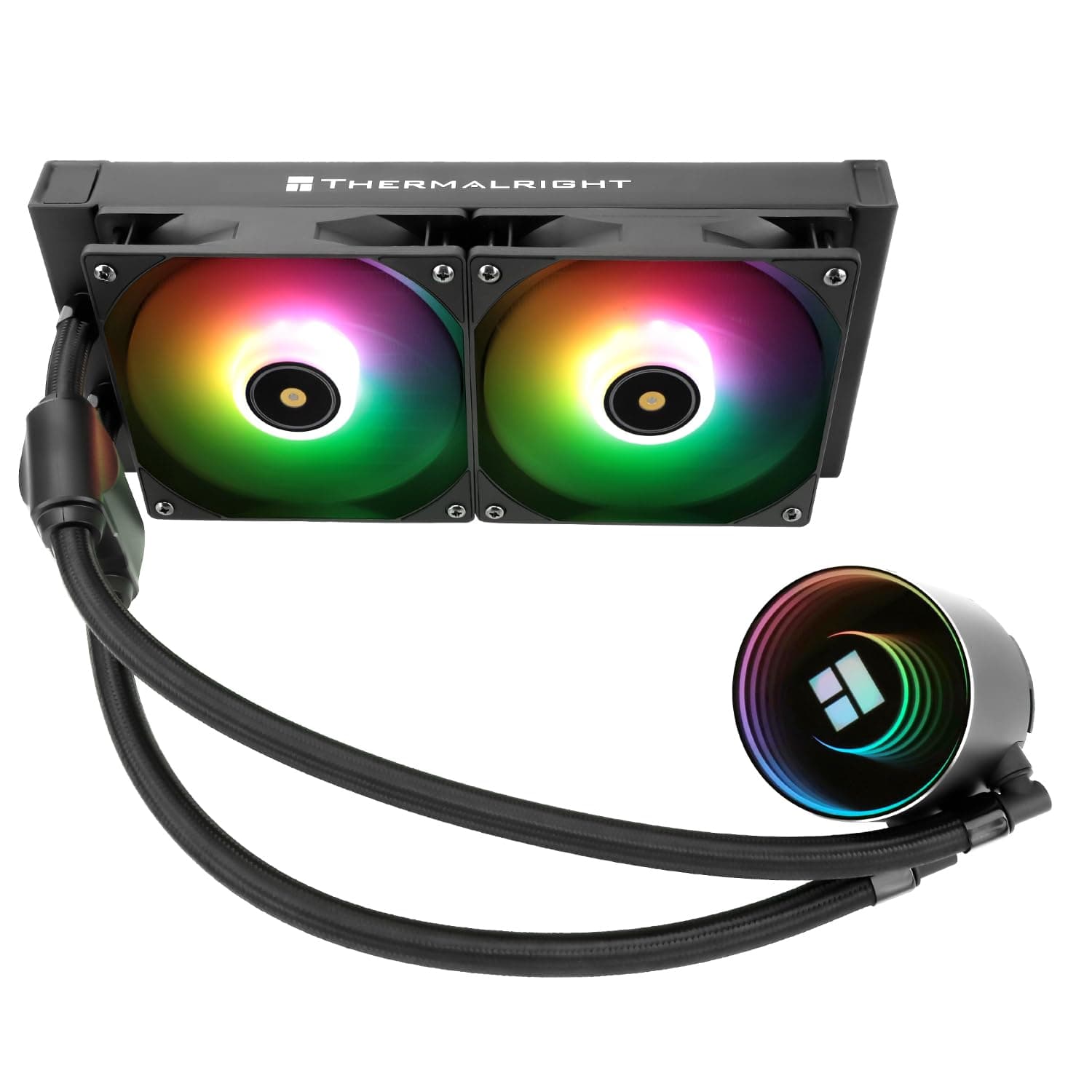
The Thermalright Frozen Notte 240 Black ARGB is an all-in-one (AIO) liquid CPU cooler aimed at builders who want 240mm-class cooling and ARGB lighting without a high-end price tag. This article looks at where it fits, and — more importantly — where it does not.
Overview
The Frozen Notte 240 pairs a 240mm radiator (the area of two 120mm fans) with ARGB illumination. The short version: this is a cooler for mainstream 6- to 12-core CPUs that you want to run quietly, without spending much.
It is not a tool for chasing high-end overclocks.
Price is what defines its position. On Amazon.co.jp it was recorded at ¥6,059 as captured on 12 June 2026, and on eBay US at $68.28 as captured on 15 July 2026.
Prices move constantly with sales and exchange rates, so always check the current listing before buying. Still, at this level you are getting into liquid cooling for roughly what a good air cooler costs.
On ratings, the product carries 4.6 out of 5 across 116 reviews (92% positive, captured 3 June 2026).
The review count is modest, so it carries less statistical weight than a long-established best-seller — but it does show the product is not plagued by widespread early failures. Thermalright has spent the last few years building a reputation on value-focused cooling (the Peerless Assassin 120 SE being the obvious example), and the Frozen Notte sits on that same line.
Compatibility Guide
With an AIO, the first thing to check is not the CPU socket — it's the physical fit inside your case. A 240mm radiator is typically around 270–280mm long, roughly 27mm thick on its own, and over 50mm once fans are attached.
Work through this list:
- Does your case list 240mm radiator support? Look for "Radiator support: Top 240mm / Front 240mm" in the spec sheet. Small-form-factor and mini-tower cases often support front mounting only, or none at all.
- Top-mount clearance over RAM and VRM heatsinks. Mounting on the top typically needs 55–60mm of clearance above the board edge. Tall heat-spreader memory is the single most common source of trouble here.
- Front-mount clearance against drive cages and cables. Check that shadow bays and front-panel cabling do not collide with the radiator.
- Socket support. AIOs in this class usually cover Intel LGA1700 / LGA1200 / LGA115x and AMD AM4 / AM5. However, bundled brackets can differ between production batches, so if you are targeting a newer socket such as LGA1851, confirm the socket list on the product page before ordering. Verify rather than assume.
- ARGB header type. ARGB products normally use the motherboard's 5V 3-pin ARGB header. Plugging into a 12V 4-pin RGB header can damage the device. If your board has no ARGB header, whether a controller is bundled will determine how much lighting control you get.
Power supply capacity is a non-issue: pump and fans together draw only a handful of watts. What matters is having a free SATA connector or fan headers available.
Product Info
rmation
As noted above, the recorded prices are ¥6,059 on Amazon.co.jp (captured 12 June 2026) and $68.28 on eBay US (captured 15 July 2026).
Domestic and international figures land in the same ballpark, which suggests no scalping or bad data on the pricing side. These are snapshots, though, and this article will not be updated — check the live listing.
User ratings stand at 4.6 / 5 from 116 reviews (92% positive), which is solid for an AIO of this scale.
The low three-figure review count suggests either a recent release or limited distribution, so long-term durability data is still thin.
One caveat on data: the source record for this article contained specification values that clearly belong to a different product category (network throughput figures and Ethernet port counts). For that reason, this article deliberately avoids stating numeric specs such as exact radiator dimensions or pump RPM.
Confirm dimensions, fan speed, noise level, and socket support on the manufacturer's or retailer's spec sheet.
What to Expect in Use
240mm AIOs generally show a gentler temperature ramp than air coolers when load spikes, because the coolant acts as a thermal buffer. During short bursts — game loading, the start of a compile — temperatures rise more slowly and fan speeds swing less.
If sudden fan noise changes bother you, that behavior alone is worth something.
Under sustained full load, however, the final equilibrium temperature of a 240mm AIO is often close to that of a good dual-tower air cooler like the Peerless Assassin 120 SE. Choose a 240mm AIO for clearance around the socket, lighting, and calmer fan behavior under variable load rather than for raw cooling headroom, and your expectations will hold up.
How It Compares
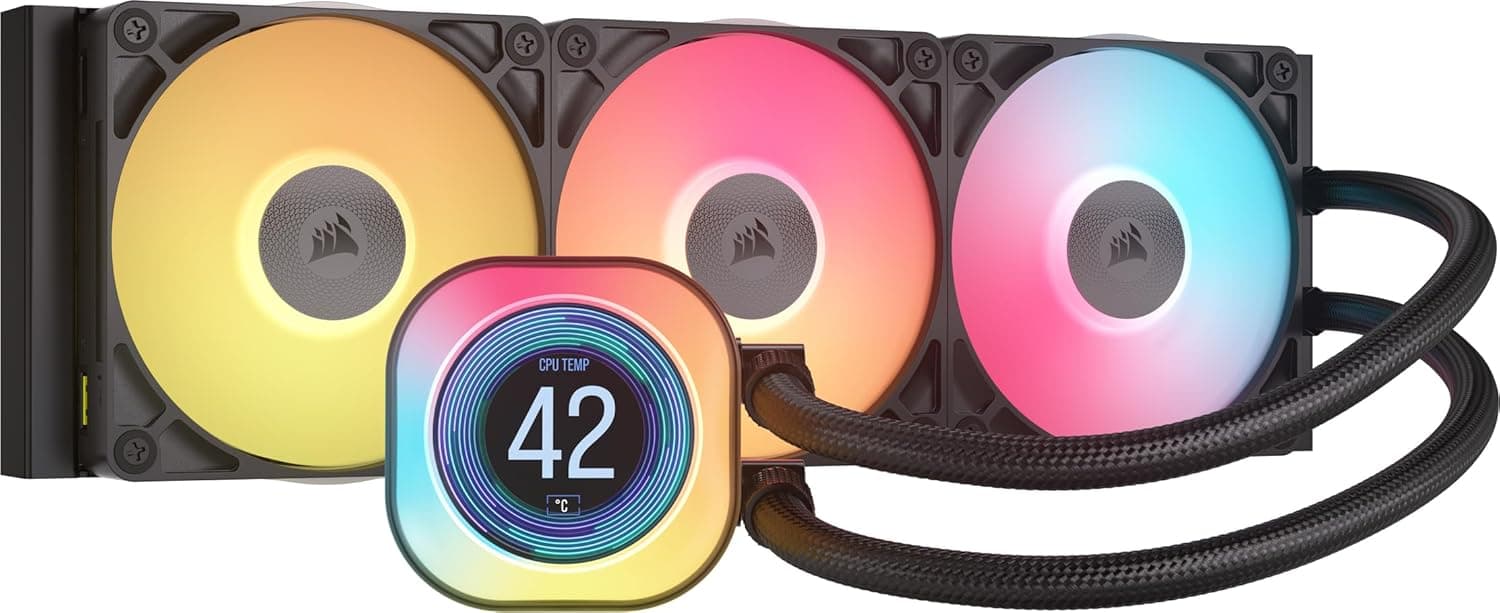
Other 240mm units — the ASUS ROG Ryujin III 240, the Corsair iCUE Link Titan 240 RX — bring Asetek-class pumps, software ecosystems, and LCD panels, at a completely different price. The Frozen Notte 240 isn't competing head-on with those; it occupies the "get into an AIO on a tight budget" slot.
| Priority | Where the Frozen Notte 240 lands | Alternatives to consider |
|---|---|---|
| Price | Very strong at the captured ¥6,059 | Air cooling (Peerless Assassin 120 SE) |
| Cooling headroom | 240mm gets tight for 12–16 core chips | 360mm AIO (ML360L V2 ARGB) |
| Software / ecosystem | No proprietary ecosystem | Corsair iCUE Link, ASUS ROG |
Decide which axis matters most before comparing rows. If budget leads, this is a very strong pick. If you want unified fan software or an LCD temperature readout, shop a different tier from the start.
Best Use Cases
This cooler suits you if you are:
- Running a mainstream 6- to 12-core CPU for gaming or video editing — a good match for 240mm.
- Trying liquid cooling for the first time — the low cost genuinely lowers the stakes.
- Building for looks — ARGB delivers a large visual upgrade per yen here.
- Trying to free up space around the socket — removing a large air tower makes RAM and M.2 access far easier.
- Prioritizing quiet operation over the absolute lowest peak temperature.
Before You Buy
This is the section that matters most. If any of the following applies, reconsider.
1. Sustained full load on a 12–16 core CPU will outrun it. A 240mm radiator is two 120mm fans of surface area.
For daily rendering or encoding, look at 360mm class or a strong dual-tower air cooler instead.
2. AIOs have a service life. A pump is a moving part, and over a span of years it introduces failure modes air coolers do not have.
If the pump stops, cooling collapses immediately. At this price, do not assume long warranty coverage or extensive support — be comfortable replacing the unit if it fails.
3. Not checking case clearance. Buying a 240mm radiator that will not fit is the most common AIO mistake.
Read the case spec sheet first.
4. Not checking the ARGB header type. 5V 3-pin (ARGB) and 12V 4-pin (RGB) are not interchangeable, and a mis-plug can cause physical damage.
5. Listing data can be wrong. The collected data behind this article included specifications belonging to an entirely unrelated product (network speeds and Ethernet ports).
Retail listings sometimes carry another product's manufacturer name, model number, or spec table in the details section. Before buying, confirm the product from the title and images, and treat the spec table with suspicion.
If anything looks off, cross-check against the manufacturer's official page.
6. "Liquid always beats air" is a myth. At the same price, a top air cooler frequently matches or beats a 240mm AIO on raw cooling.
The reasons to pick an AIO are layout, looks, and noise behavior.
FAQ
Q. 240mm or 360mm? A.
If your case supports 360mm and you run a 12-core-plus CPU hard, go 360mm. For 6–8 core gaming builds, or cases capped at 240mm, 240mm is plenty.
Q. Which sockets are supported? A.
AIOs in this class typically cover Intel LGA1700-series and AMD AM4 / AM5, but bundled brackets vary by batch. Confirm the socket list on the product page before buying.
Q. Is thermal paste included? A.
Thermalright coolers generally ship with paste, but bundle contents can vary by SKU. Check the included-items list on the listing.
Q. Top or front mounting? A.
For air-bleed reasons, the pump should sit lower than the radiator — top exhaust, or front mounting with the tubes at the bottom. If your case supports both, top exhaust is usually the easier install.
Q. Are the prices here still accurate? A.
They are snapshots from June–July 2026. AIO coolers see heavy sale-price swings, so check the live listing.
Product Disclosure (Amazon)
- ASIN: B0BLJGF79V
- Note: This article covers a manufacturer-made product based on Amazon listing details.