Overview
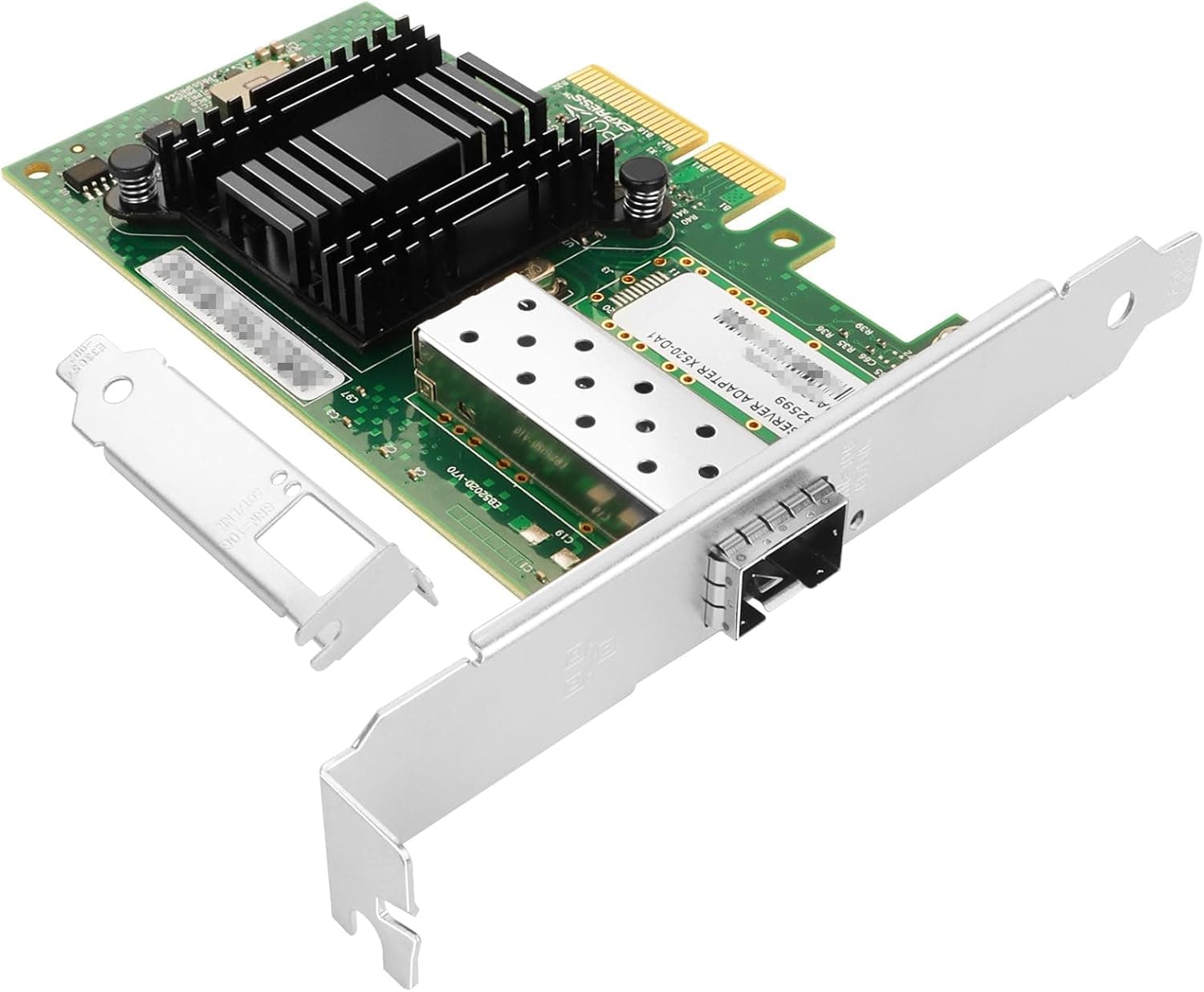
The Euqvos M.2 10Gb Ethernet Network Card is a compact single-port 10GbE adapter built around the Intel 82599 controller. It connects via an M.2 M-key slot (PCIe 3.0 x4) rather than a conventional PCIe slot, making it a perfect fit for small-form-factor PCs, thin servers, or any system where a free PCIe slot is unavailable but an extra M.2 slot exists. The card comes with a 0.4m SFF-8087 cable to bridge the M.2 slot to the NIC board, and it requires a SATA 15-pin power connector for operation. It supports SFP+ optics and DAC cables, and works with a wide range of operating systems including Windows, Linux, FreeBSD, and VMware ESXi. While it lacks features like WoL and RDMA, it offers PXE boot, SR-IOV, jumbo frames up to 15.5KB, FCoE, and iSCSI offload.
Connectivity & Compatibility
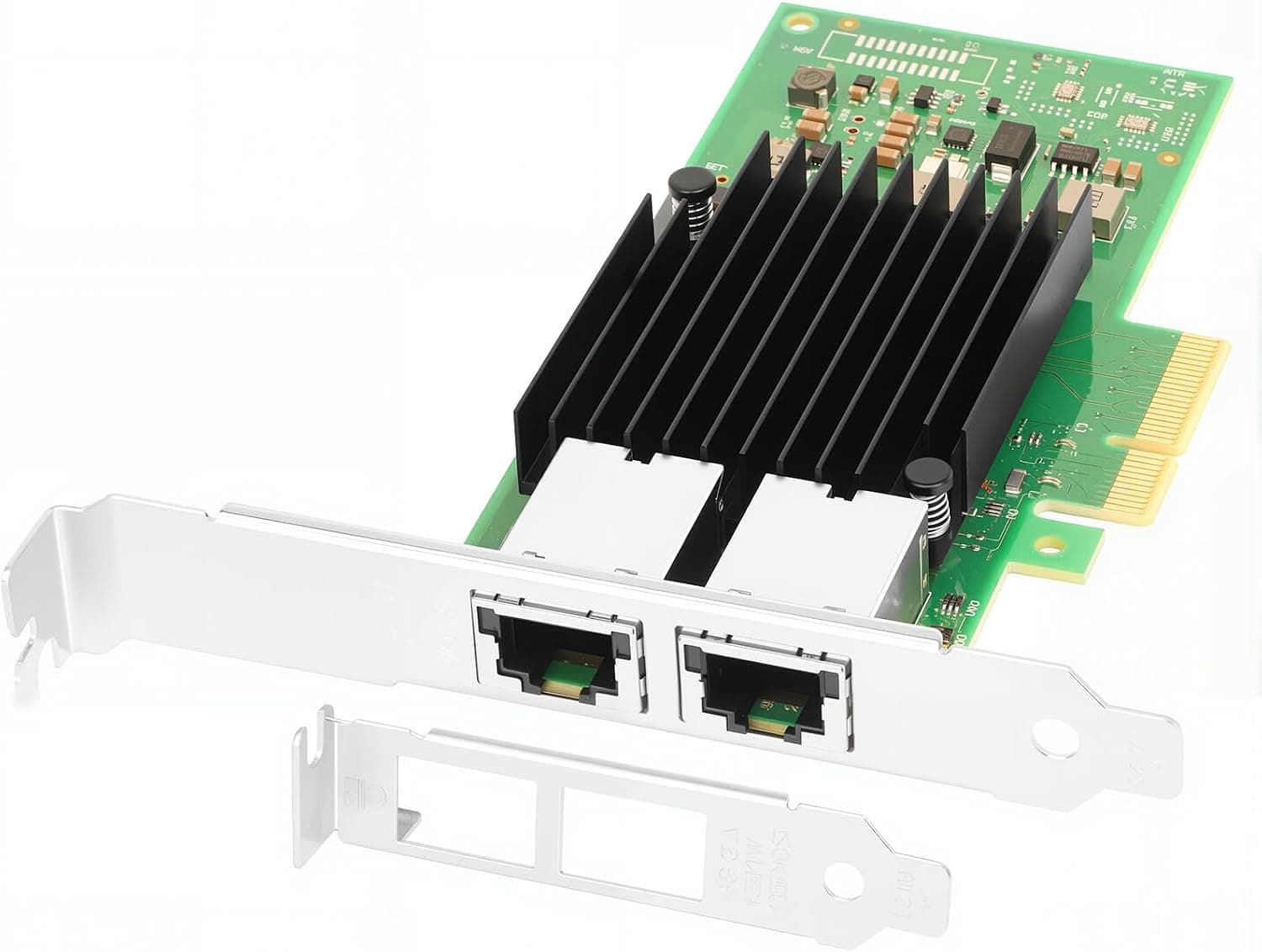
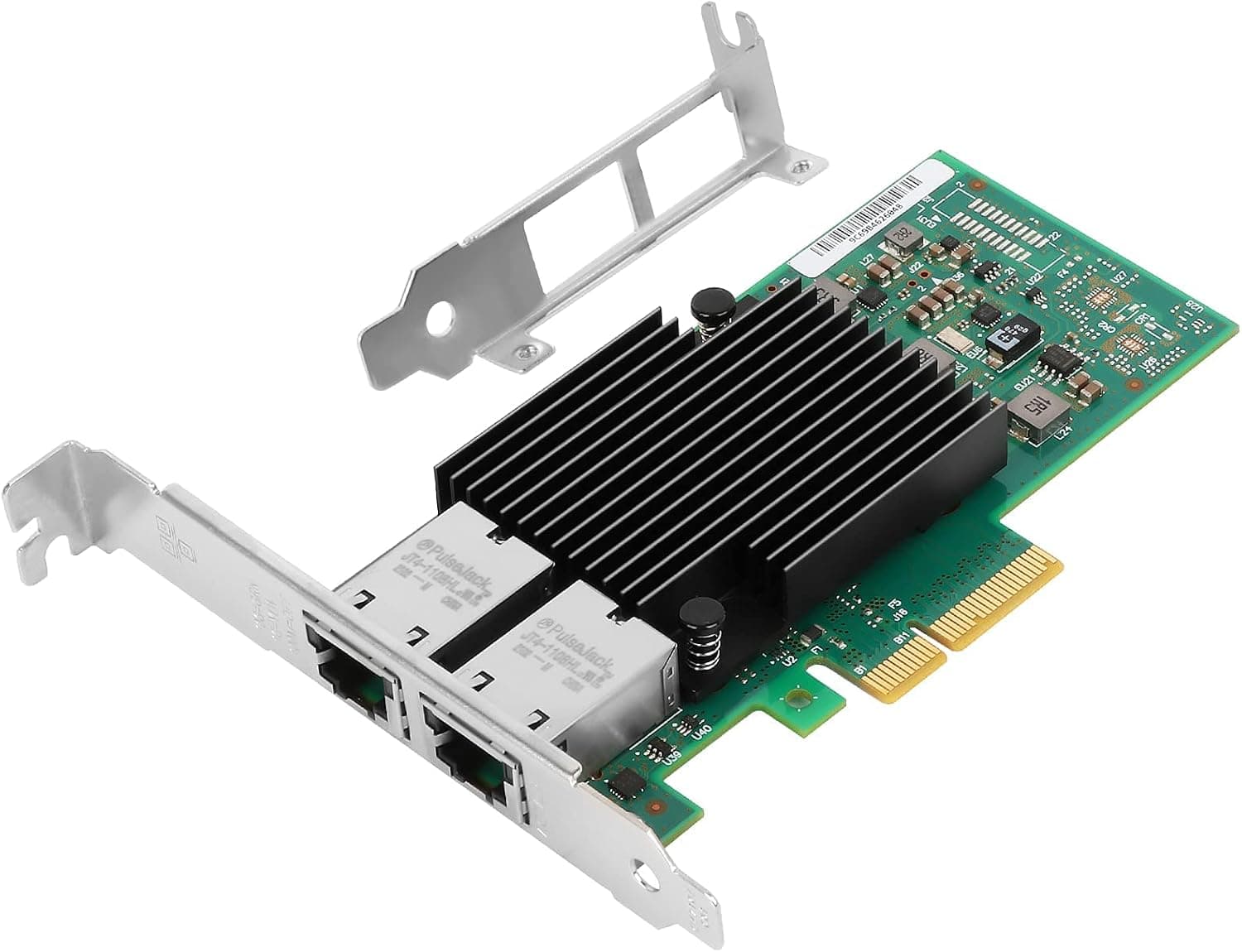
Interface: M.2 M-key (PCIe 3.0 x4) with included SFF-8087 breakout cable External Port: 1 x SFP+ (10Gbps / 1Gbps auto-negotiation) Cable Support: SFP+ DAC, AOC, optical transceivers (LRM, SR, LR, ER) OS Compatibility: Windows 7 through 11, Windows Server 2008-2022, VMware ESXi 6.5/6.7/7.0, RHEL/CentOS 7.3-8.3, Ubuntu 16.04-22.04, SUSE 12.5/15.4, FreeBSD 12.2/13.2 Power: SATA 15-pin power connector (must be connected directly to PSU) Cooling: Aluminum alloy heatsink (passive) The card ships with both a standard-height bracket and a low-profile bracket to fit various chassis. The M.2 slot must support PCIe lane bifurcation and be recognized as a PCIe device; some motherboards reserve the M.2 slot exclusively for NVMe storage, so check your UEFI/BIOS settings before purchase.
Product Info
Launched in late 2024, the Euqvos M.2 10Gb card typically retails around ¥9,800 in Japan (approximately $65 USD). It can be purchased through . The package includes the card itself, a 0.4m SFF-8087 ribbon cable, standard and low-profile mounting brackets, and a driver download QR code card. Warranty duration is not explicitly stated; expect standard seller-provided support. Market positioning is entry-level tier with a unique M.2 form factor. The Intel 82599 chip is a proven, mature 10GbE controller used in many enterprise adapters. By offloading the physical interface to an SFF-8087 cable, this card solves a specific problem: adding 10GbE without occupying a full-height PCIe slot. It is not a direct competitor to integrated PCIe NICs, but rather a specialized solution for slot-constrained builds.
Best Use Cases
Small Form Factor / HTPC Builds: If your ITX or thin mini-ITX motherboard has a spare M.2 slot but only one PCIe slot (used by a GPU), this card lets you add 10GbE networking without sacrificing the GPU slot or resorting to an ugly riser cable. The passive heatsink keeps the thermal footprint small. Home Lab / VMware ESXi Hosts: For virtualisation enthusiasts running low-power nodes (e.g., based on Intel NUC or ASRock DeskMini), adding a 10GbE interface through M.2 is often the only practical path. The card supports SR-IOV for direct VM assignment, jumbo frames, and iSCSI boot, making it suitable for NAS or virtual switch workloads. * Budget-Conscious Power Users: If you're not ready to invest in a premium Intel X710 or Mellanox ConnectX-4 LOM adapter, this card offers a low-cost entry to 10GbE. The trade-offs: no WoL, no RDMA, and the reliance on an M.2 slot that could otherwise house a second NVMe drive. You'll need to be comfortable with manual driver installation from Intel's website either by searching or scanning the QR code. Who should skip this card? Anyone needing dual-port 10GbE, RDMA (RoCE or iSCSI Extensions), or a plug-and-play OS experience where drivers auto-install. Also, if your only M.2 slot is already occupied by your primary OS drive, this card is not for you unless you upgrade to a larger single SSD.