Overview
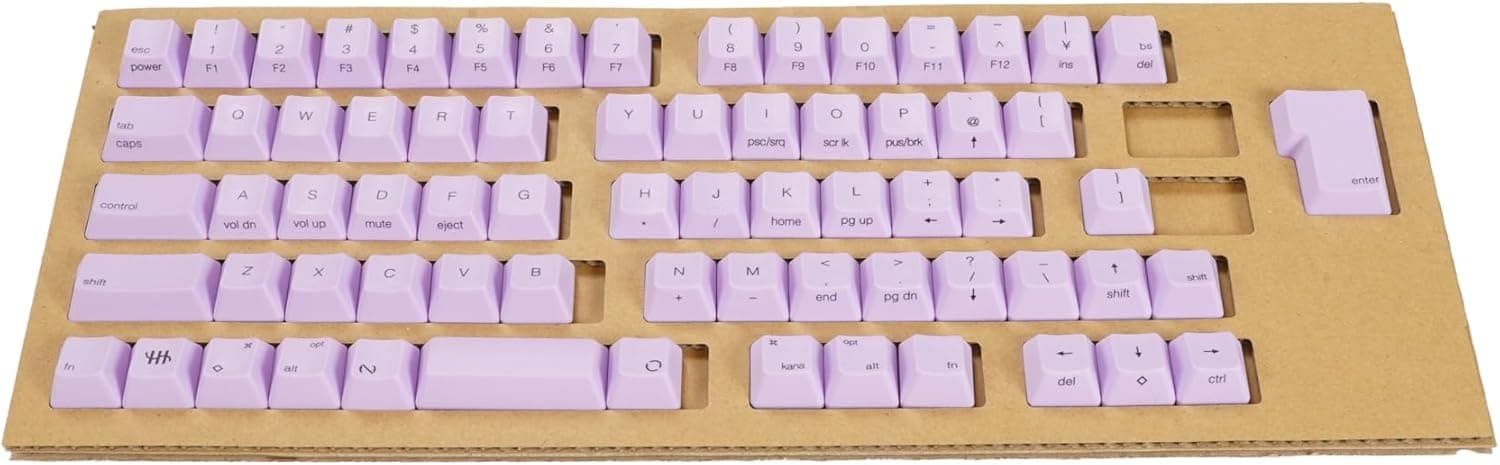
The dagaladoo Green Jade keycap set is a 121-key, double-shot PBT set in Cherry profile, made for mechanical keyboards with Cherry MX-compatible stems and an ANSI US layout. The short version: this is a strong pick if you run a standard ANSI US board and want a calm, non-RGB look — and if your board is JIS, ISO, ergo or split, you can stop reading here, because it will not fit.
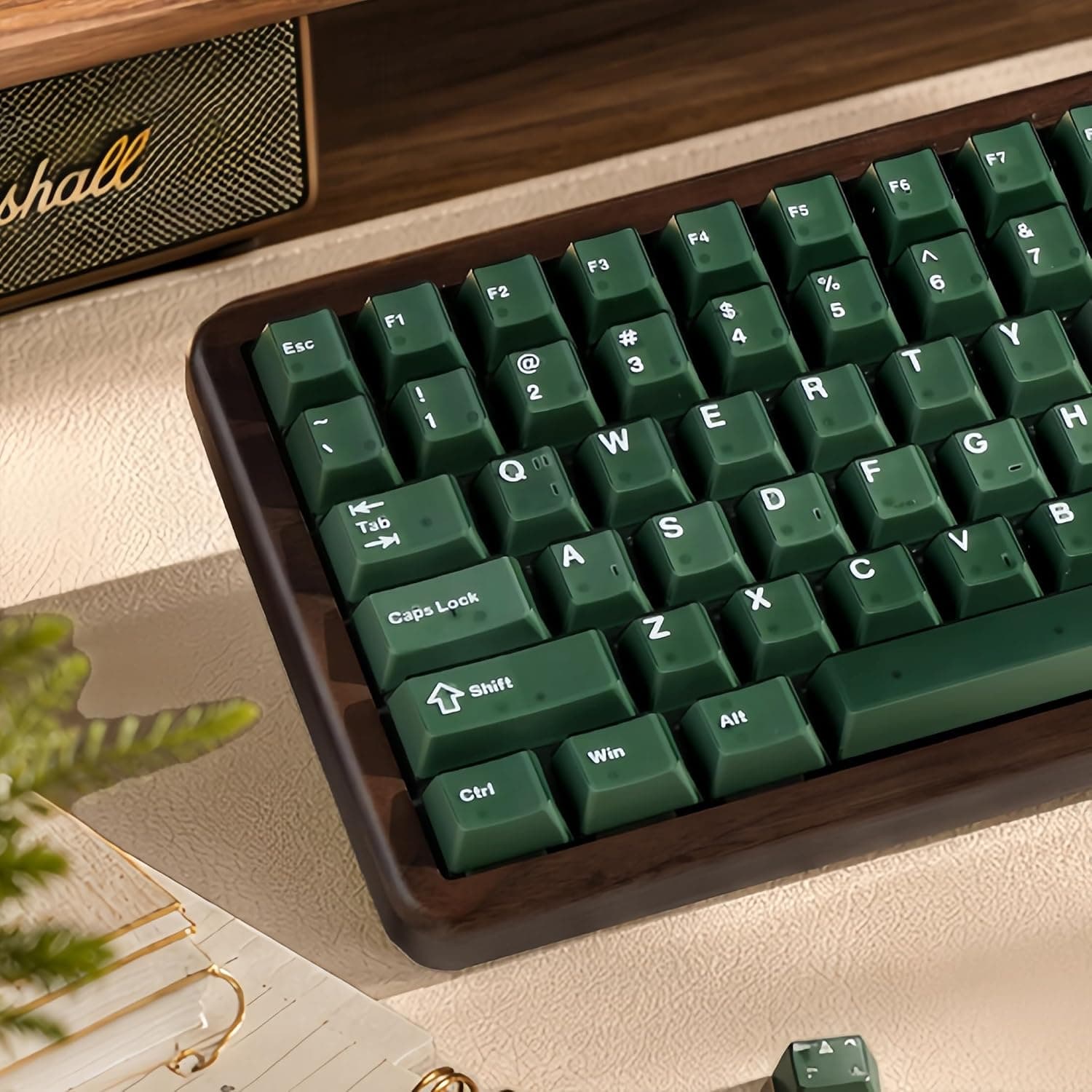
The caps are opaque rather than shine-through, so backlight bleed is suppressed and the deep green reads as an actual color instead of a tinted glow. It suits matcha, jade and vintage-themed builds.
On Amazon.co.jp, the listing showed 347 reviews at 4.4 out of 5 stars (88% positive) as of the July 16, 2026 capture — solid for this price tier.
Compatibility Guide
Three data points decide fit here.
| Item | Value | What to actually check |
|---|---|---|
| Switch compatibility | Cherry MX compatible | Is the stem a cross/MX type? Topre, Alps and proprietary low-profile stems will not accept these |
| Layout | ANSI US only | JIS (Japanese) and ISO layouts are not supported |
| Profile | Cherry | Sculpted — each row has a different height and angle |
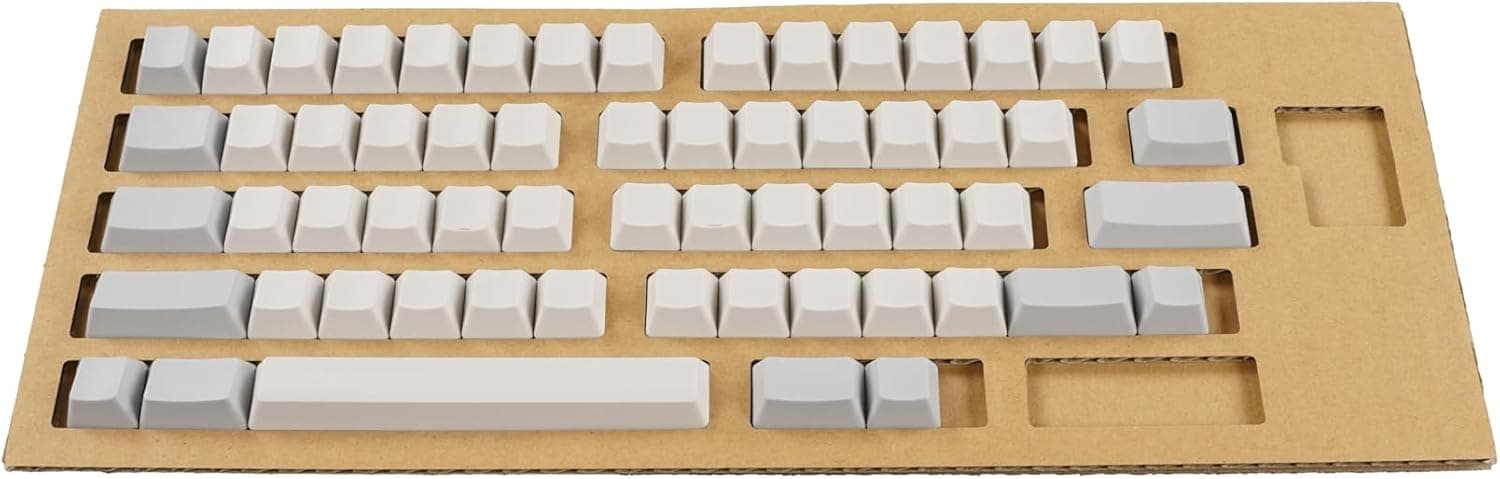
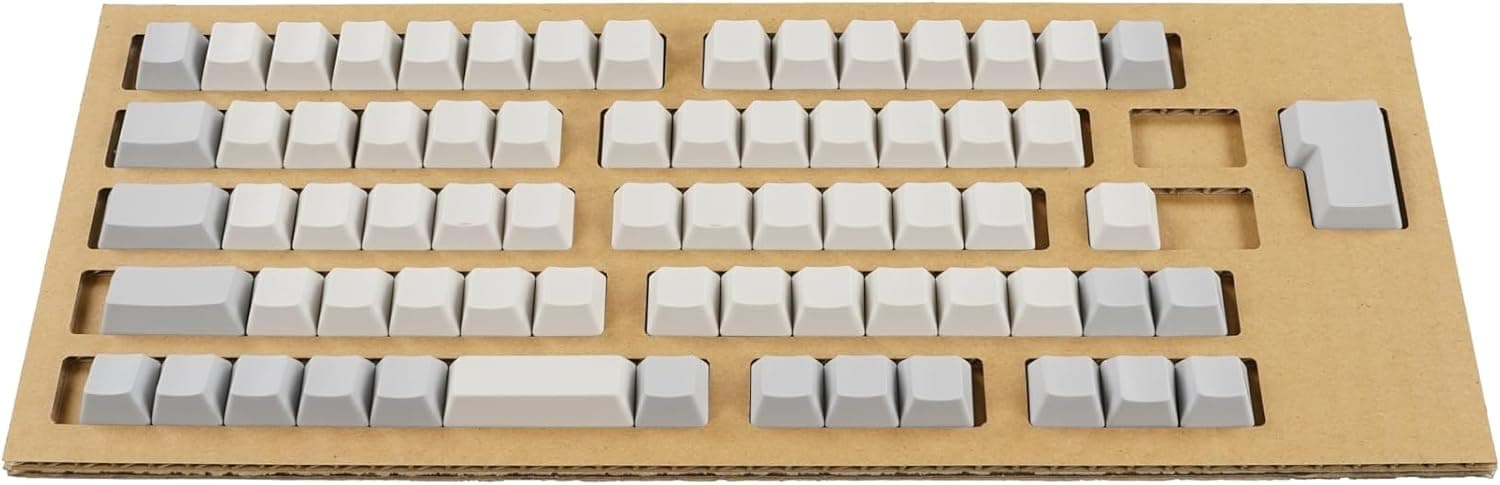
| Key count | 121 | Redundancy to absorb width variants across 60% / 65% / 75% / TKL / 96% / full-size |
Stem shape first. Cherry MX compatible means a cross-shaped stem.
Gateron, Kailh, TTC and Akko MX-style switches almost always qualify; Topre electrostatic capacitive switches and some low-profile switches physically will not. Judge by the shape of the stem, not by the brand name on the box.
Layout second. ANSI US only is the single biggest trap, especially for buyers in Japan.
A JIS keyboard has a short right shift, henkan/muhenkan keys, a reverse-L Enter and different symbol placement. An ANSI set on a JIS board leaves legends that disagree with what you type, plus several keys with no correctly-sized cap.
ISO has the same problem via its Enter shape and split left shift.
What 121 keys actually means. It is not 121 unique positions — it is the standard set plus width variants so one box can cover several board sizes.
A 65% board may want a 1.75u right shift and 1u arrow-cluster neighbors; a 121-key set generally covers common variants but not every irregular key on every board.
Count the non-standard widths on your own keyboard before ordering.
Fit by Board Size
- Full-size / TKL — safest. Standard widths throughout; you end up with spare caps rather than gaps.
- 75% / 96% — watch the far-right column and right shift width; 1.75u shift and 1u Delete are common needs.
- 65% — the most variable size. Arrow cluster and right shift differ from vendor to vendor.
- 60% — fewer keys to satisfy, but modifier row widths (1.25u vs 1.5u) vary by product.
- Ergonomic / split boards — not supported. Column-staggered and split layouts use entirely different key widths.
Product Info
The captured prices moved between snapshots: ¥4,963 as captured on July 16, 2026 and ¥4,712 as captured on August 19, 2026 — roughly ¥250 lower a month later. Both are Amazon-side captures and swing with sales and coupons.
Treat these as point-in-time figures and confirm the current price on the product page before buying. The eBay entry is a search-results page with no fixed price, so it is not usable as a comparison.
In market terms, a 100-plus-key double-shot PBT set at this price sits at the entry-to-lower-mid tier. Name-brand double-shot PBT sets typically land in the ¥6,000–12,000 range, so this undercuts them.
The tradeoff is that this is also the tier where color consistency between batches and spacebar molding precision are most likely to vary.
The practical headline spec is double-shot molding: legends are formed from a second color of plastic rather than printed, so they cannot wear off. Laser-etched and pad-printed caps commonly fade from the edges within months; double-shot legends survive as long as the cap does.
PBT itself is harder and less oil-absorbent than ABS, so it resists the glossy shine that develops on stock caps.
The English listing mentions an included keycap puller, though bundle contents can vary by listing. If the puller matters to your decision, confirm it in the product photos.
Support is handled by the seller over email.
Typing Feel: Where Cherry Profile Fits
Cherry profile is lower overall than OEM and sculpted so each row is angled toward the fingers. Shorter finger travel is the usual reason people prefer it for long coding or writing sessions.
The tradeoffs:
- It is low. If you like a tall, deep-feeling stack, coming from OEM or SA means a few days of extra typos.
- Sculpting limits key swapping. Rows R1–R4 differ in height, so relocating a number-row cap to the home row visibly breaks the profile. Heavy keymap customizers should verify the right row has the caps they need.
- PBT sounds drier and higher-pitched than ABS. If you are chasing a soft, muted sound signature, this is the wrong material.
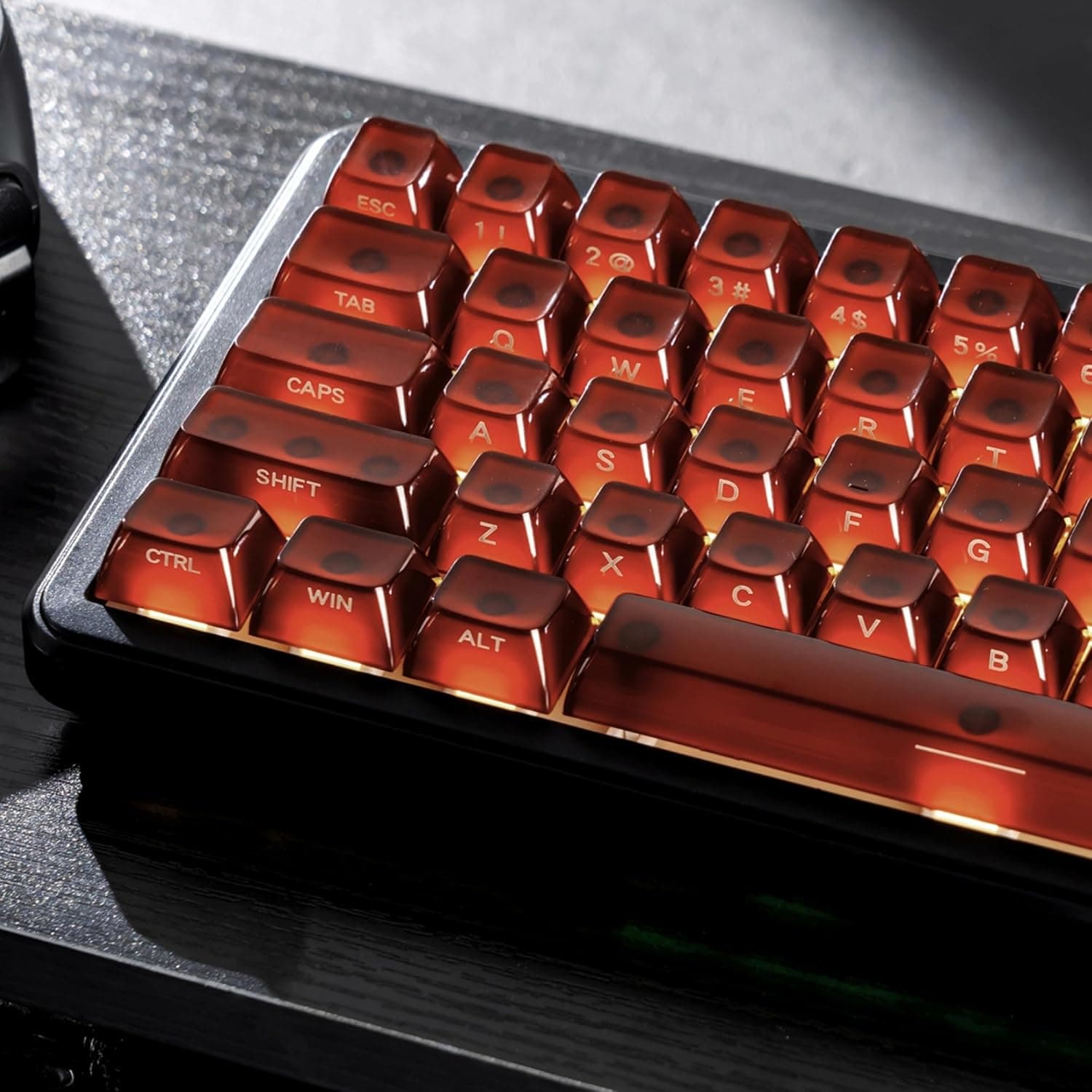
On the opaque construction: legends will not light up on an RGB board. You get underglow leaking around the caps and nothing more.
Whether that is "clean" or "wasted RGB" is the real deciding factor for this product.
How It Compares
The PBT Cherry-profile market splits cleanly into shine-through and opaque. If you want lit legends, this set is out and a double-shot clear-substrate set is in.
If you want accurate color and texture, opaque wins.
Against name brands like Glorious GPBT, the branded sets lead on color consistency, molding precision and support; direct-brand sets like dagaladoo close the gap with price. A workable split: this set for a first PBT upgrade or a secondary board, a branded set for a daily driver you plan to keep for years.
HHKB keytop sets are not competitors — those are built for one specific board's layout and legends, and if you own that board you should buy the dedicated set.
Best Use Cases
- Owners of standard ANSI US mechanical keyboards who want a quieter aesthetic — the deep green works with minimal, wood-desk and nature-themed setups, and double-shot PBT improves durability while changing the look.
- Anyone upgrading from cheap ABS stock caps — shine and fading legends, the two classic ABS complaints, both go away for under ¥5,000.
- Gamers who keep RGB off — opaque caps produce no light bleed, which keeps attention on the screen in a dark room. Legends survive heavy WASD use.
- People who like rotating colors — at this price, seasonal swaps are a reasonable thing to do.
Before You Buy
Layout is the number one risk. Most keyboards sold in Japan are JIS, and this set does not support them.
"Cherry MX compatible" and "layout compatible" are separate questions; the caps will seat, but legends will not match your input and several keys will have no correct-width cap. Confirm your board is ANSI US — rectangular Enter, long right shift, US symbol placement — before ordering.
There is no fix after the fact other than a return.
Second, coverage. 121 sounds like plenty, but boards with irregular widths — some 65% designs, custom 75% layouts, or anything not using a 6.25u spacebar — can end up with unfilled positions.
Spacebar length (6u / 6.25u / 7u / split) is a mandatory pre-purchase check. If that one key does not match, nothing else matters.
Do not expect illumination. These are opaque; shine-through legends are not a feature here.
If lit legends were the point of your RGB keyboard, this is the wrong direction.
Accept some unit variance. At this tier, batch-to-batch color drift, small molding flash on spacebars and modifiers, and stabilizer clearance quirks all show up occasionally.
347 reviews at 4.4 stars (captured July 16, 2026) is a good result, but it describes a distribution — most buyers satisfied, a minority not — rather than universal agreement.
Finally, about the listing data itself. Amazon product pages sometimes carry registration details — manufacturer, model number, compatibility text — that disagree with the physical product.
The manufacturer field on this listing matches the product covered here, but for critical items like supported layout and key count, verify against the listing photos rather than the text. With keycaps, the photographed set is usually exactly what ships, so the images are the most reliable fit check available.
FAQ
Q. Will these work on a Japanese (JIS) keyboard? A.
No. ANSI US only.
The Enter shape, right shift length and henkan/muhenkan keys all differ, so even partial reuse is not practical.
Q. Are they shine-through?
A. No. Opaque molding means legends do not light up; you only get bleed around the edges of the caps.
Q. Do they fit Gateron or Kailh switches? A.
Yes, provided the stem is a Cherry MX-compatible cross type. Most major switch makers use MX stems, but low-profile-specific switches and electrostatic capacitive designs are excluded.
Q. Will the legends wear off? A.
No. Double-shot molding forms legends from a second plastic color, so they cannot abrade away.
That is the main advantage over printed caps.
Q. What does it cost? A.
Point-in-time captures show ¥4,963 on July 16, 2026 and ¥4,712 on August 19, 2026. Prices move often — check the product page before buying.
Q. Will I have leftover keys on a 60% board? A.
Yes, most of the set. Keep the spares, but do confirm your modifier row widths (1.25u vs 1.5u) match before ordering.
Product Disclosure (Amazon)
- Manufacturer: dagaladoo
- Seller: Amazon US
- Fulfilled by: Amazon US
- ASIN: B0GXZSBKRH
- Note: This article covers a manufacturer-made product based on Amazon listing details.