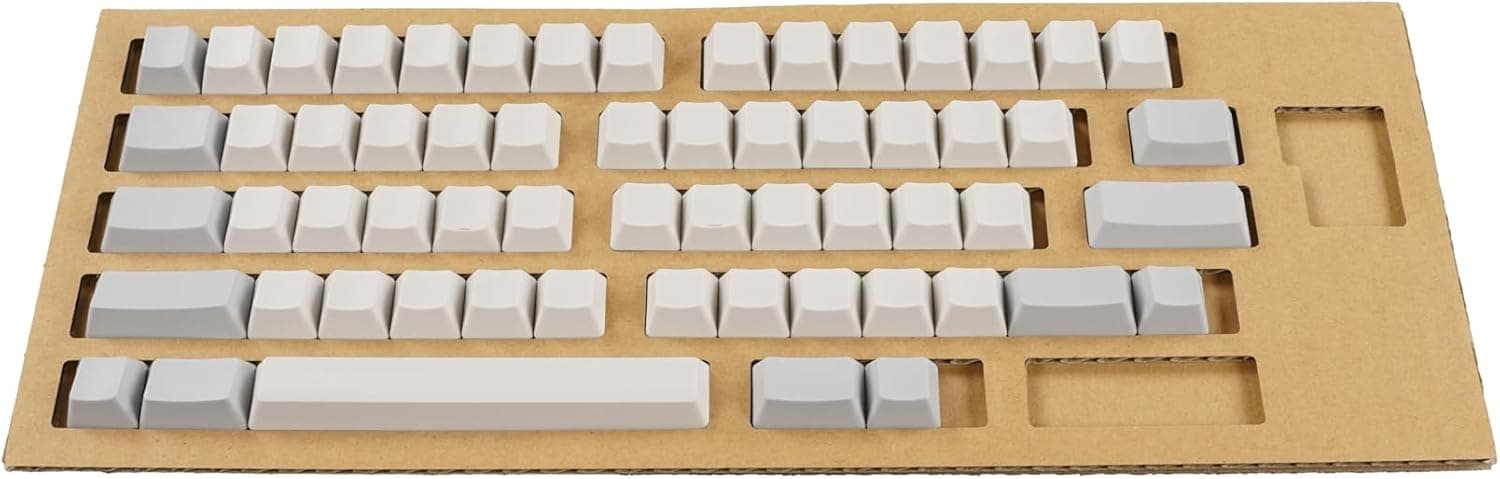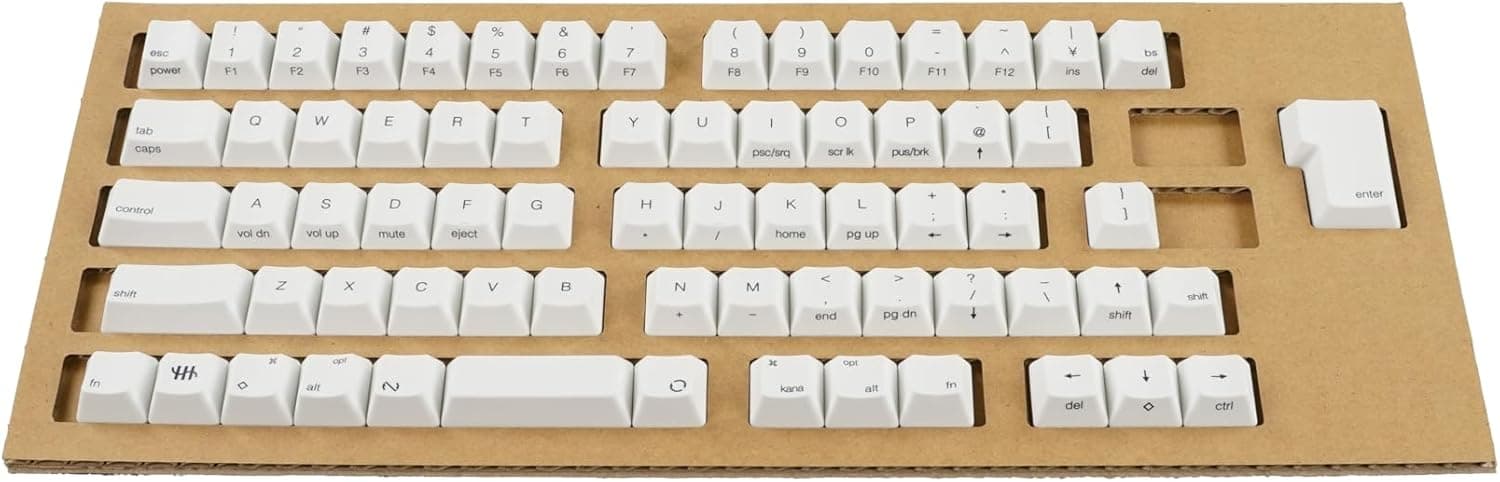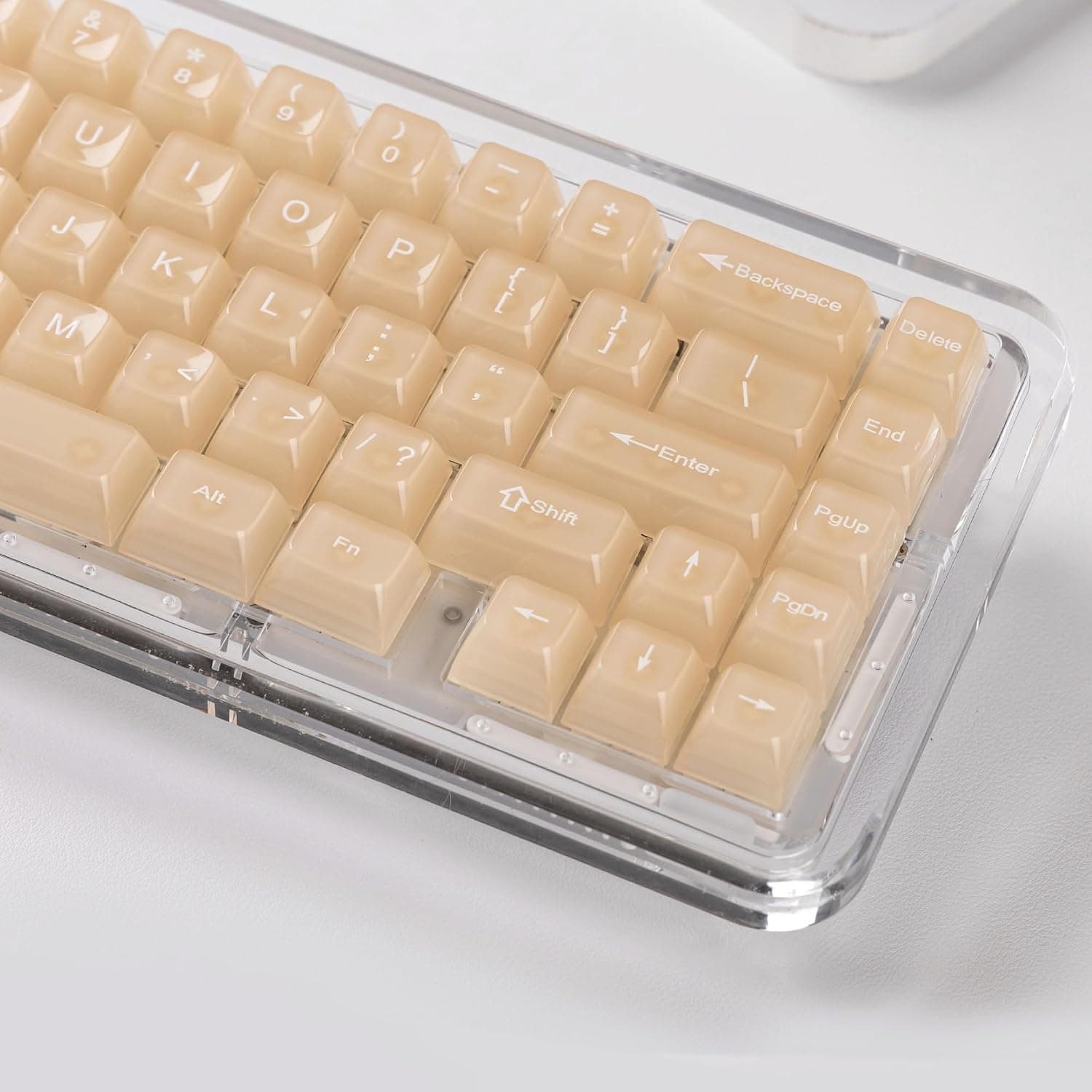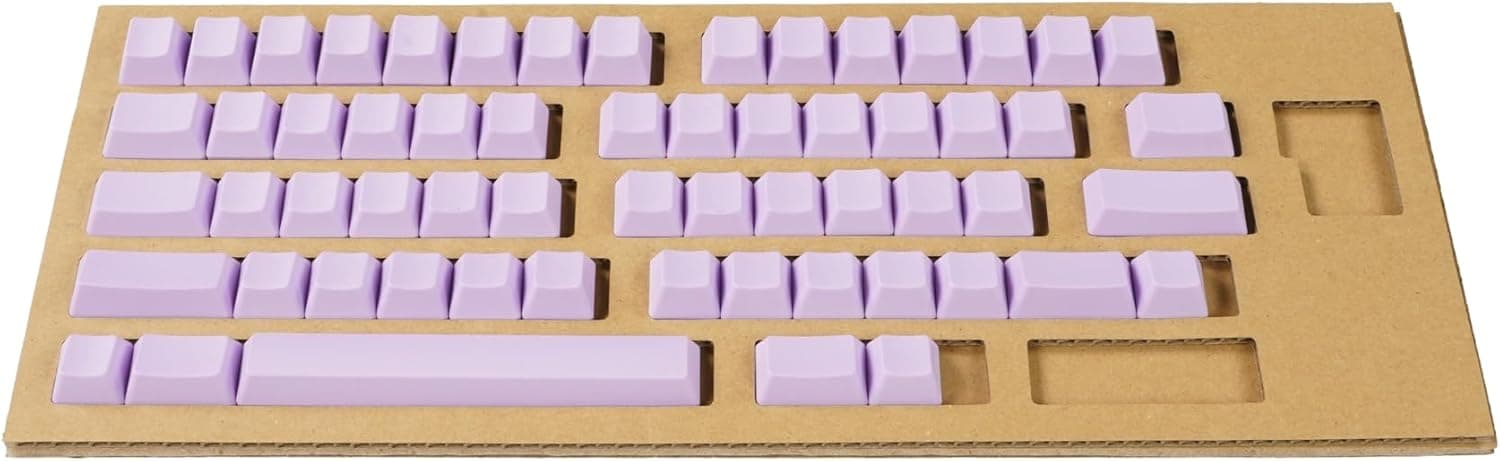
This article takes a closer look at the Womier 143-Key Low-Profile PBT Keycap Set, focusing on the things buyers usually discover only after the package arrives. It is an appealing budget shine-through set, but the words "low profile" and "Cherry MX compatible" are easy to misread, and that misreading is the single most common reason this kind of set ends up unused.
Overview
The Womier 143-key set combines frosted PBT keycaps with a translucent (shine-through) construction. In short, it is an entry-to-mid-tier set for people who want to refresh the look of an RGB mechanical keyboard on a small budget.
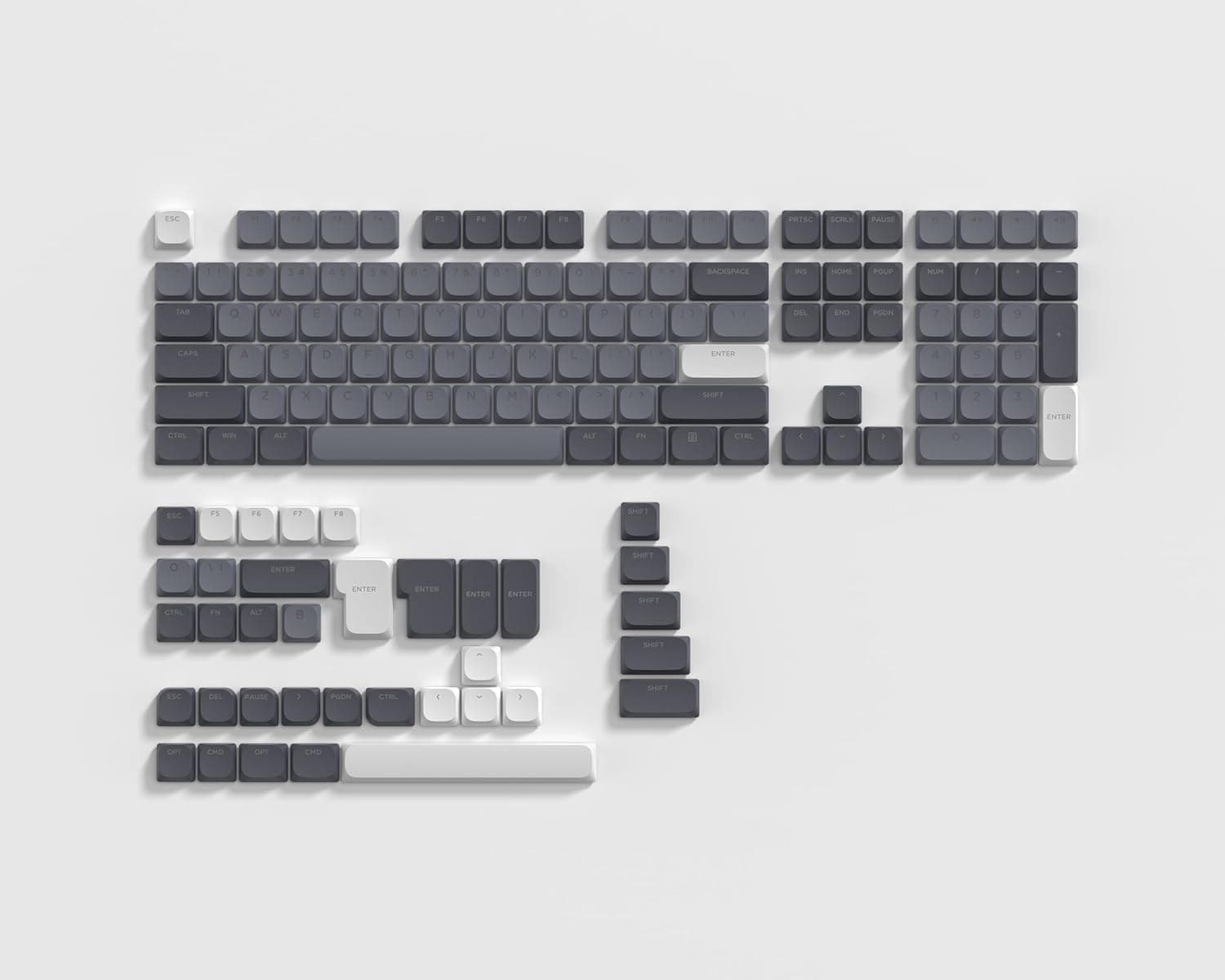
The high key count covers 60%, 65%, 75% and full-size layouts from a single kit, which is its main selling point.
Using PBT rather than ABS is a genuine plus: PBT generally resists the greasy shine that develops on ABS caps and keeps its textured feel longer. PBT is, however, harder to make translucent, so shine-through PBT sets differ a lot depending on whether only the legends glow or the whole cap diffuses light.
Check the vendor's lit-up product photos to see which behaviour this set has.
As captured in June 2026, the Amazon.co.jp listing showed 39 reviews at 3.9 out of 5 stars (roughly 78% positive).
With only 39 ratings the score can still move, but "decent, not beloved" is a fair reading, and reasonable for the price bracket. With split-rating products, reading the negative reviews first — usually about sizing, lighting or legend quality — tells you more than the average does.
Compatibility Guide
The stated compatibility is "mechanical keyboards using Cherry MX-style switches". The critical distinction: having an MX-compatible cross stem is not the same as supporting low-profile switches.
| Item | Value | How to check |
|---|---|---|
| Stem | Cherry MX compatible (cross) | Pull one cap and look for a + shaped stem |
| Profile | Low profile | Shorter than standard-height caps |
| Layouts | 60% / 65% / 75% / 100% | Measure your board's odd-width keys |
| Key count | 143 | Non-standard widths decide sufficiency |
| Material | PBT (frosted) | — |
| Shine-through | Yes | Only useful on backlit boards |
The practical check is three steps. First, pull a single keycap and inspect the stem: a cross shape means MX compatible, and Gateron, Kailh and TTC clones share that shape.
Second, note that dedicated low-profile switches such as Kailh Choc use a different stem and physically will not accept these caps — ironically, low-profile keyboard owners are the ones who must verify this first. Third, measure your right shift, spacebar and bottom-row modifiers; even a 143-key kit can miss a specific width on JIS or unusual layouts.
These caps do not work on laptop scissor-switch keyboards, membrane boards, or electrostatic capacitive boards such as HHKB and Realforce. For those, buy the manufacturer's own keytop set.
A wire-style keycap puller is safer than a plastic ring puller because it is less likely to scuff the sides of the caps.
Product Info
The listed specifications are 143 keys, frosted PBT, low-profile height, grey/white colourway, shine-through construction, and support for 60%, 65%, 75% and 100% layouts. Only the keycaps are included; no case or puller is documented, so plan to supply your own tools.
The price was ¥3,180 on Amazon.co.jp as captured on 7 June 2026.
That is clearly cheap for a 143-key kit and makes it a sensible step up from a budget ABS set. Keycap pricing moves a lot with stock and sales, though, so treat that figure as a snapshot and check the current listing before buying.
The eBay entry is a search results page, not a confirmed price, and may mix in similarly named sets.
Note that the price source is labelled "Amazon US" while the link and currency are Amazon.co.jp and Japanese yen.
This is a labelling inconsistency rather than a different product, but always confirm the displayed currency when you follow the link. Womier offers customer support, but no specific warranty period is documented; for keycaps, expect initial-defect handling rather than a long warranty.
Alternatives and Comparison
Within the keycap category, the right pick depends on your goal. If sound and typing feel matter most, a thick Cherry- or OEM-profile PBT set is usually more satisfying; this low-profile design leans toward a lighter, shallower feel.
If RGB is the point, shine-through is a hard requirement, and among sets that meet it, this one's price is competitive.
If you use a board with its own keycap standard, such as an HHKB, the manufacturer's keytop set is the faster route. The price premium is easily repaid in avoided compatibility guesswork and returns.
Things to Know Before Buying
1. "Low profile" causes the most failed purchases. Dedicated low-profile switches like Kailh Choc will not accept these caps.
Here, low profile means "a shorter cap on a standard MX stem", not a switch standard. Verify your switch stem before ordering.
2. Wrist relief is not guaranteed. Shorter caps lower total height slightly, but case thickness and tilt angle dominate.
Buying this expecting to retire your wrist rest is likely to disappoint.
3. Check the lit photos. Legend-only glow and full-cap glow look completely different.
If you need to read the legends, also confirm they are legible with the backlight off.
4. 143 keys is not automatically enough. JIS layouts and boards with odd bottom rows can still be short a specific width.
Measure first.
5. The rating sample is small. 3.9 stars from 39 reviews (June 2026 capture) is middling, not glowing.
Read the low-star reviews for legend printing and unit variation.
6. Do not trust listing metadata blindly. Keycap listings frequently have manufacturer, model number or layout fields that disagree with the actual item, and multi-variation pages change content depending on the selected option.
Confirm the product from the images and title before ordering, and prefer the live listing over this article if the two disagree.
Best Use Cases
This set suits people running Cherry MX-compatible mechanical keyboards who want their RGB to show through while escaping ABS shine. For a first keycap swap it is an easy entry point: broad layout coverage and a low enough price that a mistake is not painful.
Owners of several keyboards can also redistribute the leftover keys.
It is a poor fit for Kailh Choc and other dedicated low-profile switch users, for HHKB/Realforce owners, and for anyone chasing a deep, weighty typing sound — thick Cherry-profile PBT serves that goal better, since shallower caps change the acoustics.
FAQ
Q. Will these fit a low-profile keyboard? A.
Only if the switch stem is an MX-style cross. Dedicated low-profile switches such as Kailh Choc use a different stem and will not fit.
Pull one cap and check first.
Q. Can I use them on an HHKB or Realforce? A.
No. Electrostatic capacitive boards use a different stem; buy the dedicated keytop set instead.
Q. Is 143 keys enough for a JIS layout? A.
It covers most layouts, but JIS key widths vary by model. Measure right shift and the keys around the spacebar before buying.
Q. How bright is the lighting? A.
The caps are translucent, so a backlit board will shine through, but legend-only versus full-cap diffusion changes the look considerably — check the lit photos. On non-backlit boards there is no visual benefit.
Q. Does PBT make typing quieter? A.
Material changes the character of the sound, but if silence is the goal, silent switches or case foam do far more. Treat a keycap swap as a feel-and-looks upgrade.
Product Disclosure (Amazon)
- Manufacturer: Womier
- Seller: WOMIER SHOP
- Fulfilled by: Amazon
- ASIN: B0GZZY49WJ
- Note: This article covers a manufacturer-made product based on Amazon listing details.