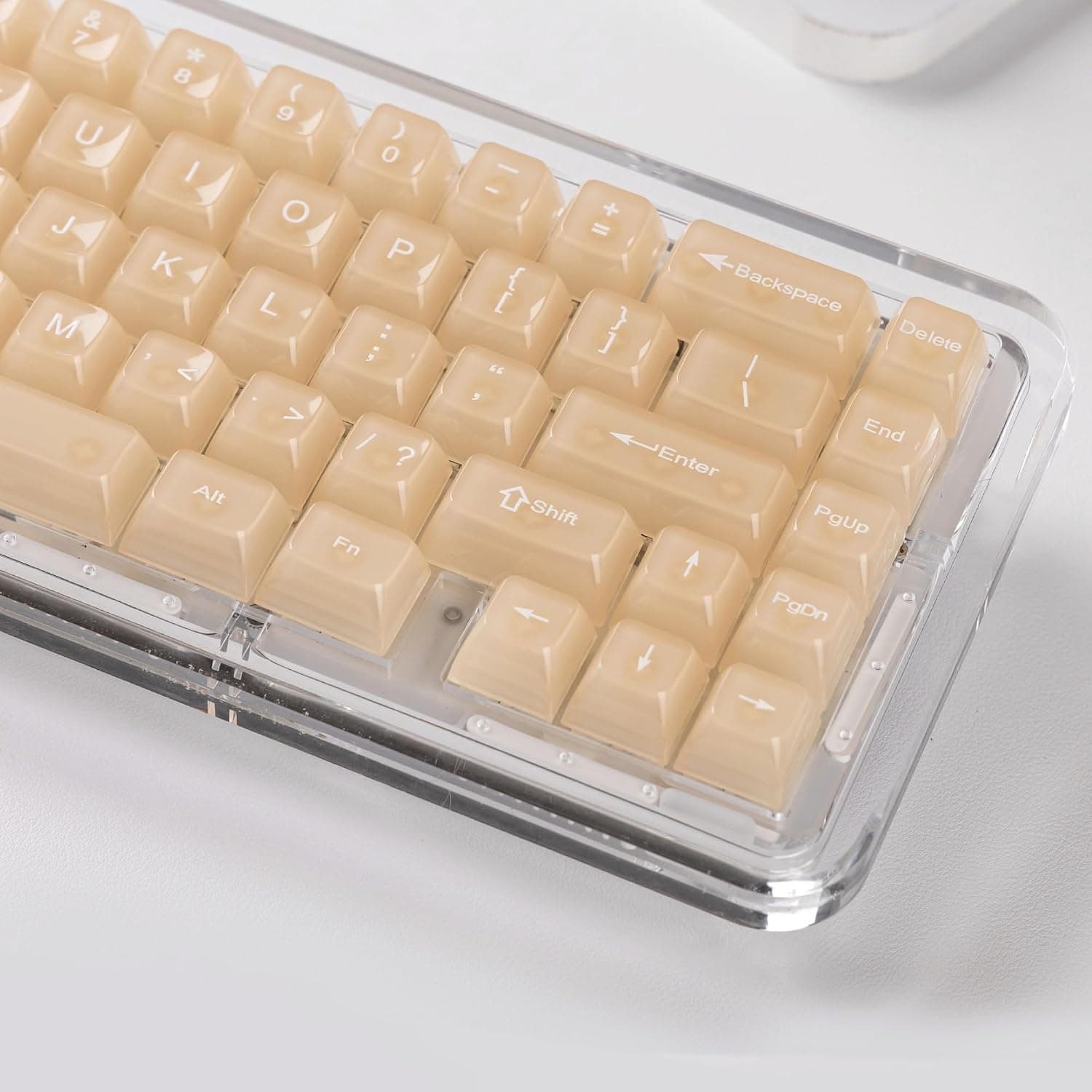
Overview
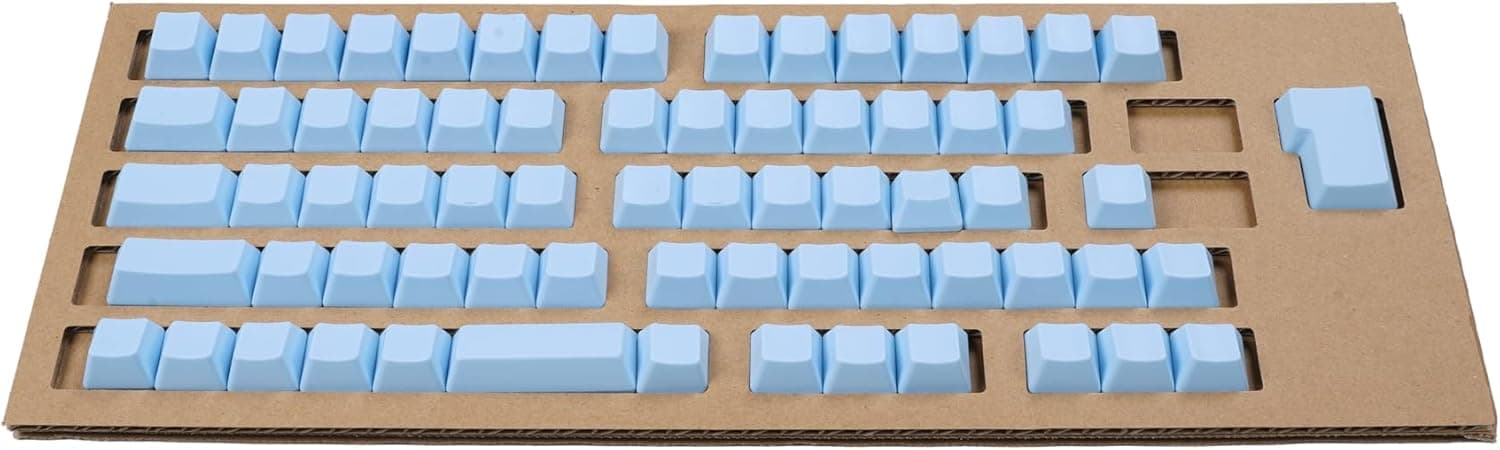
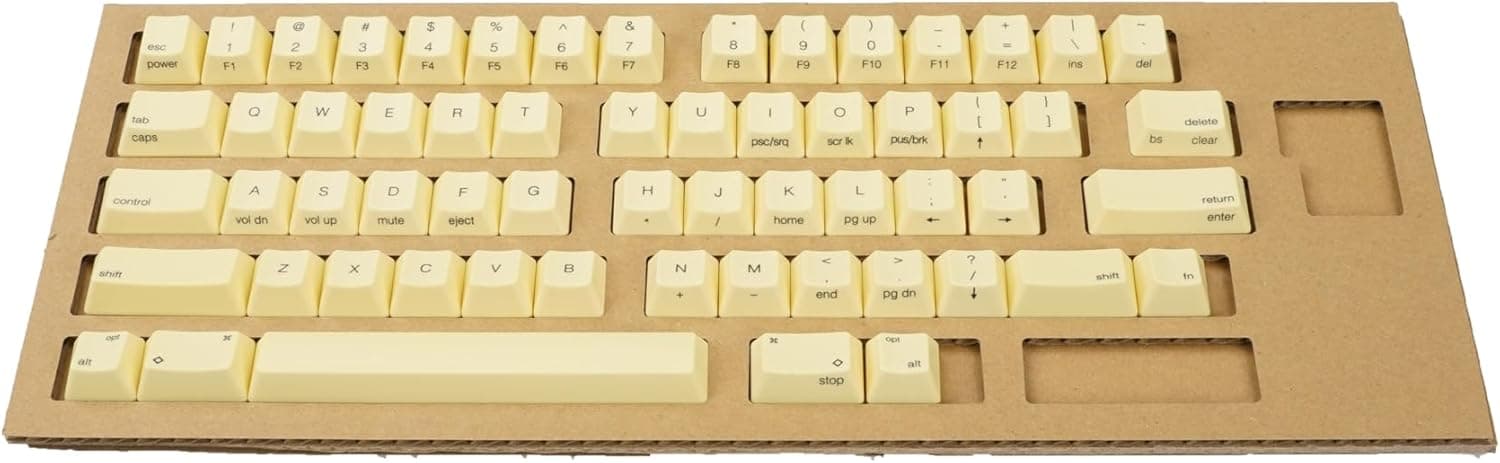
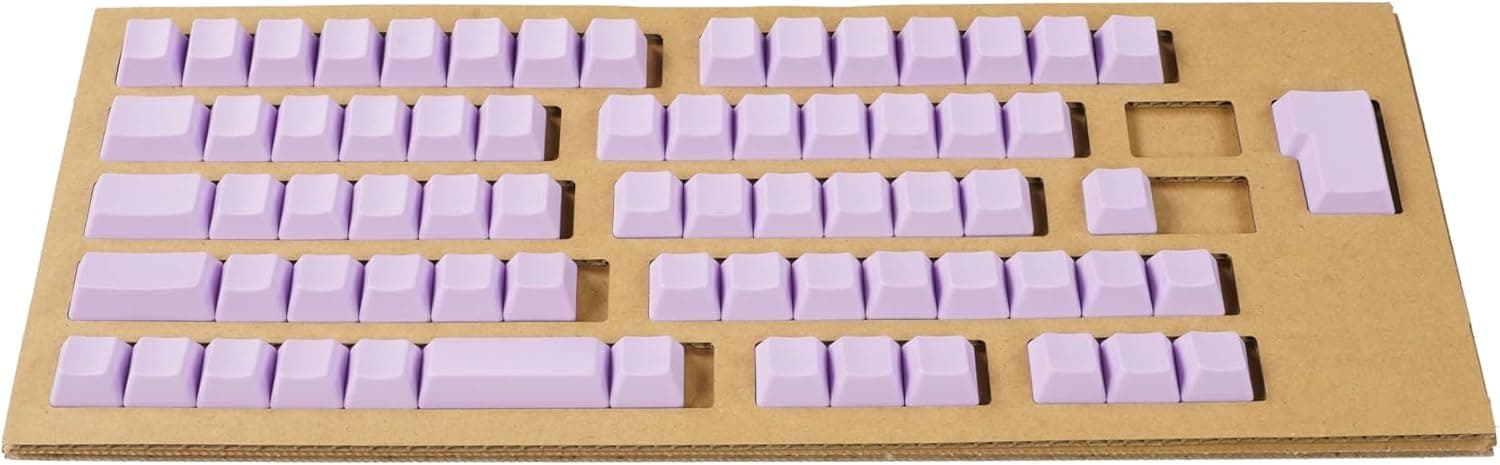
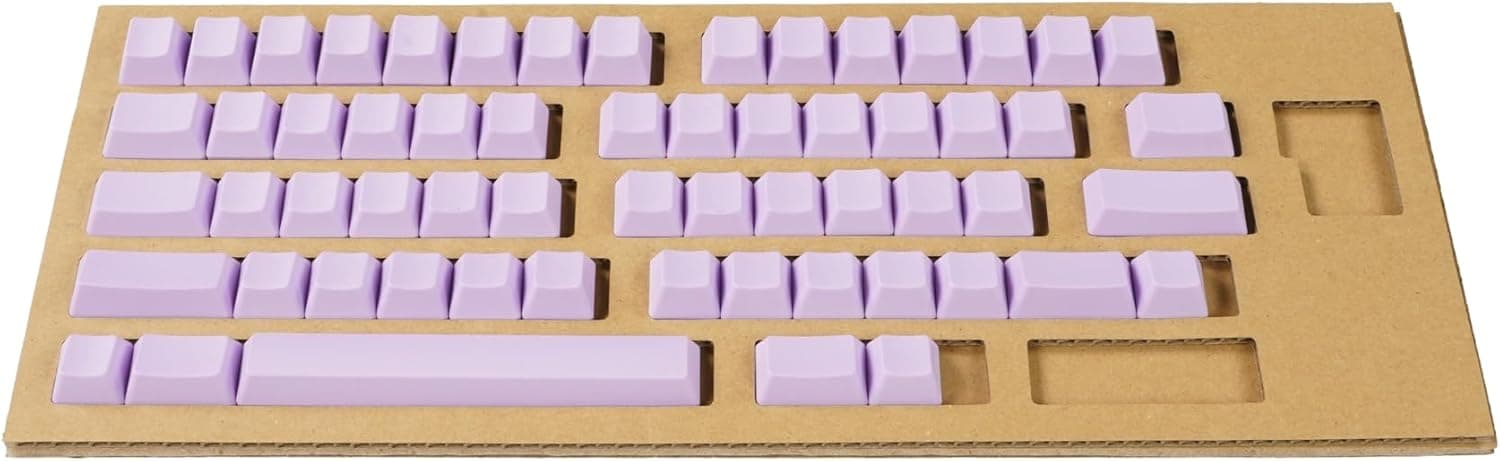
Womier Shine Through Keycaps pair translucent polycarbonate (PC) shells with an MDA profile in a 115-key set. The short verdict: this is a set for rebuilding the look of a backlit MX-style mechanical keyboard for roughly the price of a game, and it is not for people who prioritize long-term legend durability or the muted texture of PBT.
On Amazon.co.jp the set carries 4.3 stars from 333 reviews (86% equivalent, captured July 2026), a steady result for this price band.
Keycap swaps remain one of the highest-value modifications in the hobby. Unlike switch swaps or case changes, nothing needs soldering or disassembly, and a single tool reverses the whole thing.
This particular set narrows its goal further: almost every design decision serves light transmission. Jelly-style translucent caps became a staple category in the early 2020s, and this is a mainstream entry in that lineage.
That focus carries an unavoidable trade-off. Passing light through a shell means limiting pigment, so you generally give up the gritty, oil-resistant surface that PBT provides, and legends usually rely on surface printing rather than double-shot molding.
The sections below work through what actually matters before you buy: whether it physically fits your board, and exactly where you will be compromising.
Compatibility Guide
The hard requirement is a Cherry MX compatible cross (+) stem. Gateron, Outemu, Kailh, TTC, Akko and other MX-style switches are all fine on the stem side.
The following are not.
| Environment | Fits | Note |
|---|---|---|
| Cherry MX / Gateron / Outemu / Kailh (MX style) | Yes | The intended use case |
| Razer Opto-Mechanical and similar proprietary optical | No | Different stem geometry |
| Topre electrostatic capacitive (HHKB / Realforce) | No | Needs dedicated key tops |
| Low-profile such as Kailh Choc | No | Different stem and spacing |
| Laptop scissor-switch keyboards | No | Not a replaceable part |
Supported layouts are 60% (61 keys), 65% (68), 75% (84) and 100% (104/108). The 115-key count means a full-size board is covered with a few spare keys left for smaller layouts.
The most common failure here is layout mismatch, not key count. Sets like this are built around US ANSI, so Japanese (JIS) keys such as henkan/muhenkan, and ISO extras like the tall Enter and the additional left-shift key, are normally absent.
On a JIS board expect a patchwork result where some caps are new and others stay stock.
The second trap is the bottom row. The listing says standard key sizes, which in practice means a conventional 6.25u spacebar layout.
Older boards with a 7u spacebar, split spacebars, custom rows built from 1.5u modifiers, stepped Caps Lock designs, boards with rotary encoders, or wide macro columns can all leave individual keys unfilled.
Photograph your own bottom row from directly above and count the widths beside the spacebar before ordering — it is the most reliable pre-purchase check there is.
Product Info
Core specifications, as published on the listing:
| Item | Value |
|---|---|
| Key count | 115 |
| Profile | MDA |
| Material | PC (polycarbonate) |
| Switch compatibility | Cherry MX / Gateron / Outemu / Kailh (MX style) |
| Layouts | 60% / 65% / 75% / 100% |
Pricing was ¥5,551 as captured on 21 July 2026 and ¥5,583 as captured on 18 August 2026 on Amazon, with a marketplace listing at $24.53 on eBay US as captured on 18 August 2026.
Keycaps move with sales and exchange rates, so treat these as point-in-time snapshots and confirm the current price on the product page. If you see a figure an order of magnitude off, suspect a piggybacked listing for a different item.
The ¥5,000-range places this mid-market: clearly above no-name ABS sets, clearly below limited double-shot PBT runs. The 4.3-star average across 333 reviews (captured July 2026) reads as the usual pattern for this tier — some variance, most buyers satisfied.
The package contains 115 keycaps plus a keycap puller in some batches. Because the puller is not guaranteed, keep a wire-style puller on hand.
Warranty depends on the seller and is typically 30-day returns.
MDA Versus Other Profiles
MDA uses a spherically dished top with a generously sized surface. Row-to-row height differences are gentler than on steeply sculpted profiles like Cherry, so fingertips settle naturally into the dish.
The flip side is that the more your typing form is optimized around a low, forward-raked Cherry profile, the stranger the first few days will feel. Reaching for the number row and symbol keys lands differently, and a temporary rise in typos is normal.
On material, PC is chosen purely for clarity. Switching to PBT instead gives you a textured surface that resists shine from finger oils and generally holds up better, but PBT blocks light and works poorly for shine-through.
The fork is simple: PC if you want glow, PBT if you want longevity. This set commits fully to the first path, which also makes it a different proposition from legended PBT sets or Topre-specific key tops.
What Actually Changes in Use
The visual result splits sharply between lights-off and lights-on. Unlit, you see the resin itself, with the case and plate colors showing through — darker internals read as fairly subdued.
Lit, the whole cap glows like a light source, and gradient RGB effects look their best. On a board with no backlight, however, little value remains beyond translucency, and the return on the purchase drops considerably.
Sound and feel shift too. Cap material, wall thickness and profile all influence pitch and resonance, so your board will not sound identical afterwards.
Whether you prefer the result is subjective, which is why swapping keycaps as a silencing strategy usually disappoints. If quieting the board is the goal, switches, case foam and mounting style are the effective levers.
Installation Tips
The job takes 10–20 minutes, and beginners stumble in predictable places. First, photograph the stock layout from directly above before removing anything; on full-size boards this photo is the most reliable way to restore key positions.
Second, use a wire puller and lift diagonally and slowly — plastic ring pullers can scuff cap sidewalls depending on how you pull.
Third, long keys such as spacebar, Shift and Enter sit on stabilizers. Lifting one side alone can unseat or bend the wire, so pull straight up from both ends at once.
When reinstalling, confirm the stabilizer stems seat properly before pressing down; an incompletely seated cap shows up as a dead or sluggish key. Finally, run every key through a keyboard tester once the set is installed so nothing goes unnoticed for weeks.
Best Use Cases
PC gamers who want RGB as the centerpiece. If you already own a backlit MX-style board, this is a large visual change for the money, and it photographs and streams well.
Typists who prefer a broad key surface. The MDA dish catches the pad of the finger over a wide area, which suits people who dislike landing on cap edges.
Conversely, a typing form built around Cherry profile will pay a real adjustment cost.
Custom keyboard builders remixing a look. Clear caps turn case, plate and cable colors into visible design elements, opening up combinations that opaque sets cannot offer.
Who should skip it: anyone on a keyboard without backlighting, anyone who depends on legend legibility in a dark room, anyone who needs a complete JIS layout, and anyone expecting legends to survive years of heavy use. All four conflict directly with what this set is designed to do.
Things to Check Before Buying
Legend durability is the core compromise. Putting characters on a translucent shell without double-shot molding means relying on surface printing, and printed legends generally wear faster than molded ones — WASD, spacebar and Enter fade first.
How long yours last depends on batch and usage intensity, so no firm number can be given, but do not plan on pristine legends years out. You are buying the glow, not the printing.
115 keys does not guarantee full coverage. That is a layout question, not a count question.
Fit an ANSI-oriented set to a JIS board and you can run out of the right shapes while still having spare caps. Checking four things beforehand — Enter shape, left Shift width, spacebar length, and the number and width of keys flanking the spacebar — avoids nearly every return.
Transparency has its own downsides. Dust inside the shell and finger oils on the surface are both far more visible than on opaque caps, so plan on periodic cleaning.
Scratches also whiten and stand out on clear resin, which is another reason to handle the puller carefully.
Treat the listing details with care. Keycaps are a category full of near-identical products, and single listings commonly host many colors and layouts.
In the source data for this article, seller labeling and the referenced storefront were not fully consistent (listing metadata does get revised). Before ordering, confirm that the images, title and selected variation match the color and layout you actually want.
Prices quoted here are point-in-time captures and will move with sales and exchange rates.
FAQ
Q. Will these fit an HHKB or Realforce? A.
No. Those use electrostatic capacitive switches with different stems and require dedicated key tops.
Q. Can I use them on a Japanese (JIS) keyboard? A.
Some keys will fit, but a full replacement is not intended. Enter shape and the conversion keys will not match, so expect a mixed result.
Q. Is there any point on a non-backlit board? A.
You still get the translucent look, but the shine-through effect — the whole reason for the design — is wasted. A durable PBT set may satisfy you more for the same budget.
Q. Will my keyboard get quieter? A.
This is not a silencing product. The sound changes, but not necessarily for the quieter; address switches and foam instead.
Q. Is a keycap puller always included?
A. It depends on the batch. Have a wire-style puller ready just in case.
Q. How much can I trust the review score? A.
4.3 stars across 333 reviews as captured in July 2026 — a three-figure sample, so unlikely to be badly skewed.
Product Disclosure (Amazon)
- Manufacturer: Womier
- Seller: Amazon US
- Fulfilled by: Amazon US
- ASIN: B0H2H79V1R
- Note: This article covers a manufacturer-made product based on Amazon listing details.