Overview
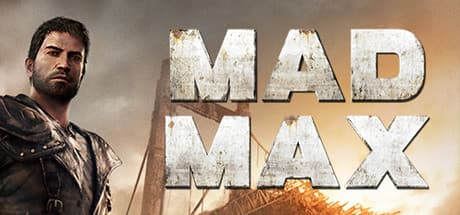
Mad Max is a third-person open-world action game developed by Avalanche Studios and published by Warner Bros. Games, released on September 1, 2015.
You play Max after his car is taken from him, and the entire game bends toward one goal: rebuilding a vehicle worth driving. That vehicle is the Magnum Opus, maintained by a hunchbacked mechanic named Chumbucket.
The story frames itself as revenge, but the moment-to-moment loop is about lowering regional threat, gathering resources, and upgrading the car.
The honest summary is that the car, not Max, is the protagonist. Travel, combat, and exploration all revolve around driving; on-foot sections feel like what happens after you park.
Whether you enjoy the driving itself is essentially the deciding factor for whether you finish the game.
Features and Systems
The core system is Magnum Opus customization. Engine, boost, body armor, ram, harpoon, side burners, tires, and paint can all be swapped, and every part carries a trade-off.
Heavier armor blunts acceleration; a lighter build is quick but gets shredded on contact. You cannot max everything at once, so the build reflects how you actually drive.
The harpoon is the other pillar. You rip tires off enemy cars, yank drivers out of their seats, tear down camp gates, sniper towers, and minefield stakes.
Chasing a convoy, stripping its escorts, and pulling the lead driver into the dirt is the most polished sequence in the game — if that clicks, the rest carries.
On-foot combat is a rhythm-based melee system built on attacks, counters, and dodges. Entering Fury changes the weight of each hit and makes crowds manageable.
Ammunition is treated as an extremely scarce resource, so this is a brawler, not a shooter, which is a genuine divide in taste.
Each region carries a threat level that you lower by clearing camps, removing snipers, destroying scarecrows, and reclaiming oil derricks. Lower threat means fewer ambushes and strongholds that generate resources on their own.
Scrap, the upgrade currency, comes from scavenging and destruction, while permanent character upgrades come from a wanderer named Griffa. Strongholds such as Jeet, Gutgash, Pink Eye, and Deep Friah each grant different benefits — water, fuel, ammunition — so the order you restore them shapes how rough the early hours feel.
The environment is an antagonist too. Water and fuel are consumables you have to manage, and sandstorms blind you while debris flies past.
That resource pressure is why simply driving across the wasteland stays tense.
System Requirements in Practice
The listed minimum is 64-bit Windows (Vista, 7, 8, 10), an Intel Core i5-650 at 3.2 GHz or AMD Phenom II X4 965 at 3.4 GHz, a GeForce GTX 660 Ti (2 GB or more) or Radeon HD 7870 (2 GB or more), 6 GB of RAM, 32 GB of storage, and DirectX 11.
Recommended moves to a Core i7-3770 at 3.4 GHz or FX-8350 at 4.0 GHz, a GeForce GTX 760 (3 GB or more) or Radeon HD 7970 (3 GB or more), 8 GB of RAM, and the same 32 GB of storage.
Those figures are 2015-era, so translate them. A GTX 760 sits in the 3 GB VRAM class, meaning current entry-level discrete GPUs — and the stronger integrated graphics found in recent laptop APUs — are generally within reach at 1080p with tuned settings.
On a mid-range desktop GPU, your time is better spent checking frame rate caps and v-sync behavior than worrying about whether it runs.
Memory and storage deserve more attention. The 8 GB recommendation reflects its era; 16 GB is the comfortable figure today if you keep a browser and background apps open.
Storage is explicitly 32 GB, so confirm free space first. Because this is a seamless open world you drive across continuously, an SSD noticeably reduces load and streaming hitches compared with a hard drive.
Vista and Windows 7 remain in the OS field because the original listing was never rewritten; the practical requirement is a 64-bit system. This is a DirectX 11 title, so do not expect DirectX 12-specific features.
Controller support is noted (including PlayStation 4 controllers), and since driving dominates, a gamepad with analog triggers is the more comfortable option. Keyboard and mouse work, but throttle and brake modulation clearly favor a pad.
Reception Patterns
Years after release, user sentiment has stayed consistently strong. Praise clusters around atmosphere, weather rendering, and the feel of vehicular combat.
Stripping an enemy car with the harpoon and running down a convoy is regularly called out as genuinely distinct within the open-world field. The world also avoids the thinness typical of licensed games — sand, rust, and heat feel deliberately built.
Its light performance footprint gets frequent mention as well.
Criticism, meanwhile, converges on one point: repetition. Camp clearing and threat reduction repeat across the whole map, and once collecting becomes the goal in itself, monotony sets in.
Simple on-foot combat and a low-key narrative arc are the other recurring complaints. The split is not about craft but about tolerance for a repeated loop.
Who It Suits
It wins outright for people who treat driving and car building as the point, and for anyone content to cross bleak terrain for hours. It also fits players who enjoy methodically clearing an open-world task list and want a long single-player sink.
If you want to live in a world where water and fuel are currency, it works as a companion piece to the films.
Comparing it to city-focused driving in Grand Theft Auto IV, or to the fortress-capture structure of Middle-earth: Shadow of War, sharpens the picture. Those lean on urban density and enemy individuality; Mad Max spends everything on the experience of driving the wasteland.
Early-Game Advice
Start by clearing whatever lowers threat in the regions you can survive. Your armor and engine are weak early, and pushing into high-threat territory gets the car destroyed.
Restoring Jeet's stronghold stabilizes your water supply and visibly softens the first few hours.
Scrap feeds both car upgrades and character progression, but early on prioritize the engine, the ram, and unlocking the harpoon. Once the harpoon works, gates and sniper towers that previously blocked you open up, and the map of reachable resources expands sharply.
Paint jobs and nitro tuning can wait.
Carry fuel cans and get into the habit of refueling at strongholds. Running dry far from base drops you into the worst situation in the game: crossing hostile ground on foot.
Caveats and Who Should Skip It
The main caveat is that most of the progression is the same task repeated. Clear camps, drop threat, gather resources — that structure holds to the end.
If icon-clearing tires you quickly, or if narrative momentum is what keeps you playing, expect a mid-game slump. Full completion takes a serious time investment, so deciding up front to follow only the main story is a legitimate plan.
Do not expect much from melee. The counter-driven design is readable but shallow, with no deep combos or build variety.
Anyone wanting firearm-led combat will find it thin.
Multiplayer is not on the table either. This is a purely single-player game, and its online functionality was retired on October 31, 2020, so the original online-linked features are no longer available.
On languages, the store listing includes Japanese among several supported languages. Coverage can differ by language — subtitles only versus full voice — so check the language table on the store page before buying.
Store listings also get edited over time, so treat the requirements and language fields shown at purchase as the authoritative version.
Finally, if you buy this expecting the visual adrenaline of Fury Road recreated end to end, the impression will not match. This is not a curated spectacle; it is a game about driving long, quiet stretches of desert and slowly finishing a car.
Whether that use of your time appeals is what decides your verdict.