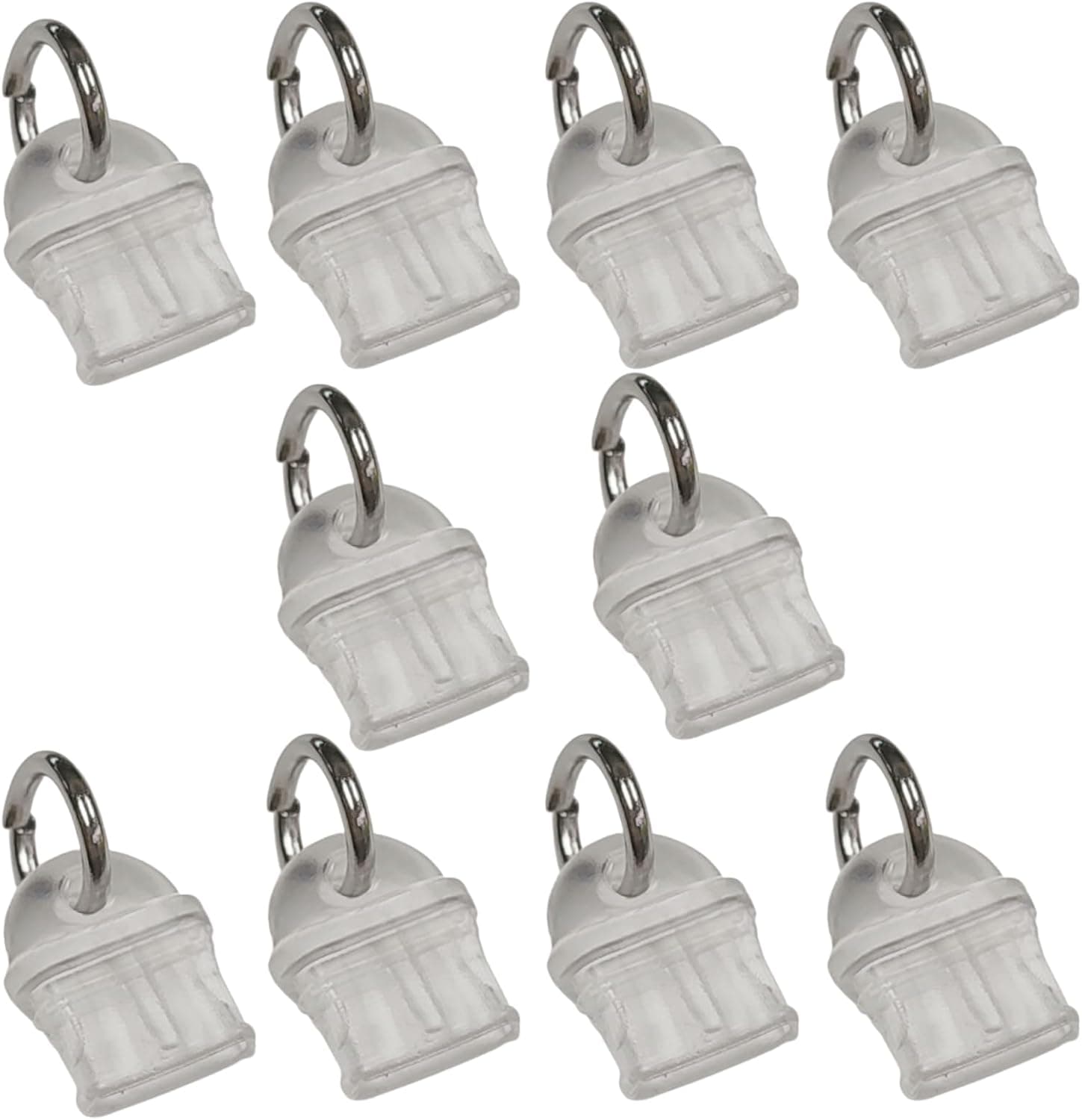
A USB-C dust plug costs pocket change, which makes it oddly hard to evaluate: does it actually help, or does it just add a chore? This article looks at the NYANDELMO ND-0494-R01-CL-ring-10pcs — ten clear caps with pull rings — using the published specs, pricing and review data, and gets specific about where it pays off and who should skip it.
Overview
These are plastic caps that sit in the opening of a USB-C (Type-C) receptacle to keep out dust and pocket lint. Each measures 1.1×0.9×0.5 cm, comes in clear, and includes a pull ring; the pack contains ten.
The short version: this suits people who carry a phone loose in a pocket, and anyone with USB-C ports that sit idle — but it is a poor fit if you plug and unplug several times a day on every port.
Since there is no electronics involved, quality here comes down to three things: dimensional fit, how hard the cap is to pull out, and how sturdy the ring is. Treat the ten-count not as "one per device" but as a consumable quantity that assumes some will be lost or torn.
Compatibility Guide
The supplied compatibility note is simply "devices with a USB-C port." Sockets, chipsets and power supplies are irrelevant here.
If the port is a physical USB-C receptacle, the cap fits — phones, tablets, laptops, mini PCs, power banks, handheld consoles, USB-C monitors and docks — regardless of whether the port runs at USB 2.0 speeds or supports Thunderbolt.
Data and power standards live inside the connector; the opening is the same shape.
The real failure points are physical, not electrical. Three things worth checking:
| What to check | Common problem | What to do |
|---|---|---|
| Case cutout | A thick rugged case recesses the port, leaving no room to grip the ring | Confirm you can reach the ring with a fingernail |
| Seating depth | On some devices the cap does not sit fully flush | Do not force a cap that will not seat |
| Ring routing | Tethering the ring to a strap means the cap tugs when you lift the device | Leave desktop gear capped permanently; tether only carry gear |
The ring exists so the removed cap does not vanish, but tethering it also means the cap dangles near the cable every time you plug in. In practice: leave stationary gear capped and untethered, and reserve the ring for devices you carry.
Product Info
The published specs: 1.1×0.9×0.5 cm, plastic, clear, ten pieces, ring included, USB-C compatible.
There is no claim of water resistance or impact protection — this is strictly a dust barrier. Clear plastic blends with any device color, but it also makes an installed cap hard to notice, so keep track of which ports you have capped before you wonder why charging "failed."
Pricing was ¥457 as captured on 18 June 2026, or roughly ¥46 per cap. That figure reflects the moment of capture and will move with sales and stock, so check the product page for the current price.
One inconsistency worth noting: the pricing entry is labeled "Amazon US" while the actual reference is Amazon.co.jp with a yen price.
The amount itself is entirely plausible for a small accessory, so it is cited here, but verify the store and region on the listing if that matters to you.
Reviews stood at 18 ratings and 4.2 out of 5 (84%) as captured on 18 June 2026.
Eighteen reviews is enough to suggest nothing is badly wrong, but too few to judge scattered issues like device-specific fit. A 4.2 in this category typically means most buyers had no trouble while a minority complained about caps being loose or hard to remove.
With a sample this small, the score can still shift.
Best Use Cases
- Anyone carrying a phone loose in a pocket or bag — lint in the charging port is one of the most common causes of "it stopped charging." Cutting the cleaning frequency alone justifies ¥46 a cap.
- Owners of mini PCs, docks or monitors with unused USB-C ports — idle ports collect dust unnoticed. These stay capped permanently, so the removal chore never appears.
- People with several USB-C devices — ten caps cover a phone, tablet, laptop, power bank and handheld with spares left over.
- Dusty or pet-heavy environments — workshops, homes with shedding pets, and outdoor use are where the dust barrier earns its keep.
Things to Know Before Buying
Put one on a port you charge daily and you will almost certainly stop using it. This is the main trap.
A cap on your nightly-charge phone port adds a step every single day; within a week it either lives off the device or gets lost. The ring reduces the losing part, not the chore part.
Start with the ports you rarely touch — satisfaction is far higher there.
There is no waterproofing. A clear cap looks like a seal, but only dust protection is claimed.
Buying these as splash protection will disappoint. The same goes for impact protection — they will not stop a drop from deforming a port.
Fit tolerance is the most variable trait in this product class. The 1.1×0.9×0.5 cm figure is nominal, while device-side openings vary with case and chassis design.
Caps that fall out on their own, or grip so tightly they resist removal, are not unusual at this price. Never pry with a metal tool — damaging the tongue inside a USB-C receptacle costs hundreds of times what this pack does.
Use a fingernail or a plastic pick and pull the ring straight out.
Listing metadata does not always match reality. Even here, the pricing label (Amazon US) disagrees with the actual reference (Amazon.co.jp, yen).
Small accessories like this often share one listing across colors and quantities, making it easy to order a variant other than the 10-pack clear with rings. Confirm the images, title and selected variant before ordering.
These do not fit headphone jacks, USB-A, HDMI or Ethernet. "Port cover" is a broad category; this product is USB-C only.
Other port shapes need their own plugs.
Who Should Skip This
Skip it if every USB-C port you own gets a cable daily; if you charge wirelessly and barely use the port (an unused port collects little dust anyway, and occasional compressed air handles it); and — importantly — if your port is already clogged and you want it working again. In that last case you need a wooden toothpick and compressed air, not a cap.
These are preventive, not restorative.
FAQ
Q. Can I charge with the cap installed? A.
No. It physically blocks the opening, so it comes off for every charge or data transfer.
Whether that chore is acceptable is the whole buying decision.
Q. Do I have to attach the ring to something? A.
No. The ring also works simply as a grip for removal.
On stationary gear, leaving it untethered is easier to live with.
Q. Will I ever use ten? A.
Treat them as consumables. Spread across a phone, tablet, laptop and power bank, you still keep spares — and at ¥457 as captured in June 2026, roughly ¥46 each, losing a few does not sting.
Q. Do they work on Thunderbolt or USB4 ports? A.
Physically yes, since the opening shape is common to USB-C. The internal standard has no bearing on cap fit.
Q. What if a cap is stuck, or keeps falling out? A.
For a stuck cap, skip metal tools and pull the ring straight out with a fingernail or plastic pick. If caps fall out on your device, accept the mismatch — never glue them in place, as adhesive that reaches the contacts is unrecoverable.
Verdict
At ¥457 with 18 reviews and a 4.2 average as captured in June 2026, this is not a decision worth agonizing over.
The reliable win is capping ports you do not use; buying them for a port you unplug daily leads to unused caps. Accept that there is no waterproofing and that fit tightness varies by device, and this lands among the better-value small accessories.