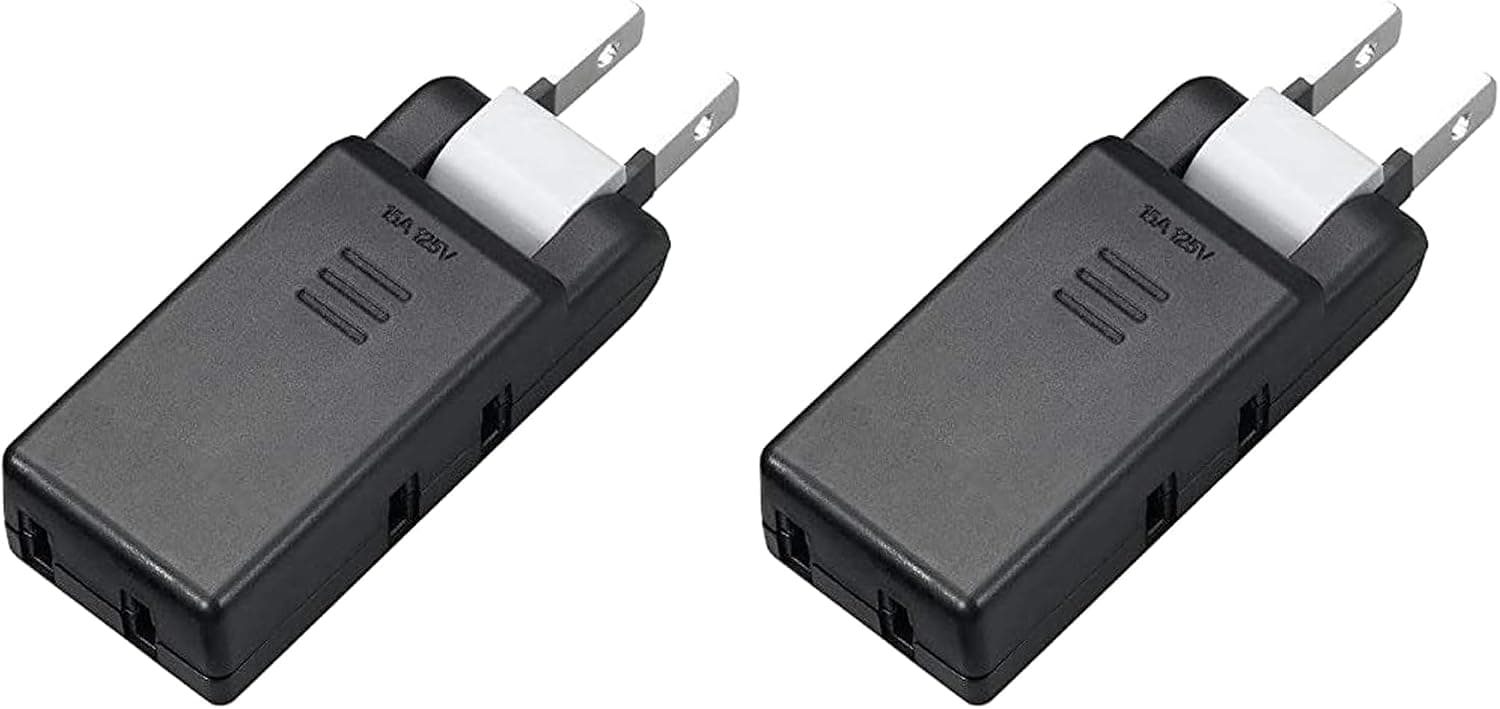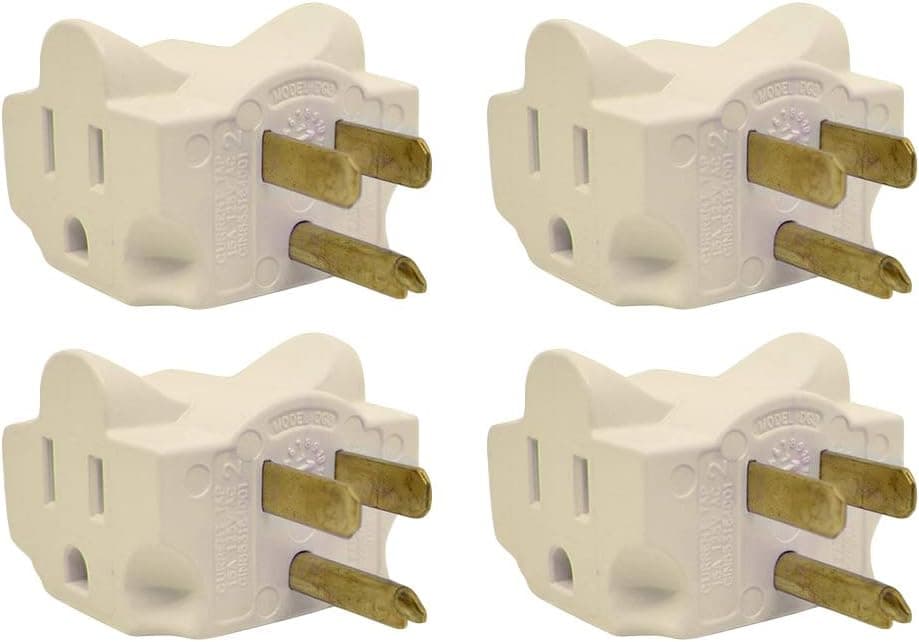
Overview
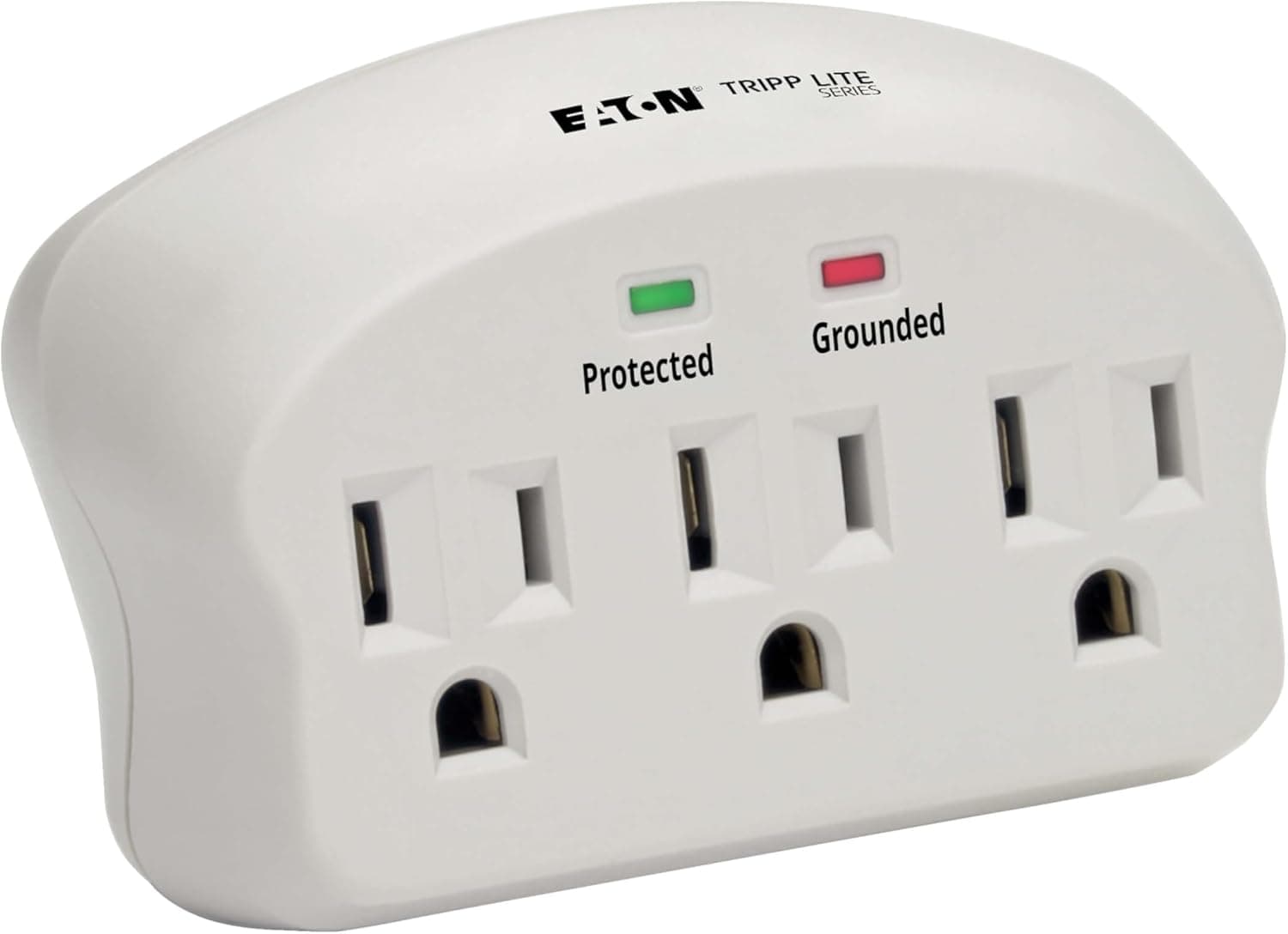
The Box of 4 Hug-A-Plug Dual Outlet 15a Adapter Plugs is a four-pack of compact adapters that turn one wall receptacle into two. There is no cord, no switch, and no surge protection — the design is stripped down to "plug it in and go." The color is ivory, the rating is 125V / 15A, and the plug is a two-blade NEMA 1-15 type with no ground pin.
The short verdict: this suits desks and furniture-backed outlets where there is no room to place a power strip. It does not suit gear that needs a ground connection or surge protection — desktop PCs, external drives, and network equipment among them.
Understood on those terms, it is an easy product to live with, and the four-pack quantity makes sense if you have several outlets to fix.
Amazon.co.jp shows 39 reviews at 98% positive (4.9 out of 5, captured 2026-08-30).
That is a strong score, but keep the sample size in mind — with fewer than 40 reviews, a handful of ratings moves the average.
Compatibility Guide
This adapter fits NEMA 1-15 receptacles: two parallel flat blades, no ground pin. North American wall outlets and standard Japanese outlets (the two-blade JIS C 8303 shape) are physically near-identical, so it will insert into a Japanese receptacle as well.
The output side gives you two of the same two-blade receptacles, rated 100–125V with a 15A total ceiling.
Four things trip people up in practice:
- Three-prong plugs will not fit. The output receptacles are two-slot only, so any plug with a round grounding pin is physically blocked. Desktop PCs, many monitors, microwaves, and washing machines fall into this group. If you need a ground, buy a grounded strip instead.
- 15A is the total across both outlets, not 15A each. A single wall receptacle is limited to roughly 15A (about 1500W) by the circuit behind it. Splitting one outlet into two does not increase the power available — this is the single biggest misconception about outlet adapters.
- Do not stack adapters. Plugging an adapter into an adapter adds contact resistance, generates heat, and makes the total load impossible to track. If you need more sockets, use one strip with more outlets rather than chaining splitters.
- The body may block the neighboring socket. Wide-bodied splitters can cover the second slot of a duplex receptacle. If you also want to use a bulky wall-wart AC adapter on the same outlet, check the physical clearance before committing.
On voltage: 100–125V operation means the adapter passes voltage through, not that it converts anything. It will not work on 240V systems, and the plug shape does not match European or UK outlets.
Confirm your destination's outlet type and voltage before packing it for a trip.
Product Info
Key specs: 15A max current, 125V rating, 2 outlets per adapter, NEMA 1-15 (2-prong) plug, ivory finish, four units per pack. There is no switch, no LED indicator, no USB port, and no surge-suppression component.
There is also no cord — the unit sits flush against the wall receptacle.
That bare-bones design is the point rather than a shortcoming. With no cord there is nothing to snag, and it fits behind furniture where a strip would not.
The trade-off is zero protection from surges or voltage spikes, so treat surge protection as a separate job handled by a separate device.
This article deliberately does not quote a price. The captured price figure is out of scale for four small molded plastic splitters — it works out to several thousand yen per adapter, well above what this class of product normally costs.
Publishing that number would mislead more than it helps. Check the product page for the current price before buying, and expect parallel-import stock and exchange rates to move it around.
The product has been on the market since roughly 2010, making it a long-running staple. No warranty period is stated.
The only contents are the four adapters themselves.
How It Compares
There are three broad ways to add sockets, and they suit different problems.
| Type | Characteristics | Best for |
|---|---|---|
| Two-outlet splitter (this product) | No cord, no ground, no surge protection | Tight spaces behind furniture or desks |
| Grounded 3-prong adapter | Passes the ground connection through | PCs and grounded appliances |
| Surge-protected power strip | Varistor, switch, multiple outlets | Protecting expensive equipment |
This product only makes sense for the first row. Buying it just because you want "more sockets" tends to end with a second purchase later, when a grounded device shows up and will not fit.
If the equipment you are powering is a PC or a monitor, a surge-protected strip is cheaper in the long run.
The four-pack matters too. It is efficient if you have several outlets to fix around the house, wasteful if you only need one.
Count your actual needs before comparing it against single-unit products.
In Practice
The quality difference between splitters comes down to grip. A loose fit means the adapter's own weight, plus tension from connected cables, slowly walks it out of the socket and creates an intermittent contact.
Reviews for this product do not flag that as a problem, but it is still worth checking the fit by hand a few days after installation.
One more practical note: a splitter does not reduce cable clutter, it adds one more starting point for cables. If your goal is a tidier desk, plan to pair it with clips or a cable channel rather than expecting the adapter alone to fix the look.
Best Use Cases
- Desks with no room for a power strip. When the wall outlet sits behind furniture, a cordless splitter works where a strip physically cannot. Ideal for low-draw pairs like a phone charger and a desk lamp.
- Fixing several outlets at once. With four in the box you can cover a bedroom, an entryway, and a kitchen corner in one purchase.
- Workshops running light loads. A work light plus a soldering iron is well within range. Check inrush current before running power tools.
- Renters who cannot modify wiring. Adding sockets without electrical work is a genuinely useful option when installation is off the table.
It is a poor fit if you need a grounded connection, if you are running high-draw appliances like heaters, air conditioners, or microwaves, or if you want surge protection. Any one of those three should push you to a different product.
Before You Buy
1. More sockets does not mean more power. A single receptacle supplies about 15A (roughly 1500W), and splitting it changes nothing.
Running two high-draw appliances at once trips the breaker before the adapter's rating even becomes relevant.
2. No ground means no grounded devices. Three-prong plugs will not physically fit, and forcing a two-prong workaround is a shock and noise risk.
Appliances that require a ground wire are simply out of scope.
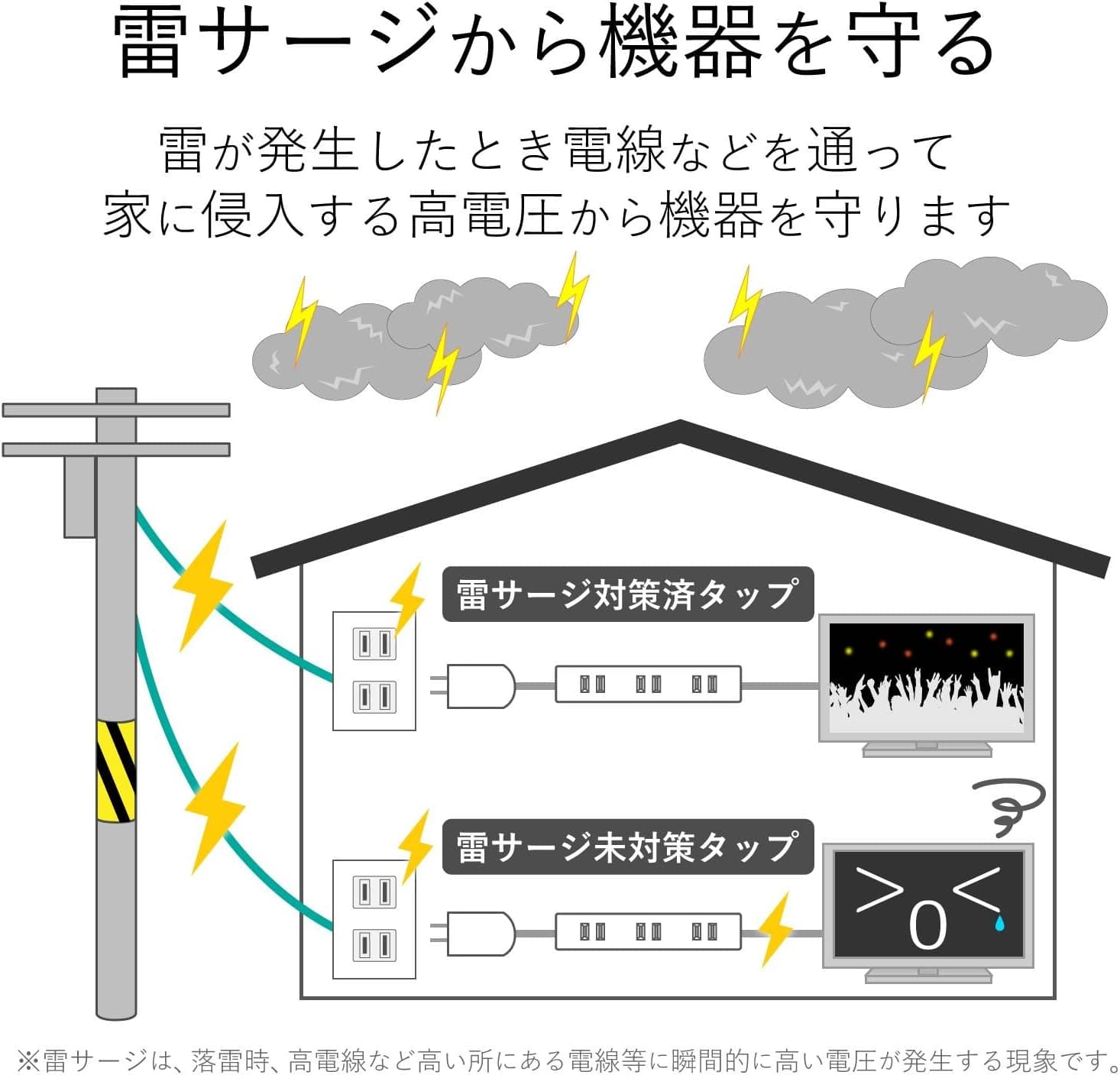
3. There is no surge protection. If you live somewhere with frequent lightning, or you have lost network gear to a strike before, do not expect this adapter to help.
Use a proper surge-protected strip on those circuits.
4. The listed price may be far off the real market. If the page price looks unreasonably high for four small plastic splitters, it may reflect parallel-import stock or a listing inconsistency.
Compare against similar products before assuming the number is normal.
5. Listing metadata can disagree with the actual product. Manufacturer names, model numbers, and other registered details on retail pages occasionally belong to a different item.
Confirm from the product photos and title that you are getting an ivory, ungrounded, two-outlet splitter in a pack of four. That one habit prevents most returns.
6. Domestic use in Japan is your own call. Products built for overseas markets may lack the PSE mark required under Japan's electrical appliance safety law.
Check the page and the unit marking; if in doubt, choose a domestic product.
FAQ
Q. Will it fit a Japanese outlet? A.
Physically yes — the two-blade shape matches and the 100–125V range covers Japan's 100V supply. Confirm whether the unit carries a PSE mark before making it a permanent fixture.
Q. Can I plug in a PC? A.
Most desktop PCs use a grounded three-prong plug and will not fit. A two-prong laptop adapter works, but remember there is no surge protection.
Q. Is it 15A per outlet? A.
No. 15A is the combined total, and the wall circuit behind it has the same ceiling.
Splitting the outlet does not add capacity.
Q. Can I stack two adapters? A.
Not recommended. Each extra contact adds heat and failure risk, and the combined load becomes hard to track.
Use a single multi-outlet strip instead.
Q. I only need one — is the four-pack wasteful? A.
Possibly. Single-unit equivalents exist; compare the per-unit cost before deciding.
Spares store fine in a dry place, but buying only what you need is simpler.
Q. The rating is 98% — is that enough reassurance? A.
98% from 39 reviews (captured 2026-08-30) is good, but discount it for the small sample. A high score reflects build quality; it does not change the fixed limitations of no ground and no surge protection.