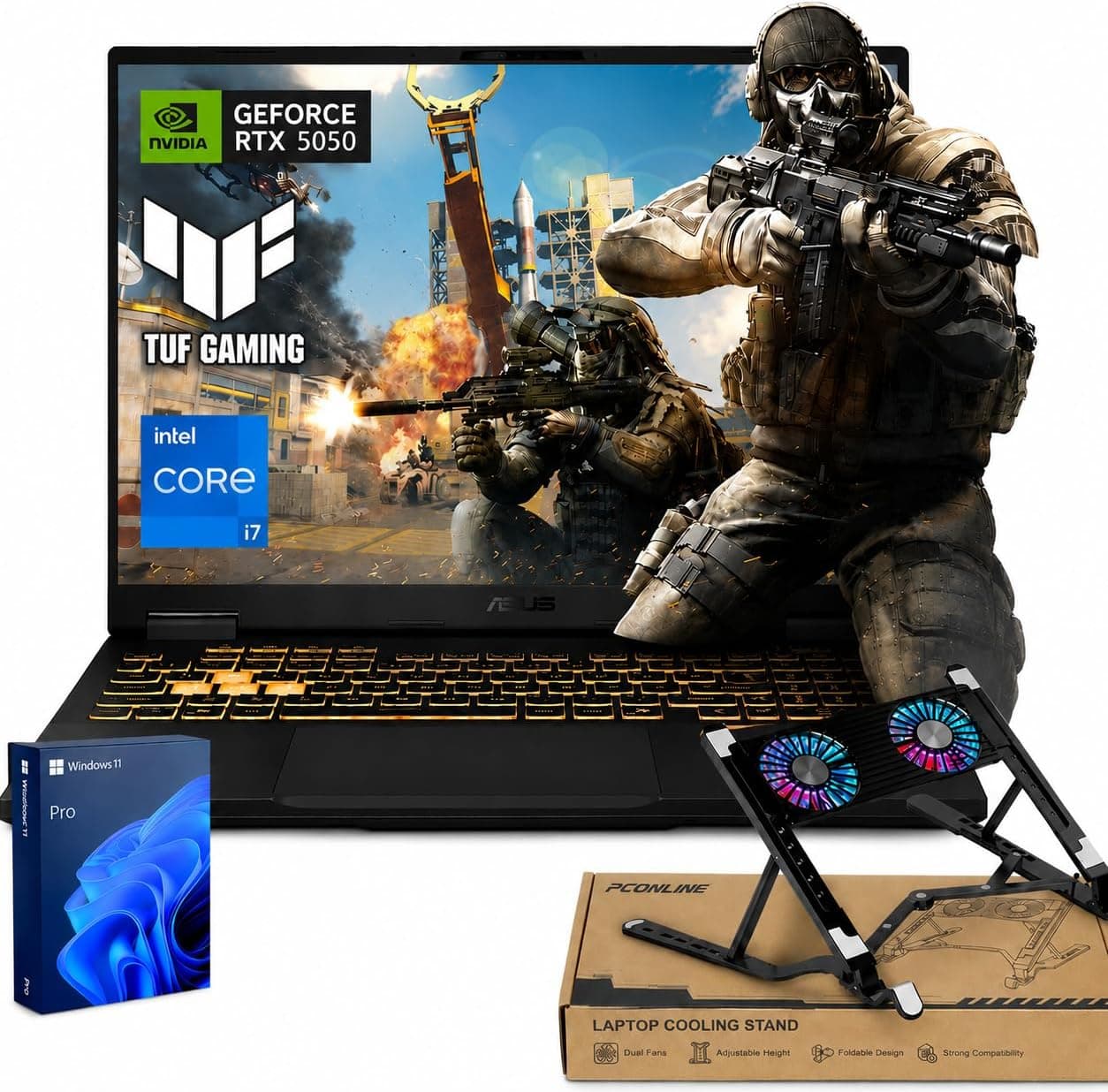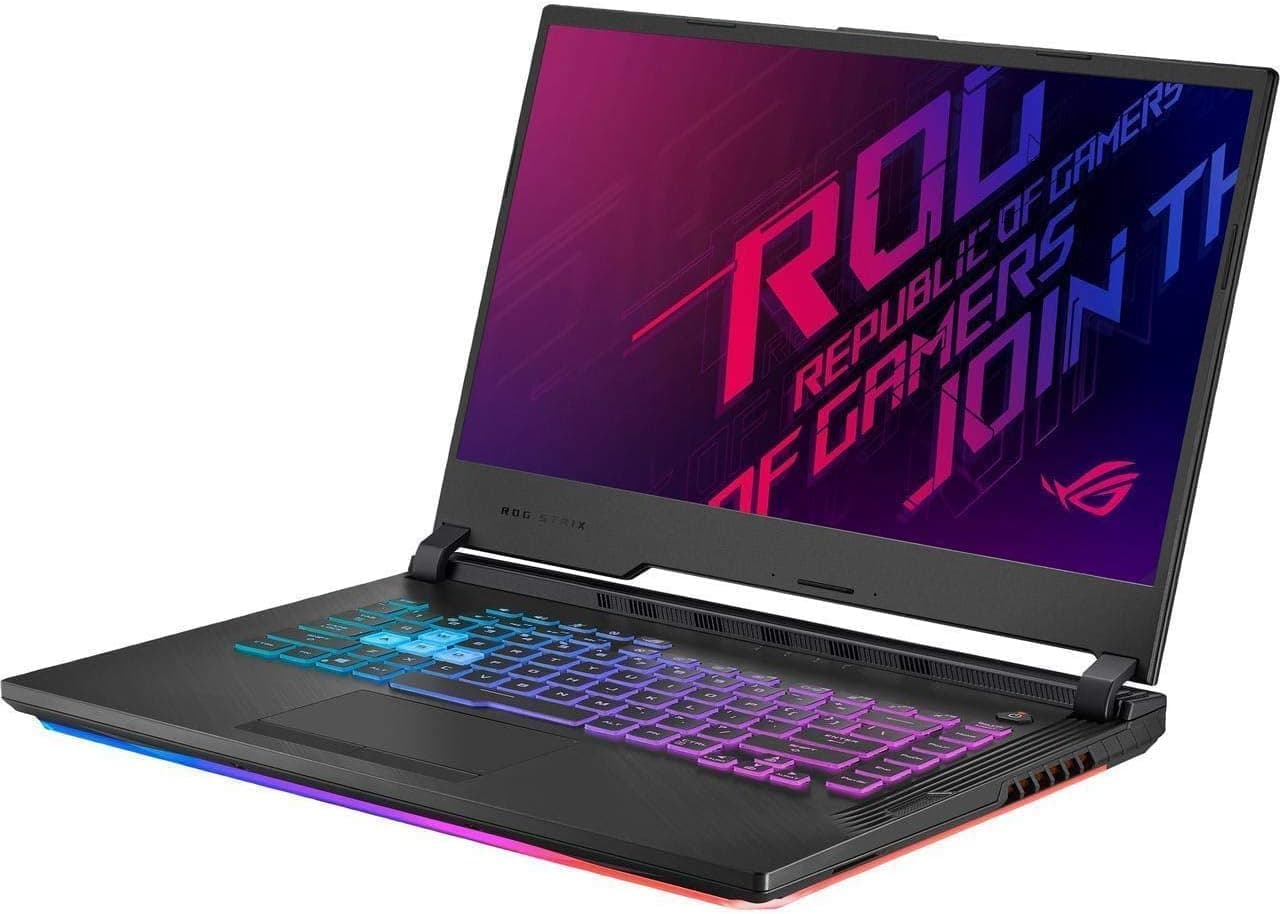
The ASUS ROG Strix GL531GU-WB53 is a 15.6-inch gaming laptop from 2019.
If you are looking at it in 2026, the real questions are whether it still plays what you want and what holds it back — so that is what this article focuses on.
Overview
The GL531GU-WB53 pairs a 9th-gen Intel Core i5-9300H (4 cores / 8 threads, 2.4–4.1GHz) with an NVIDIA GeForce GTX 1660 Ti.
The display is a 15.6-inch 1920×1080 IPS panel running at 120Hz.
It ships with 8GB of DDR4-2666 memory, a 512GB PCIe SSD, Windows 10 Home, and weighs about 2.4kg.
When it launched it sat in the entry-to-mid gaming tier: built to push competitive titles at high frame rates at 1080p, not to run modern AAA games maxed out or at 4K. Amazon.co.jp reviews stood at 4.4 out of 5 stars from 36 reviews (88% favorable) as of June 2026 — a good score, but 36 reviews is a small sample, so treat it as a hint rather than a verdict.
The short version: this machine only makes sense as a cheap used or refurbished buy. There is almost no reason to pay near-new money for it in 2026.
Compatibility Guide
There are no sockets or chipsets to match here, but what you can upgrade later and what you can plug in do matter.
| Item | Spec | Why it matters |
|---|---|---|
| Memory | 8GB DDR4-2666 | Upgrades must be DDR4-2666 SO-DIMMs; mixing speeds drops everything to the slower module |
| Storage | 512GB PCIe SSD | PCIe NVMe M.2 interface — stick to the same standard when adding or swapping |
| Power | 180W AC adapter | A generic USB-C charger will not run it; you need the proprietary barrel adapter |
| Battery | 48Wh | Small for a gaming laptop — treat this as a desk machine that travels occasionally |
| Wireless | Wi-Fi 5 (802.11ac 2×2), BT 5.0 | A Wi-Fi 6/6E router will not raise the link rate past Wi-Fi 5 limits |
| Video out | HDMI | Works with external monitors and TVs |
Memory is the upgrade that matters most. 8GB is clearly short in 2026, and if it ships as a single module you are also running single-channel.
On a GPU like the GTX 1660 Ti, moving to dual-channel alone can produce a noticeable frame-rate gain. Confirm the slot configuration on the spec sheet before you buy rather than discovering it during teardown.
Do not overlook power either. The 180W adapter is bulky, so real carry weight is well above 2.4kg.
"15.6-inch fits in a bag" is a statement about dimensions, not about daily portability.
Product Info
Key specifications:
- CPU: Intel Core i5-9300H (4C/8T, 2.4–4.1GHz)
- Memory: 8GB DDR4-2666
- Storage: 512GB PCIe SSD
- Display: 15.6-inch IPS 1920×1080 120Hz
- OS: Windows 10 Home
- Wireless: Wi-Fi 5 (802.11ac 2×2), Bluetooth 5.0
- Battery: 48Wh lithium-ion
- Weight: approx. 2.4kg
Wired connectivity includes multiple USB 3.1 Gen1 Type-A ports, HDMI output, a 3.5mm audio jack, and gigabit Ethernet.
That is a sane, unglamorous port selection: a gaming mouse, an external SSD, and a headset can all stay connected. The Ethernet port is still a genuine plus if you want online play that does not depend on Wi-Fi.
On price: the captured data shows ¥182,397 on Amazon as of 12 June 2026 and $1,562.99 on eBay as of 14 July 2026.
Neither figure should be read as this machine's real value. A 2019 GTX 1660 Ti laptop at that level is out of line with its product class — typical of discontinued-stock premiums or listing errors.
Actual prices vary widely by channel (used, refurbished, parallel import), so check the current price and item condition on the product page. Original launch pricing was around ¥150,000, warranty is ASUS's standard one year (retailer terms vary), and the box includes the AC adapter, power cord, and quick-start guide.
Real-World Performance
Exact numbers depend on your settings, but the character of a GTX 1660 Ti plus a Core i5-9300H at 1080p is predictable.
Competitive titles — MOBAs, lighter shooters, fighting games — are where the 120Hz panel earns its place, and the difference versus a 60Hz machine is easy to feel. Recent AAA releases require turned-down settings.
The GTX 1660 Ti has neither RT cores nor Tensor cores, so DLSS upscaling and frame generation are not available to bail you out. That is the decisive gap versus RTX-generation hardware.
Cooling and noise are part of the package too. Fitting a 45W-class CPU and a GTX 1660 Ti into a slim chassis means the fans get loud under load; plan on using a headset.
If you intend to run it hard for long sessions, clean the intakes and check the thermal paste after purchase — especially on a used unit.
How It Compares
If you can spend ¥150,000 or more in 2026, the right comparison is not another 2019 machine but a current-generation laptop. An RTX 5060-class notebook wins on DLSS support, refresh rate, standard memory capacity, and remaining warranty.
This machine only makes sense when it is substantially cheaper than those.
Against same-price non-gaming laptops, though, it holds up. An integrated-graphics office machine will not deliver playable 120Hz gaming.
If gaming is the point and your budget is used-market sized, it is a coherent choice.
Best Use Cases
- Buyers who can find it cheap used or refurbished — value-for-money is the whole argument here. Well below market rate, it is a fine 1080p entry machine.
- Competitive gamers — the 120Hz panel plus wired Ethernet suits play styles that prize frame rate and connection stability.
- Students or professionals who mostly game at a desk — run HDMI to a monitor at home and carry it only occasionally, and the 2.4kg / 48Wh weaknesses stay hidden.
- People comfortable upgrading memory — 8GB versus 16GB genuinely changes the experience. This machine rewards owners who open it up.
Before You Buy
1. 8GB of RAM is below the 2026 baseline. Many current titles list 16GB as recommended; at 8GB expect frame drops, longer loads, and stutter when background apps are running.
Budget for the upgrade — it is close to mandatory, not optional.
2. No DLSS, no ray tracing. Do not count on upscaling to extend this GPU's life.
Lowering settings is your only lever. Over a three-to-four-year ownership window, that can become fatal.
3. Do not take the listed price at face value. As noted, the captured figure (¥182,397 as of 12 June 2026) is out of proportion for this product class.
Discontinued models routinely show prices far from reality due to thin stock or marketplace sellers. The same ASIN can mix new, used, and parallel-import listings, so check the seller and condition.
4. Listing metadata is sometimes wrong. Amazon product pages are partly auto-linked, and manufacturer names, model numbers, or bundled items do not always match the physical product.
Verify the model number (GL531GU-WB53), the product images, and the stated CPU/GPU yourself. ROG Strix has many near-identical variants and is easy to confuse with lower-tier GTX 1650 configurations.
5. The battery is a consumable. 48Wh is the as-new design figure.
On a 2019 machine bought today, assume meaningful degradation and leave battery life out of your buying calculation.
6. It ships with Windows 10. If you plan to move to Windows 11, note that 9th-gen Core CPUs fall outside Microsoft's officially supported processor list, so upgrade eligibility depends on the unit and the requirements in force.
Check this first if long-term OS support matters to you.
Who should skip it: anyone targeting 4K or above-144Hz play, anyone who wants ray tracing, anyone doing video editing or 3D work that eats VRAM and RAM, anyone who needs real battery life, and anyone who wants the reassurance of an active warranty. If even one applies, a current-generation RTX laptop will serve you better.
FAQ
Q. Will it run modern games in 2026? A.
Many titles run at 1080p with medium-to-low settings, but max settings and high frame rates are out of reach. Fine for competitive games, underpowered for demanding AAA.
Q. Can I add memory? A.
It uses DDR4-2666 SO-DIMMs. Slot configuration (free slot, 8GB×1 versus 4GB×2) varies by unit, so confirm before buying.
Going dual-channel is one of the more noticeable upgrades on this GPU.
Q. Is 512GB enough storage?
A. A few large modern titles will fill it. Plan on an M.2 NVMe upgrade or an external SSD.
Q. How should I read the review score? A.
4.4 out of 5 from 36 reviews as of June 2026 — a good score from a small sample, and most of those reviews reflect the pricing and games of an earlier era.
Q. Is it good for travel? A.
Not really. About 2.4kg plus a 180W adapter, and 48Wh gives limited unplugged gaming time.
Desk-first with occasional trips is the realistic use.
Q. Can I use an external monitor? A.
Yes, via HDMI. Driving a larger or faster external display at home is a good way to offset the built-in panel's limits.
Product Disclosure (Amazon)
- ASIN: B07VWDKV4C
- Note: This article covers a manufacturer-made product based on Amazon listing details.