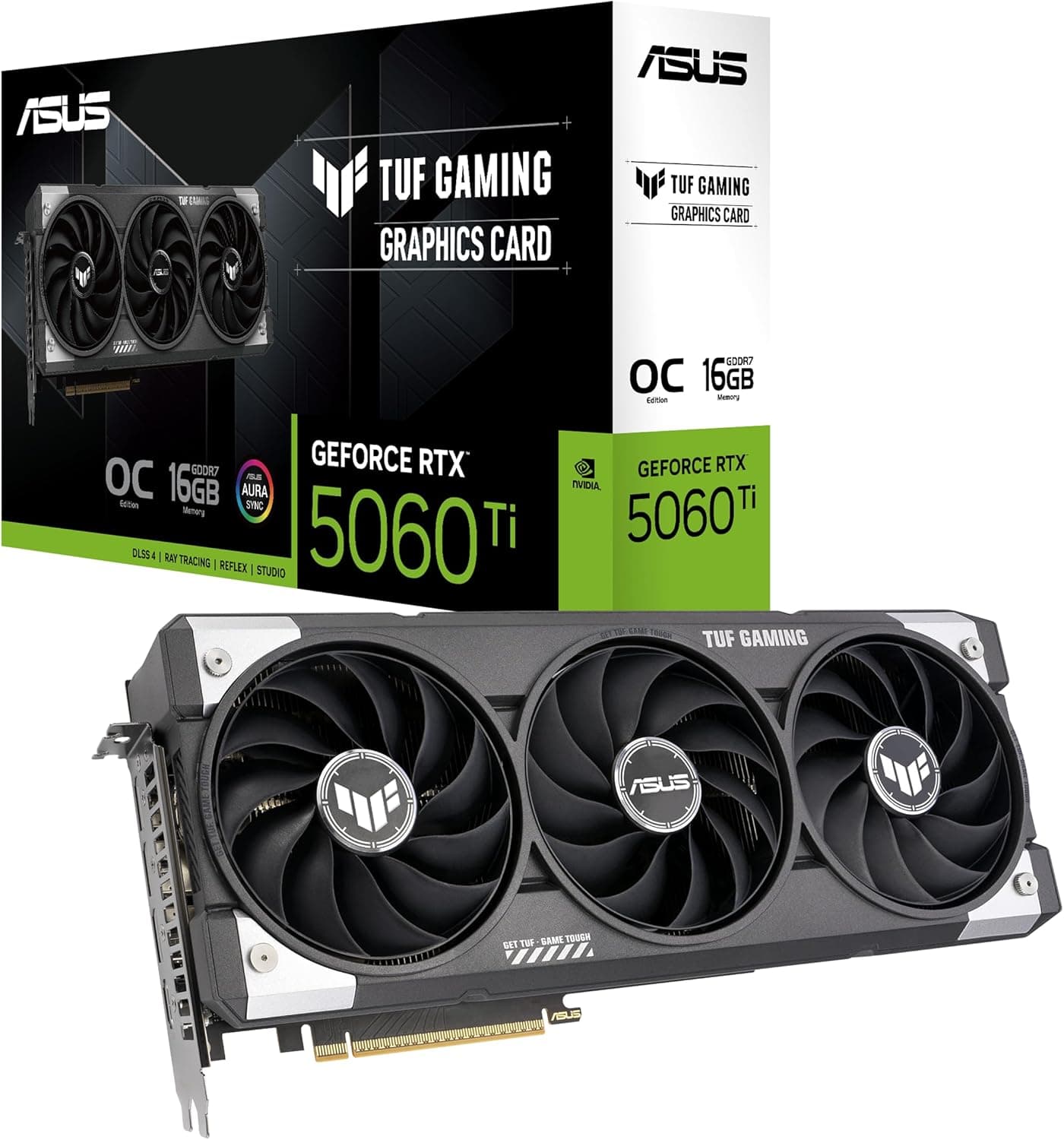
This article covers ASUS Dual GeForce RTX 5060 TI OC 16G GDDR7 ゲーミンググラフィックスカード.
Overview
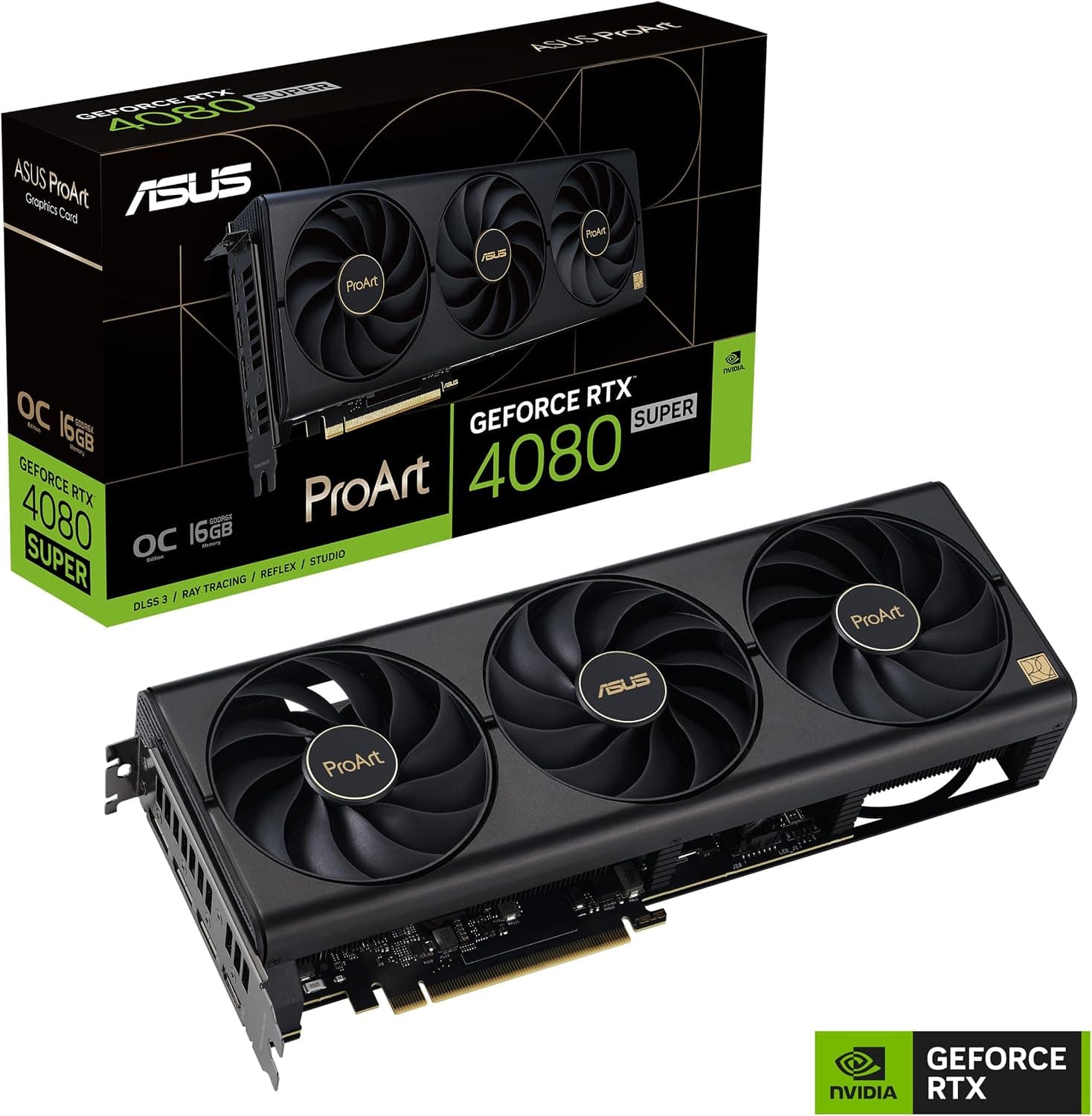
The ASUS Dual GeForce RTX 5060 TI OC 16G GDDR7 is a mid-high range graphics card built on NVIDIA's Blackwell 2.0 architecture. It features the GeForce RTX 5060 Ti GPU with 16GB of GDDR7 memory, a boost clock of 2632MHz, and PCIe 5.0 interface support. With 785 AI TOPS and DLSS 4, this card delivers impressive AI-accelerated performance for both gaming and creative workloads. This card adopts a compact 2.5-slot dual-fan design with ASUS's Axial-tech fans and a vented backplate for efficient cooling. The 0dB technology stops fans entirely under light loads, making it virtually silent during everyday tasks. Positioned as a bridge between mainstream and high-end, the RTX 5060 Ti excels at 1440p gaming while offering enough VRAM for content creation and AI applications.
Compatibility Guide
Interface: PCIe 5.0 x16 (backward compatible with PCIe 4.0/3.0 motherboards, though bandwidth may be slightly limited) Power: Single 8-pin PCIe power connector (no 12VHPWR); recommended PSU 600W or higher Dimensions: Approximately 227mm x 123mm x 52mm (2.5 slots). Fits most ATX and Micro-ATX cases; check clearance for Mini-ITX builds Display outputs: 1x HDMI 2.1b, 3x DisplayPort 2.1b — supports up to 8K/60Hz or 4K/144Hz
Product Info
Released in May 2025, the ASUS Dual GeForce RTX 5060 TI OC 16G GDDR7 occupies the mid-high tier of NVIDIA's Blackwell lineup, succeeding the RTX 4060 Ti. The 16GB GDDR7 memory delivers 448GB/s bandwidth, a significant upgrade over the previous generation. GPU: NVIDIA GeForce RTX 5060 Ti (Blackwell 2.0, 5nm process) CUDA Cores: 3840, Tensor Cores: 120, RT Cores: 30 Boost Clock: 2632MHz, Memory Clock: 2662MHz TDP: 145W, Recommended PSU: 600W+ * Warranty: 3 years (ASUS standard)
Best Use Cases
1440p gaming enthusiasts: The RTX 5060 Ti handles most modern titles at 1440p high settings with 60+ fps. DLSS 4 support provides extra headroom for demanding games. Not ideal for 4K ultra settings without DLSS. AI and creative professionals: With 785 AI TOPS and 16GB VRAM, this card excels at Stable Diffusion, AI upscaling, and video editing tasks. Users who need more VRAM for large models will appreciate the 16GB capacity. Silence-focused builders: The 0dB fan mode makes this card inaudible during web browsing, office work, or media playback. A great choice for quiet PC builds. Budget-conscious early adopters: Offers Blackwell architecture, DLSS 4, and PCIe 5.0 at a lower price point than RTX 5070 or 5070 Ti. Ideal for those who want the latest features without breaking the bank. ## Alternatives
NVIDIA GeForce RTX 4060 Ti 16GB: The previous-gen mid-high option. The RTX 5060 Ti offers significantly higher AI performance (785 vs ~350 TOPS) and faster GDDR7 memory. If the price difference is small, the 5060 Ti is the better buy. AMD Radeon RX 7800 XT 16GB: A direct competitor in the same price tier. The RX 7800 XT matches rasterization performance but falls behind in ray tracing and DLSS ecosystem. However, it often costs less and may appeal to pure rasterization-focused gamers.
Things to Consider
The card lacks a 12VHPWR connector, so it uses a standard 8-pin PCIe power cable. While this simplifies compatibility with older PSUs, it means you won't have the newer connector if you plan to upgrade to a higher-end card later. The 2.5-slot cooler is compact but not as thermally capable as 3-slot designs. Under sustained heavy loads, temperatures may run slightly higher than larger cards. Ensure good case airflow. For 4K gaming at maximum settings, consider stepping up to an RTX 5070 Ti or higher. The RTX 5060 Ti is best suited for 1440p; 4K requires DLSS or reduced settings. The 128-bit memory bus is a limitation inherited from the RTX 4060 Ti generation. While GDDR7 improves bandwidth, it still trails 256-bit bus cards in high-resolution texture streaming. ## FAQ Q: Can I use this card on a PCIe 3.0 motherboard? A: Yes, the card is backward compatible with PCIe 3.0 and 4.0 slots. However, bandwidth may be slightly limited, resulting in a small performance penalty (typically a few percent in games). It will work without issues. Q: Do I need 16GB of VRAM for gaming? A: For most current games at 1440p, 8GB is sufficient. 16GB becomes beneficial for 4K ultra textures, modded games, or future-proofing. It's also essential for AI workloads like Stable Diffusion. Q: Should I buy this or the RTX 5070? A: The RTX 5070 offers more CUDA cores and higher memory bandwidth, making it better for 4K gaming and heavy creative work. The RTX 5060 Ti is more affordable and ideal for 1440p gaming. If the price gap exceeds $200, the 5060 Ti offers better value for most users.
Product Disclosure (Amazon)
- Manufacturer: ASUS
- Seller: TAISEI商店
- Fulfilled by: TAISEI商店
- ASIN: B0F4DX2GLY
- Note: This article covers a manufacturer-made product based on Amazon listing details.