Game Overview
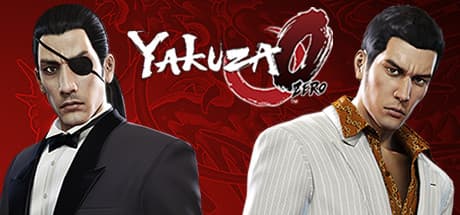
Yakuza 0 is set in 1988, split between Kamurocho in Tokyo and Sotenbori in Osaka. You alternate, chapter by chapter, between two protagonists: Kazuma Kiryu, a low-ranking member of the Dojima Family framed for a murder he did not commit, and Goro Majima, at this point in the timeline the manager of a Sotenbori cabaret club, who is offered his freedom in exchange for an assassination.
Both stories orbit a single vacant lot in Kamurocho and converge late in the game.
The loop alternates between story chapters and free roaming. Walk a few dozen meters in the street and thugs pick a fight, transitioning seamlessly into combat; finish it, return to exploration, and detour into substories or minigames along the way.
Following only the main story runs a little over 20 hours; playing substories and minigames easily pushes past 50.
The PC version launched on August 1, 2018 (JST), with an uncapped framerate and 4K resolution support, giving it more rendering headroom than the console releases.
Features and Systems
Combat is built around three fighting styles per protagonist, swapped in real time mid-fight. Kiryu switches between a fast, high-hit-count style, a grappling and throwing style, and a trump-card style unlocked through the story.
Majima has his own three, including bat-based and breakdance-influenced movesets that feel distinctly different from Kiryu's. Same system, but the two halves of the game play noticeably differently.
Progression runs on cash rather than experience points, reflecting the bubble-economy setting. Defeated enemies scatter money, and that money buys abilities directly.
The shift from the broke, fragile early game to the flush, powerful mid-game is unusually tangible.
Feeding that economy are the two headline side modes: Kiryu's real estate business and Majima's cabaret club management. Both are multi-hour management sims that, once running, generate steady income for combat upgrades.
Beyond them sit karaoke, disco, mahjong, shogi, darts, pocket circuit racing, claw machines, and an arcade stocked with playable period Sega titles.
Many substories are deliberately comedic, in sharp contrast to the serious main plot. That tonal gap is a defining trait of the series.
System Requirements
| Item | Minimum | Recommended |
|---|---|---|
| OS | Windows 7 64bit | Windows 10 64bit |
| CPU | Intel Core i5-3470 / AMD FX-6300 | Intel Core i7-6700 3.4GHz / AMD Ryzen 7 1700 3.7GHz |
| GPU | NVIDIA GeForce GTX 560 / AMD Radeon HD 6870 | GeForce GTX 1070 8GB / Radeon RX Vega 56 8GB |
| RAM | 4GB | 16GB |
The recommended tier is annotated as targeting 60FPS at 1080p on the High preset, so a GTX 1070 is the bar for near-max settings, not the bar for running the game at all.Check the review panel on this page or the Steam listing for the latest user review trend.
With settings lowered, this is a title that boots on fairly old hardware.
In practice, a GTX 1060 or GTX 1650 class card is a reasonable target for 1080p high at 60fps. Despite the open-world label, Kamurocho and Sotenbori are compact, area-based districts rather than a continuously streamed landscape, so GPU load is lighter than in recent large-scale open worlds.
Because the PC version uncaps framerate, aiming for 144Hz-plus output warrants a GPU above the recommended tier.
The 4GB minimum versus 16GB recommended gap is wide; 8GB may work with adjusted settings, but on a modern Windows desktop the OS and a browser consume enough that 16GB is the safer baseline. Storage size is not included in the provided data, so check the Steam store page for the current requirement.
As the notes state, Windows 10 and older are no longer supported by Microsoft, so plan around Windows 11 regardless of what the requirements table lists.
Reception Trends
The game has held a very high standing for years. Positive feedback consistently centers on it being the ideal entry point to the series: it sits earliest in the timeline, so no prior knowledge is needed.
The contrast between the serious main plot and the absurd substories, plus the sheer volume of side content, draws similar praise. "I meant to advance the story and lost hours to the real estate mode" is a recurring sentiment.
Criticism tends to land in three places. Combat repetition is the main one: street fights follow much the same pattern across dozens of hours.
Frequent forced encounters while simply traveling to an objective hurt pacing. Long non-interactive cutscenes divide opinion.
Technically the PC port is generally stable, though some setups need controller or frame-pacing adjustments.
Who It Suits
- Story-first players. The core of the game is human drama, not mechanics.
- Series newcomers. Earliest in the timeline and an origin story for the main cast.
- Anyone drawn to 1980s Japan. Phone booths, telephone cards, and period arcade cabinets are all reproduced.
- Minigame and detour enthusiasts. Management sims, mahjong, shogi, darts, retro arcade games.
- Players who want one long game. 20+ hours for the story alone, 50+ if you dig in.
Caveats and Who Should Skip It
Not for players who prioritize combat depth. Fights are designed around cheerfully flattening street thugs, not combo freedom or fighting-game nuance.
After enough hours, encounters settle into routine.
Not for players impatient with cutscenes. Some chapters run well over ten minutes without input.
Not for players who judge open worlds by size. Both districts cross in a few minutes on foot; this is density, not scale.
Contains strong violence and organized-crime themes. Blood and brutal beatdowns are explicit, and the nightlife setting brings sexual content into some substories.
Not suited to play with children in the room.
Completionists should budget time. Full clears demand substantial minigame grinding; being willing to stop after the main story changes how heavy the game feels.
Japanese text and voice acting are included, but confirm the supported-language list on the Steam store page before buying, as localization can vary by region and version.
Early Game Tips
Money is tight early, so abilities unlock slowly and combat feels stiff. Rather than rushing the plot, clear street fights and unlock health and defense abilities first.
Start Kiryu's real estate business and Majima's cabaret management as early as they open; income accumulates passively and accelerates mid-game upgrades. Don't force yourself through every minigame — sample the arcade and karaoke first, then go deep on whichever ones click.