Game Overview
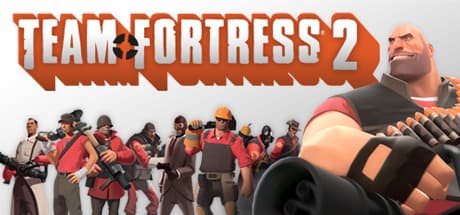
Team Fortress 2 is a free-to-play multiplayer FPS developed and operated by Valve, released in October 2007 and still running nearly two decades later. Matches are typically 12-vs-12 (server settings vary), with teams fighting over control points, a bomb cart, or the enemy's intelligence briefcase.
Raw aim is not what decides matches: who picks which class, and when the team pushes, matters far more.
The core loop is simple — pick a class at spawn, run to the front, die, and pick again. That last step is the point.
Death is designed less as a punishment than as a chance to re-cast your role. If enemy defenses are too solid, switch to Demoman and break them; if a Sniper has your team pinned, go Spy and get behind him.
Making that call every few dozen seconds is what playing TF2 actually feels like.
The Nine Classes
The nine classes are grouped into offense, defense, and support, and their roles are unusually distinct. Unlike modern hero shooters with sprawling rosters, TF2 assumes everyone understands a small cast deeply.
| Group | Classes | Role in short |
|---|---|---|
| Offense | Scout / Soldier / Pyro | Push and disrupt. Scout brings speed and capture power, Soldier brings rocket mobility and area damage, Pyro handles close-range denial |
| Defense | Demoman / Heavy / Engineer | Hold ground. Demoman places explosives, Heavy is a wall of damage, Engineer builds sentries, teleporters, and dispensers |
| Support | Medic / Sniper / Spy | Move the front line. Medic heals and grants invulnerability, Sniper removes targets at range, Spy disguises and cloaks to strike from behind |
These labels are the official classification, not a rule. Demoman is filed under defense but is a primary pick on offense too, and Engineer teleporters are frequently built to speed up attacking pushes.
Playing strictly by the category can actively work against your team.
Systems That Set It Apart
The biggest differentiator is that advanced movement exists as a side effect of weapons. Soldier fires a rocket at his own feet to launch himself; Demoman uses sticky bombs the same way.
Both cost health, which turns mobility into a trade — you pay HP to buy position. There is no skill ceiling on this, so years in, your movement is still improving.
The second pillar is the Medic's ÜberCharge. Healing a teammate builds a meter; releasing it makes the Medic and the healed target immune to damage for several seconds.
Since this is essentially the only reliable way to crack a dug-in defense, high-level matches become a game of forcing the enemy Über out before spending your own. It functions as a resource-management game as much as a shooting one.
Weapons are items, and the same class plays differently depending on loadout. They drop through play and can be traded, so spending money is not required, and stock weapons remain competitive.
On top of that sits an enormous library of cosmetics — the famous hats — which affect nothing mechanically but sustain their own economy.
System Requirements
By today's standards, the harder task is finding a PC that cannot run this game. The published figures:
| Item | Minimum | Recommended |
|---|---|---|
| OS | Windows 7 (32/64-bit) / Vista / XP | Windows 7 (32/64-bit) |
| CPU | 1.7 GHz processor or better | Pentium 4 (3.0GHz or better) |
| RAM | 512 MB | 1 GB |
| Storage | 15 GB | 15 GB |
| DirectX | 8.1 | 9.0c |
A recommended spec listing a Pentium 4 at 3.0GHz and 1 GB of RAM tells you these numbers date from launch and were never revised.
No GPU requirement is stated at all. Any PC bought in the last decade, integrated graphics included, will launch it.
Storage is the one real figure: 15 GB at both tiers.
But running and running well are different things. The engine is an old generation and leans heavily on single-core CPU performance, so a modern GPU paired with a weak CPU can still drop frames in a crowded 24-player server.
Practically, your money does more good on single-thread CPU performance and a high-refresh monitor than on a faster graphics card. If you plan to play competitively, a 144Hz-or-better display is the more sensible upgrade.
What Reviews Tend to Say
The game has held strong user sentiment for a very long time, and the praise is consistent: the sheer volume of content for a free game, characters that have not aged, and clearly defined roles that give even weak players a job to do. The cartoon art direction and over-the-top voice work land especially well with players tired of photorealistic military shooters.
Negative reviews cluster around operations. Long gaps between major updates, matchmaking wait times and quality, and the influx of automated clients (bots) are the recurring complaints.
This situation shifts over time, so check recent reviews yourself before committing. "Hard for newcomers to break into" is also a common refrain, which ties directly to the learning curve below.
Where Beginners Should Start
Trying all nine classes at once is a reliable way to quit. Start with Soldier or Heavy.
Soldier's splash damage rewards approximate aim and offers rocket jumping as a visible path to improvement. Heavy is slow but hits hard and survives, and simply walking in front of your team is already useful.
Spy and Sniper are the wrong first picks. Spy requires knowing enemy sightlines and movement habits, which you don't have yet, so you mostly die without learning why.
Sniper is pure aim and teaches you almost nothing about positioning. Medic is the best refuge when you have no idea what to do — holding the heal button is genuine contribution.
Server choice matters too. Beyond official matchmaking there are many community servers with very different atmospheres.
Large casual servers are chaotic, but that's a fine place to learn controls where dying doesn't matter.
Who It's For
- Players who like defined team roles. If you enjoy supporting and fortifying more than dueling, Engineer and Medic let you contribute without winning gunfights.
- Players who want self-contained sessions. No battle-royale-length tension; you can stop after 30 minutes.
- Players tired of realism. The exaggerated cast and comedic staging are specific to this game.
- Players who want a long improvement curve. Rocket jumping and Über management have no visible ceiling.
- Players worried about hardware. The requirements are low enough that a non-gaming PC gets you in the door.
Who Should Skip It
The real barrier is accumulated knowledge. After nearly two decades, existing players know map geometry, weapon behavior, and splash ranges by muscle memory.
Closing that gap takes dozens of hours, during which you'll be killed by things you don't understand. If you want to be competitive within a few matches, look elsewhere.
In-game teaching is not modern. Weapon specifics and class matchups are barely explained.
You'll need to research or lose your way to understanding, and players who find that tedious tend to leave early.
Match quality is inconsistent. A zero-barrier free game means lobby quality varies by server and time of day, and automated clients have been a problem in some periods.
For consistently serious play you'll need a curated community server or third-party matchmaking.
Don't expect much on the Japanese-language side. The interface is localized, but voice work stays in English and much of the humor lives in English delivery.
The population skews international, so voice and text chat are effectively English, and connecting to overseas servers adds latency worth checking if you're sensitive to it.
Finally, if cosmetics mean nothing to you, you're writing off a large slice of the game. Much of TF2's update cadence and economy revolves around hats.
Nothing about it affects performance, so there's no real harm — but it does change how long the motivation lasts.