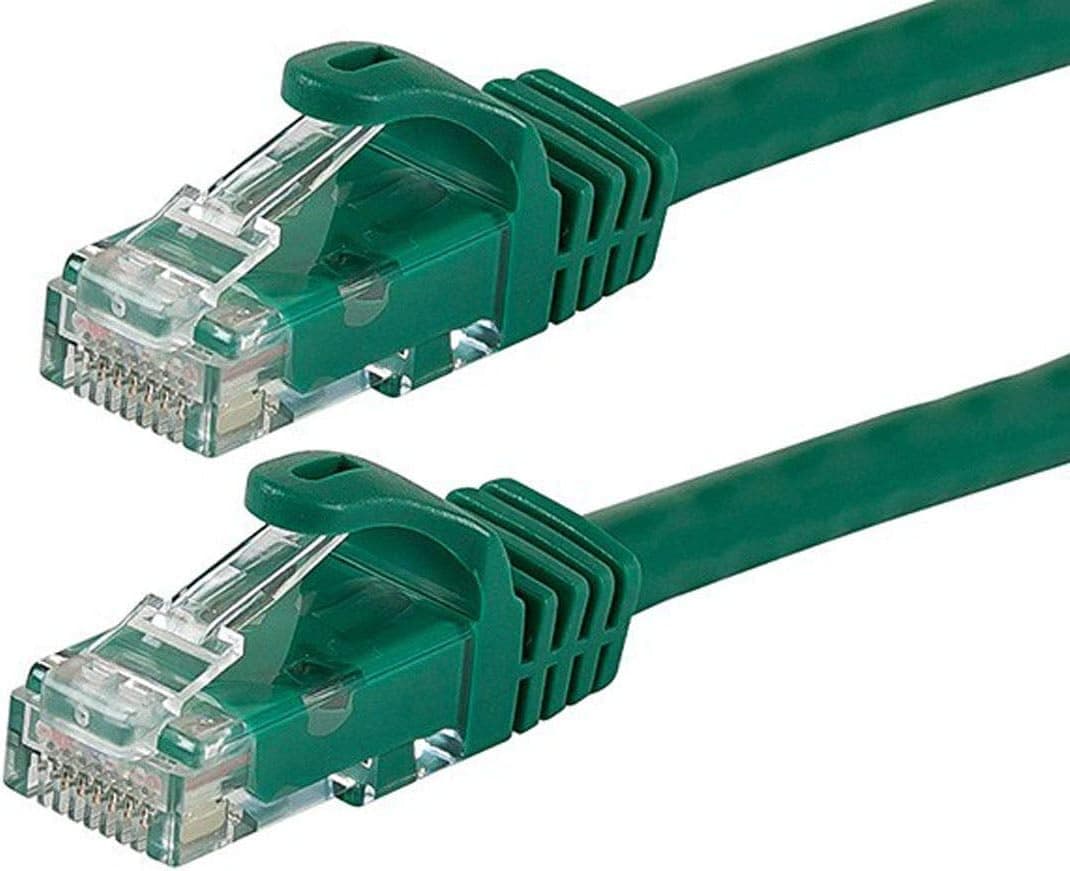
Overview
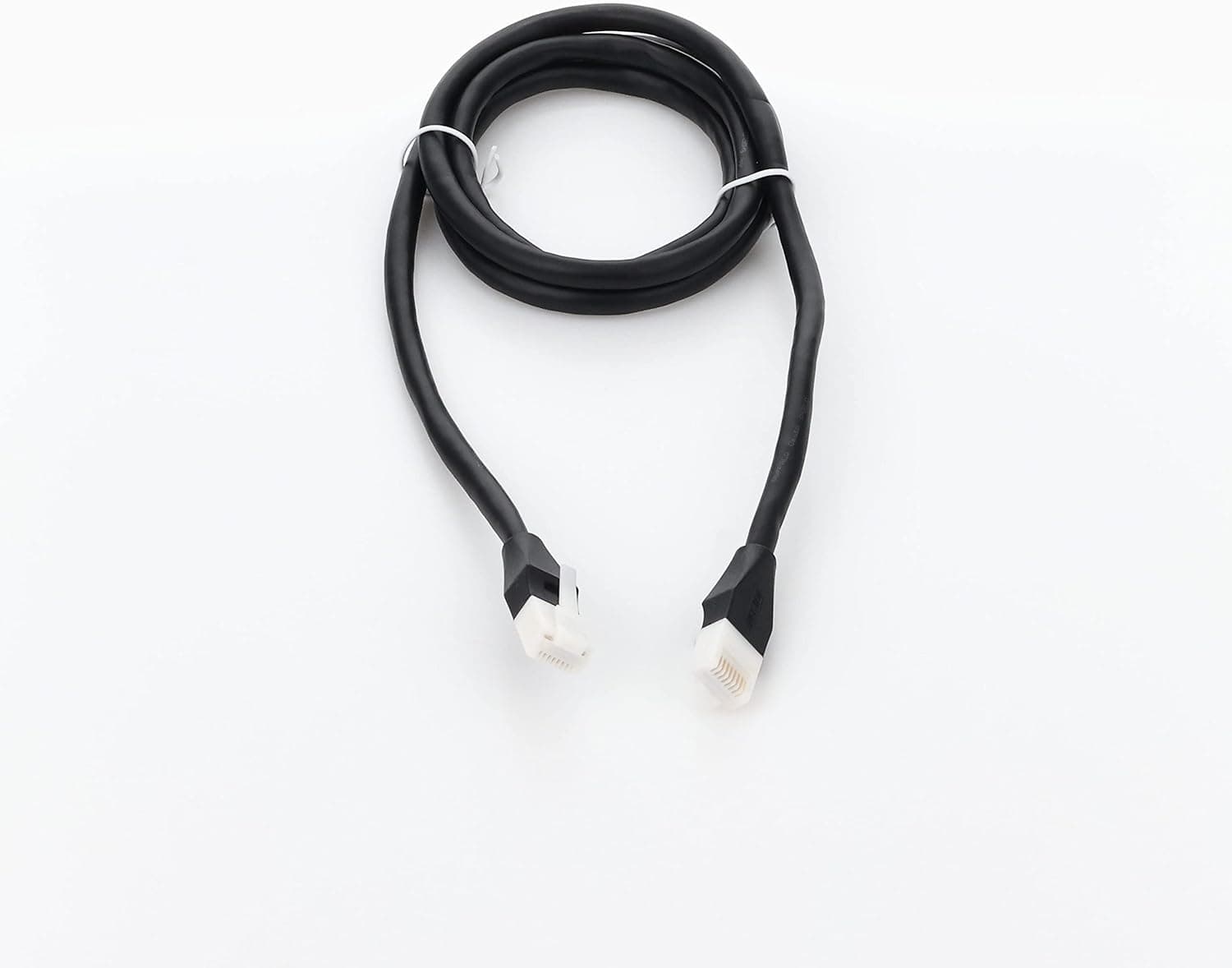
The shiverpeaks Basic-S 7.5m Cat7 S/FTP (S-STP) is a shielded LAN cable terminated with RJ45 connectors at both ends.
The short verdict: it is a solid pick if you need to run a wired link across rooms past electrical noise sources, but it is the wrong purchase if you assume "Cat7" alone will give you a 10 Gbps network. Cable never sets your speed — the devices at both ends do.
On paper: 7.5 m length, RJ45 connectors, 10 Gbps rated data transfer, S/FTP (S-STP) shielding, blue jacket, 0.25 kg weight.
That 250 g for 7.5 m is meaningful — it reflects the foil-per-pair plus overall braid construction, which makes the cable genuinely thicker and stiffer than an unshielded run.
That stiffness matters later.
The Cat7 and RJ45 Catch (read this first)
The ISO/IEC Cat7 (Class F) specification was written around GG45 and TERA connectors, not RJ45. Almost everything sold as a "Cat7 cable" — this one included — is Cat7-grade bulk cable terminated with ordinary RJ45 plugs.
Because the connector is RJ45, real-world performance lands inside the Cat6A (10GBASE-T, 500 MHz) envelope.
This is not a defect. Every consumer and office device uses RJ45, so a GG45 build is not a practical option in the first place.
But the belief that "Cat7 is faster than Cat6A" is wrong. It is more accurate to say the cable protects the same 10 Gbps ceiling with heavier shielding.
Keep that in mind when judging whether the price premium is worth it.
Compatibility Guide
The compatibility note states it works with any device that has an RJ45 Ethernet port. In connector terms that covers desktops, laptops, consoles, smart TVs, NAS units, switches, routers and PoE gear.
Cat7 cable is backward compatible with Cat6A, Cat6 and Cat5e, so you can drop it into an existing network as a direct replacement.
Three things are actually worth checking:
| Check | Requirement | What happens if unmet |
|---|---|---|
| Port speed at both ends | 10GBASE-T NIC and switch | A 1G port caps you at 1 Gbps; the cable changes nothing |
| Run length | 10GBASE-T allows up to 100 m | 7.5 m has huge margin; distance will not degrade the link |
| Shield grounding | Metal-bodied STP ports / shielded hub | It still links, but the shield does not deliver its rated benefit |
Length is a non-issue. The 100 m 10GBASE-T limit makes 7.5 m less than a thirteenth of the budget.
In practice 7.5 m is about right for routing along a wall and behind furniture; in a 4–5 m room you will have slack left over.
Coil the excess loosely — roughly a 15 cm diameter loop — rather than winding it tight.
Grounding is the commonly missed part. S/FTP only performs as specified when the shield is reliably grounded somewhere.
Plastic-bodied consumer switches provide no grounding path, so the shield ends up being marginally better than nothing. Worse, if the shield is grounded independently at two devices sitting at different potentials, you can create a ground loop that actually adds noise.
Ideally the shield is grounded at one end only.
Product Info
shiverpeaks is a German cable and PC-accessory brand; Basic-S is its standard line. This variant is 7.5 m, blue, RJ45 at both ends, S/FTP (S-STP), 0.25 kg, and ships as the bare cable with no accessories.
The gold-plated contacts resist oxidation, which generally keeps contact resistance stable across repeated plug cycles.
Pricing was ¥5,194 as captured on 14 May 2026 (Amazon.co.jp, ASIN B00EZ44VHU).
That is clearly at the expensive end for a 7.5 m patch cable — several times what a domestic Cat6A of similar length can cost.
Import status and the double-shielded construction explain part of it, but prices move constantly with sales and exchange rates, so always confirm the current figure on the product page. The eBay entry shows only a search result rather than a specific amount, so treat it as a rough market reference at best.
The review data deserves scepticism. As of 14 May 2026 the listing shows 5,660 ratings at a flat 5.0 out of 5 (100%).
A perfect 5.0 sustained over 5,000-plus ratings essentially does not happen in reality. Amazon frequently merges ratings across length and colour variants, and sometimes leaves reviews from an unrelated product attached.
Treat the figure as weak evidence that this is not a notoriously bad product, not as a quality guarantee — read a few actual review texts and check whether any of them describe this 7.5 m variant.
Comparison With the Alternatives
For the same job — wiring a roughly 7.5 m run — you have three families of choice:
- Domestic Cat6A (Elecom, Buffalo and similar) — snag-free latch designs and softer jackets tuned for Japanese homes. Same 10 Gbps ceiling as this cable, clearly cheaper. For ordinary indoor routing this is enough.
- Cat7 S/FTP like this one — heavier shielding pays off when the run parallels power cables or passes near a breaker panel or motorised equipment. The trade-off is a thicker, stiffer cable that dislikes tight bends.
- Cat8 (40 Gbps rated) — a short-reach data centre spec. Most homes cannot even saturate 10GbE gear, and Cat8 stock skews toward very short lengths.
The deciding question is simple: does the run pass near a noise source? If not, Cat6A is enough.
If yes, an S/FTP cable like this one earns its place.
Best Suited For
- Runs that pass electrical noise sources — bundled with power strips, or routed near a breaker panel, microwave or motor equipment. Double shielding does real work here.
- People already on 10GbE, or planning it soon — with a 10GBASE-T NIC and switch in place, 7.5 m is well within the range where you get full throughput. It also works as pre-wiring for a future 10G upgrade.
- Anyone wiring a PC, NAS or console in a room away from the router — 7.5 m is enough to route along walls, and a practical escape from unstable Wi-Fi.
- People who colour-code cabling — the blue jacket is easy to pick out behind a rack or TV stand, which makes later maintenance far less painful.
Before You Buy
1. A new cable does not make your internet faster. This is the most common misconception.
If your ISP plan is 1 Gbps, Cat7 leaves you at 1 Gbps. The cable only matters when both ends are 10G-capable and the run itself is the bottleneck — LAN transfers to a NAS, for example.
Verify your NIC and switch are 10GBASE-T before buying.
2. It is thick and stiff, so it is poor at tight routing. Foil plus braid means a larger outer diameter and a larger minimum bend radius; the 250 g weight is the giveaway.
For running under a door, through a window frame, or into a 1 cm gap behind furniture, a flat or slim Cat6A is far easier to handle. Forcing a sharp bend risks internal damage and degraded characteristics.
3. The shield only counts once it is grounded. As above, connecting two plastic-bodied devices limits what the shielding can do.
Do not treat "I bought S/FTP" as noise mitigation complete — pair it with shielded hubs or keystones, or at minimum aim for grounding at one end.
4. No snag-free latch is claimed. The specs make no mention of the break-resistant connector latches common on domestic products.
For ports you unplug frequently, a cable that explicitly advertises latch protection will last longer.
5. Weigh what the price actually buys. ¥5,194 at capture time is clearly above domestic Cat6A with the same 10 Gbps ceiling.
What you are paying for is shielding and the availability of a 7.5 m length — not speed.
If your noise environment is unremarkable, putting that difference toward a 10GbE switch or NIC will do far more for perceived performance.
6. Verify the listing details yourself. Amazon product pages sometimes carry manufacturer, model, length or colour data that disagrees with the item shipped, or mix information across variants — the merged review count is a symptom of the same thing.
Before ordering, confirm from the product image and title that you are getting the 7.5 m blue Cat7 S/FTP, and re-check the variant selector if length options are offered.
FAQ
Q. Will Cat7 speed up my internet? A.
No. Your ISP plan and the port speeds on your router and PC set the ceiling.
On a 1 Gbps line with 1G ports, Cat5e and Cat7 perform identically.
Q. Is there any point choosing Cat7 over Cat6A? A.
With RJ45 connectors the achievable speed is the same 10 Gbps. The difference is shielding thickness, which only matters on runs passing noise sources.
Otherwise Cat6A is sufficient.
Q. Is 7.5 m too long? Will the signal degrade? A.
No. 10GBASE-T is specified to 100 m, so 7.5 m has enormous margin.
Just avoid winding the slack tightly — a loose coil is better.
Q. Can I use it for PoE? A.
The 4-pair S/FTP construction is the type generally used for PoE, but the data provides no explicit PoE/PoE+/PoE++ rating. For powering cameras or access points, confirm PoE support on the product page.
Q. Will it reduce lag in games? A.
Moving from Wi-Fi to wired reduces jitter and feels noticeably better. If you are already wired on Cat5e or Cat6, switching to Cat7 will not change in-game responsiveness.
Q. Can I trust the 5.0 rating from 5,660 reviews? A.
Treat it as background only. A sustained perfect score at that volume is implausible and suggests merged variant reviews.
High volume shows the product circulates; it does not certify quality.
Product Disclosure (Amazon)
- Manufacturer: shiverpeaks
- Seller: M_plus_L
- Fulfilled by: M_plus_L
- ASIN: B00EZ44VHU
- Note: This article covers a manufacturer-made product based on Amazon listing details.