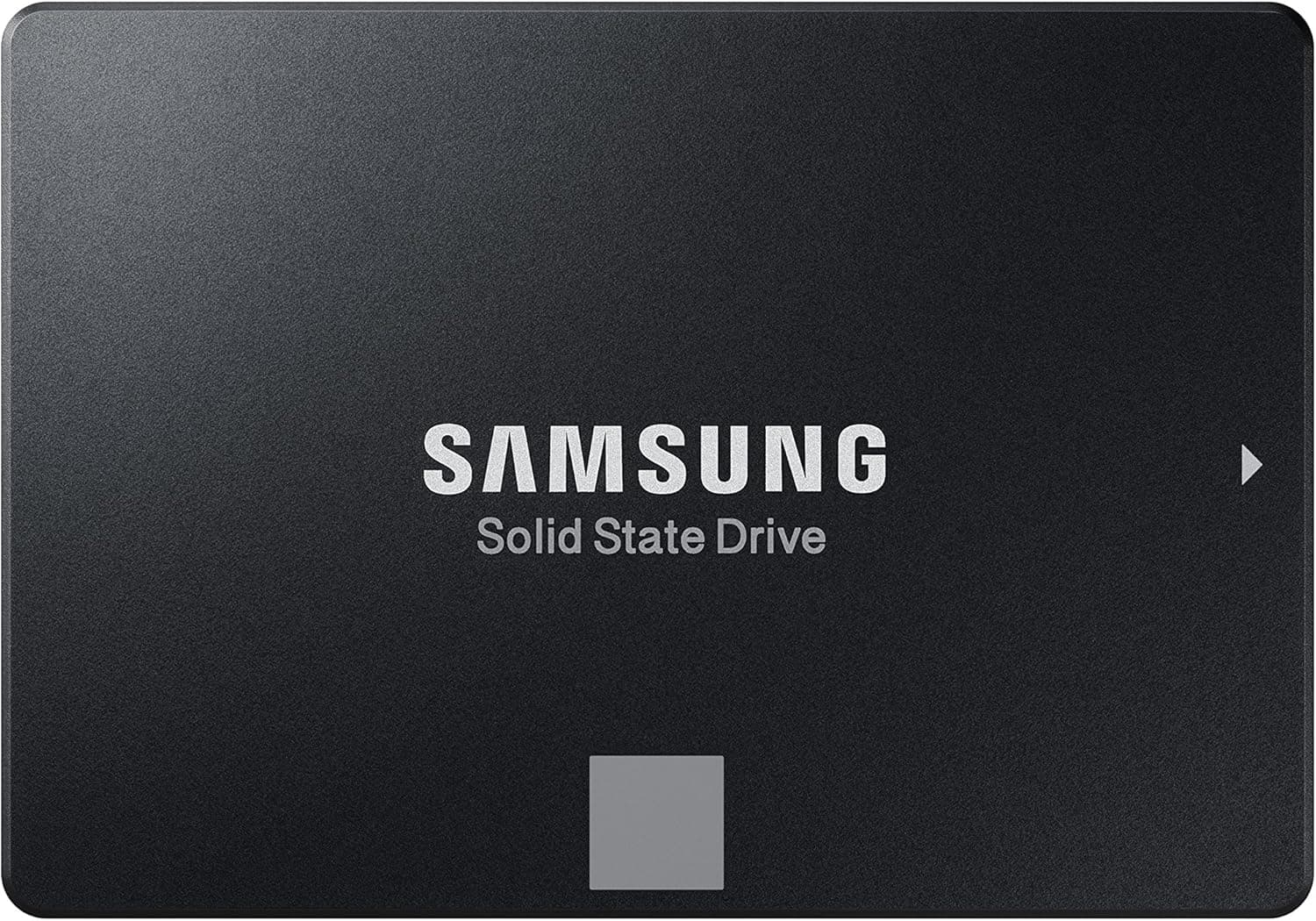
This article covers Samsung 970 EVO Plus 500GB PCIe (最大転送速度 3.
Overview
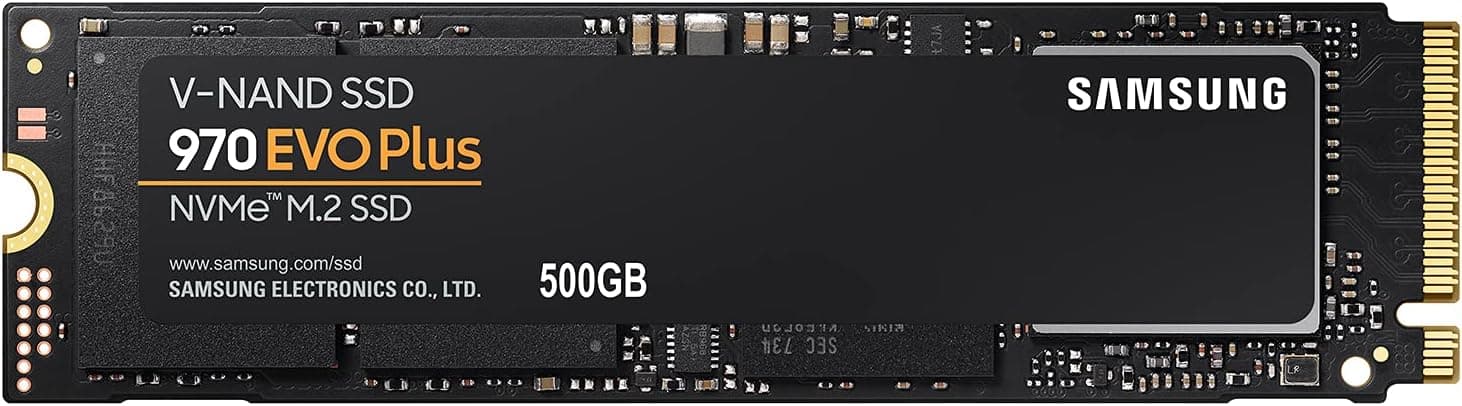
Samsung's 970 EVO Plus is a PCIe Gen 3.0 x4 NVMe M.2 2280 internal SSD that delivers sequential read speeds up to 3,500 MB/s and writes up to 3,200 MB/s. This 500GB variant (model MZ-V7S500B/EC) combines Samsung's 64-layer TLC NAND flash with a proprietary Phoenix controller and 1GB of DRAM cache, making it a well-rounded storage solution for gamers, creators, and everyday PC users alike. Positioned in the mid-to-high-end segment of the PCIe 3.0 NVMe market, the 970 EVO Plus offers a compelling balance of performance and affordability. Even as PCIe 4.0 drives become more common, this drive remains a solid choice for systems that haven't yet made the leap to the newer interface. It's particularly well-suited as a primary OS drive or as a game library SSD where the extra speed over SATA is immediately noticeable. The drive uses the standard M.2 2280 form factor, fitting directly into any compatible M.2 slot on a desktop motherboard or laptop. The included Samsung Magician software simplifies firmware updates, performance optimization, and drive health monitoring, adding to the overall user experience.
Compatibility Guide
Interface: PCIe Gen 3.0 x4 (NVMe 1.3). Requires an M.2 slot that supports PCIe 3.0 or higher. Backward compatible with PCIe 4.0 slots, but speed remains at PCIe 3.0 limits. Form Factor: M.2 2280 (80mm length). Compatible with most desktop and laptop M.2 slots that accept dual-sided modules. Check for clearance in ultra-thin laptops. Memory Type: Not applicable — this is an SSD, not system memory. Storage Interface: NVMe. The system BIOS/UEFI must support NVMe devices. Older motherboards without NVMe support may not boot from this drive without a modded BIOS or third-party driver. Power Consumption: Average 5.5W during active operation, 0.03W at idle. No special PSU requirements necessary; almost any power supply will handle it. Compatibility Notes: Works seamlessly with modern AMD (AM4/AM5) and Intel (LGA1200/1700/1851) platforms. Older chipsets like Intel H310 or AMD A320 may require a BIOS update for NVMe support.
Product Info
Release Date: January 2019 (original launch); updated SKUs available through 2020. Price Range: Approximately $50–$70 USD for the 500GB model (prices fluctuate). Warranty: Samsung offers a 5-year limited warranty for the domestic authorized model; TBW endurance limit applies (300TB for 500GB). Supported Platforms: Desktop PCs, laptops, and compatible gaming consoles (via USB enclosure). * Market Positioning: Mid-to-high-end PCIe 3.0 NVMe SSD. While PCIe 4.0 drives offer faster sequential speeds, the 970 EVO Plus delivers excellent real-world performance for most users at a more accessible price point. Its TLC NAND and DRAM cache give it a durability edge over budget QLC drives, making it suitable for sustained write workloads and system drive duty.
Best Use Cases
Gamers building a high-speed system drive: Boot times and game load speeds see a dramatic improvement over HDDs or SATA SSDs. Titles like Call of Duty: Warzone or Cyberpunk 2077 load noticeably faster. However, for the latest PCIe 4.0-native games, the difference vs. a PCIe 4.0 drive may be minimal in practice. Content creators editing 4K video or working with large RAW files: The 970 EVO Plus handles large sequential writes well, making it a good choice for video editing caches or project file storage. For constant 8K RAW editing, a higher-end PCIe 4.0 drive with higher sustained write speeds would be more appropriate. Users upgrading a laptop's storage: If your laptop has an empty M.2 2280 slot, this drive offers a simple, low-power upgrade that won't drain the battery excessively. Be sure to check for single-sided vs. dual-sided compatibility in ultra-portables. Budget-conscious PC builders on a PCIe 3.0 platform: If your motherboard doesn't support PCIe 4.0, this drive provides near-maximum performance for the interface at a great price. Builders planning a future upgrade to PCIe 4.0 should consider a 4.0 drive instead for longer-term value.
Things to Consider
PCIe 3.0 limitation: The 970 EVO Plus is capped at PCIe 3.0 speeds, meaning sequential transfers top out at 3,500 MB/s even in a PCIe 4.0 slot. If you have a PCIe 4.0 motherboard, a drive like the Samsung 980 Pro or WD SN850 will offer roughly double the sequential speed for a modest price premium. 500GB capacity may be tight for heavy users: After Windows 11, drivers, and core applications, you'll be left with approximately 350GB of usable space. Without active file management, this can fill quickly with modern AAA games (often 80-150GB each) or a few 4K video projects. * TLC NAND vs. QLC: While TLC offers better endurance than QLC, some budget competitors like the Crucial P3 Plus use QLC NAND but achieve higher sequential speeds at a lower cost. For write-heavy workloads (like video editing or backup), TLC is p
Product Disclosure (Amazon)
- Manufacturer: サムスン(SAMSUNG)
- ASIN: B07MZ4R9FR
- Note: This article covers a manufacturer-made product based on Amazon listing details.