Overview
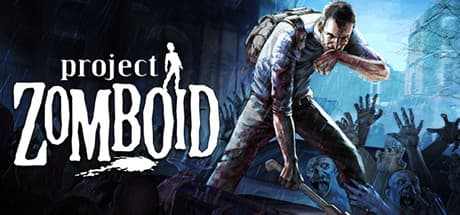
Project Zomboid is an isometric survival sandbox set in a fictional stretch of Knox County, Kentucky, and it asks exactly one question: how long can you last? The opening line — "This is how you died." — is not a tagline but a spec.
There is no win screen, no final boss, no rescue helicopter. The only record you leave behind is a survival time.
In practice the loop is less zombie-slaying and more rebuilding a life. You clear houses, shops and warehouses in towns like Muldraugh and West Point for food, tools and medicine, pick a house to live in, board up its windows and doors, stockpile water before the taps run dry and the power cuts out, plant crops, and set up rain collectors.
Combat is what happens when that preparation fails — it is an accident, not the main activity.
The game entered Early Access on 7 November 2013 and has been in continuous development since. Because major updates change what is implemented, check the store page for the current state.
Features and Systems
What separates this from other zombie titles is that zombie perception is split into sight and sound. Breaking glass, a running engine, a gunshot, a lamp left on after dark — each pulls nearby zombies toward you.
The inverse is the real skill ceiling: crouch-walk, choose quiet doors, and be home before nightfall, and your encounter rate collapses. Your strongest weapon is not firepower, it is the option to make no noise.
Progression is skill-XP based rather than level based. Your occupation and traits at character creation (positives paid for with negatives) set your starting values, and skill books multiply how fast you learn afterwards.
Tailoring for bite-resistant clothing, metalworking for barricades, farming and fishing for food independence — those choices become your mid-game strategy.
Condition management is granular. Hunger, thirst, fatigue, boredom, unhappiness and panic are all surfaced as persistent icons, and panic degrades your accuracy, so "stay calm" has a mechanical meaning.
Bite infection has no cure by default; the days between the bite and the end become time for putting your affairs in order. That single-hit severity is what makes every scavenging run tense.
Sandbox settings matter just as much. Zombie population, respawn, the share of sprinters, loot abundance and how infection works are all adjustable before you start.
If the default difficulty is not working for you, change the settings before you give up on the game.
System Requirements
The minimum requirements listed on the store page are:
| Item | Minimum |
|---|---|
| OS | Windows 10, 64-bit |
| CPU | Intel 2.77GHz quad-core |
| GPU | Dedicated card with 2GB VRAM, OpenGL 2.1 / GLSL 1.2 (generally 2012 or newer) |
| RAM | 8GB |
| Storage | 5GB |
On paper this is undemanding. The isometric 2D-sprite presentation means a machine several generations old with a discrete GPU will generally launch it without trouble, and 5GB of storage is trivial.
The caveats are RAM and CPU. The game runs on Java, and load scales with zombie counts, dense player-built bases, and long-running saves with many loaded map chunks — all of which lean on single-thread CPU performance and memory rather than the GPU.
Treat 8GB as the floor; 16GB is the more realistic target if you play without closing everything else, and hosting a multiplayer server needs more headroom still.
No recommended-spec data was available here, so check the store page's recommended column if you want a comfort baseline. Also note that a higher-resolution display simply means more to draw — if your frame rate is poor, lowering resolution or zoom level helps more than most graphics toggles.
Multiplayer and Co-op
The game supports persistent player-run online servers and local split-screen co-op for up to four players. On a persistent server the world keeps changing while you are logged off: you may return to a raided base, or to one somebody else reinforced.
Co-op does not simply lower the difficulty. More players means more noise, and driving or dismantling work draws proportionally larger crowds.
What you gain instead are tactics that solo play cannot support — carrying the wounded, posting a lookout, splitting skills by role. If you are playing with friends, decide up front who handles medicine, who builds, and who drives.
Reception Trends
This is a title that has held strong sentiment over a long period. Positive comments consistently point to its density as a life simulation and to the way failure turns into a story: breaking a window at the wrong moment, pulling a horde, and abandoning a base you spent dozens of in-game days building.
That such moments differ for every player is the draw. Its unusually long update history in Early Access is also frequently cited.
Critical or hesitant comments cluster around learning curve and pacing. The controls and UI carry a lot of options, and the first several hours are exploratory even after the tutorial.
Base building and farming can consume real-world stretches of time, and some players find that "preparing takes longer than playing." The other common complaint is how abruptly early runs end — a single bite effectively closes that character's story, which reads as unfair until it clicks.
For current sentiment, check the rating panel on this page or the Steam store listing.
Getting Started
Not trying to keep your first character alive is, counterintuitively, the fastest way to improve. A workable order:
- Do not fight for the first day or two. Move quietly through residential streets and secure food, water containers, first aid supplies and tools (hammer and nails).
- Start in a house on the edge of town. Few windows and at least two escape routes make a building easy to hold.
- Delay noisy actions — driving, breaking windows, firearms — until you know what is around you.
- Never skip a skill book. Learning-rate multipliers change your entire late game.
- Treat wounds immediately. Untreated injuries disable more runs than zombies do.
Who It's For
This suits players who enjoy preparation and domestic routine as gameplay, and who can treat losing as a narrative rather than a waste. Concretely: people who find satisfaction in incrementally improving a base, people who want to tune their own difficulty through detailed settings, and people who like retelling their runs.
As a zombie work it favors lived-in realism over spectacle, so it lands hardest with players who want quiet tension.
The depth of sandbox options and the mod ecosystem also mean this is not a one-and-done title — it supports changing how you play across hundreds of hours.
Caveats and Who Should Skip It
Be cautious if any of the following describes you:
- You want a sense of achievement in short sessions. There are no built-in milestones; you set your own goals. It fits badly with wanting results within an hour.
- Losing accumulated progress is genuinely stressful for you. By default death ends that character — the base remains, the skills do not. If that loss is unbearable, buy it on the assumption that you will loosen the sandbox settings first.
- You want cathartic zombie action. Combat here is the slow work of peeling off one zombie at a time; being surrounded is usually already fatal. Other titles will satisfy an action itch better.
- Dense UI and systems put you off. Inventory, condition icons, construction and vehicle maintenance are a lot to absorb, and the first hours are largely reading.
Japanese language support is not stated in the data referenced here — confirm it in the store page's supported-languages section. Because this is an Early Access title, implemented features change with updates; where this article and the current store page disagree, trust the store page.