Overview
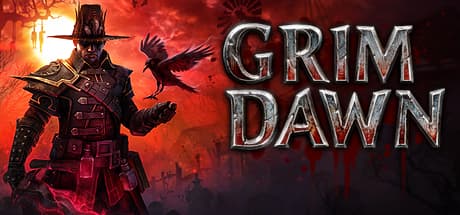
Grim Dawn is an isometric action RPG set in the ruins of the Erulan Empire. It launched on 25 February 2016 and has been expanded steadily ever since.
The premise is bleak and simple: humanity got caught between two otherworldly factions, civilisation collapsed, and the survivors now huddle behind fences in a handful of fortified settlements.
Moment to moment, you move your character with mouse or controller, cut through packs of enemies with skills, pick up what they drop, return to a hub to re-equip, and push into the next area. It sits firmly in the loot-driven hack-and-slash lineage, and it is not a game you finish once and put down.
The structure assumes you learn the rules on your first character and build the one you actually wanted on your second.
Your character begins as someone whose body was nearly taken by an otherworldly entity and who survived it. That is why human settlements treat you with suspicion at first, and earning their trust is woven directly into progression.
Features and Systems
The core of the game is the dual-class (mastery) system. In the base game you pick one of six classes, then add a second one after a few levels.
The combination is entirely up to you: pour everything into one mastery for a specialised build, or split evenly for a hybrid. Adding a caster mastery to a melee class to convert your damage into an element is the kind of off-script build that actually works here, and that flexibility is the main reason build-focused players have stuck with this game for years.
One layer deeper sits the Devotion constellation system. Restoring shrines scattered across the map grants points you spend on constellations, which give stats and skills that trigger automatically under set conditions.
Constellations have colour-based prerequisites, so reaching the endpoint you want becomes a routing puzzle. Two classes multiplied by constellation routing makes the practical build space enormous.
On the gear side, alongside the usual rarity tiers there are many items that grant skills of their own. Picking up one particular weapon can redirect an entire build on the spot.
Crafted components and augments slot into equipment, and patching your resistance gaps is normally done through those slots rather than through base gear.
Factions matter too. Each has a reputation track that unlocks exclusive gear and recipes, and some story choices side you with one faction while turning another hostile.
Because the game expects repeat playthroughs, those exclusive choices are designed to be made decisively rather than agonised over.
System Requirements in Practice
The requirements listed on Steam are as follows.
| Item | Minimum | Recommended |
|---|---|---|
| OS | Windows XP / Vista / 7 / 8 / 10 | Windows 7 / Windows 10 |
| CPU | x86 compatible 2.3GHz or faster (Intel 2nd gen Core i-series or equivalent) | x86 compatible 3.2GHz or faster (Intel 4th gen Core i-series or better) |
| GPU | 512MB NVIDIA GeForce 6800 series or ATI Radeon X800 series or better | 1.5GB NVIDIA GeForce 500 series or ATI Radeon 6000 series or better |
| RAM | 2 GB | 6 GB |
| Storage | 5 GB | 5 GB |
| DirectX | 9.0c | 11 |
What stands out is how light this is. Even the recommended tier asks for an Intel 4th generation Core i-series CPU, a GPU with 1.5GB of VRAM, and 6GB of RAM.
Those were 2016-era targets, and most current laptops with integrated graphics already clear them. If you do not own a gaming PC, this is one of the safer bets for simply running.
That said, running and running well are different things. Enemy density and effect volume climb sharply in late-game content, so if you are near the minimum spec, expect frame drops in the packed late areas rather than in the opening hours.
The minimum spec carries a specific note: 4GB of memory is required to host multiplayer games. If you plan to be the host for co-op with friends, check that before committing.
The 5 GB storage figure is tiny by modern standards, but it reflects the base game. Adding expansion content can increase what you need, so confirm the current figure on the store page.
Getting Started
A few things trip up new players in the first few hours. The first is how you spend skill points.
Early on, raising your main attack skill alongside the mastery bar (which drives your baseline stats) is more stable than dumping everything into a single skill. Respecs are available from an NPC in the hub, but they cost resources, so avoid spending blindly.
The second is resistance management. As difficulty rises, you will start evaporating to elemental attacks.
Almost every time, the cause is missing resistances, and swapping gear to prioritise resistance values over raw damage fixes it. This is the wall most ARPG newcomers hit first.
Devotion shrines are optional, so they are easy to skip, but clearing them early makes the later game noticeably smoother. Knowing that the corners of the map are worth visiting gives exploration a purpose.
How Players Rate It
Despite its age, this game has held strong support consistently. The praise almost always centres on build freedom: combinations the developers plainly did not plan for still function, and a build you designed yourself without consulting a guide can carry you through.
Players also value that it runs offline and has no seasonal reset chasing you, letting you play at your own pace. The developer's long record of continued updates comes up repeatedly as well.
Criticism is just as consistent. The visuals are not current-generation, the opening pace is slow enough that people say it takes a while to get good, and the game explains its own systems poorly.
That last point comes up constantly — because nothing teaches you why resistances and Devotion matter, newcomers die for reasons they cannot diagnose and drift away. Complaints about dated UI and inventory management are common too.
Who It's For
- Players who enjoy designing builds themselves, treating experimentation as the point rather than following a guide.
- Anyone wanting a self-contained offline ARPG with no always-online requirement and no seasonal reset.
- Players comfortable with repeat playthroughs, since the second character is where the game really opens up.
- People without a powerful PC, given how modest the requirements are.
- Fans of bleak settings, since this is survival after the collapse, not a story of rescue.
Who Should Skip It
If you want a story-led RPG, look elsewhere. The lore is extensive but delivered through notes and logs, not cinematics that carry you emotionally.
An open-world RPG will serve that appetite better.
It is not immediately fun. Early skills are limited and enemies are plain.
The game accelerates once your build takes shape and your gear starts interacting, so judging it after a couple of hours means missing what it actually is. If you have no intention of investing time, it is a poor fit.
It will not impress you visually. This is a 2016 title, and lighting and model detail lag behind current ARPGs.
The art direction is coherent, but graphical novelty is not on offer.
Be ready for thin in-game tutorials. Resistances, Devotion routing, and component slotting are barely explained.
You will need to look things up. If you dislike doing that, expect friction early.
Check language support on the store page yourself. The source data for this article does not list supported languages, so nothing can be stated here with certainty.
Given how much text this game contains, language support directly affects whether it is worth buying for you.
One more practical note: store and aggregator listings occasionally mix in details from a different edition or from a standalone expansion. Before buying, confirm from the page title and contents whether you are looking at the base game or a bundle that includes expansions.
Summary
Grim Dawn does not compete on spectacle or graphical freshness. Its value is concentrated in build depth — two masteries, Devotion routing, and skill-granting gear interacting with each other.
Combine that with low system requirements, offline play, and no deadlines, and it remains a genuinely reasonable pick for a long-term ARPG. If you want brisk pacing, generous onboarding, or modern visuals, another title will make you happier.