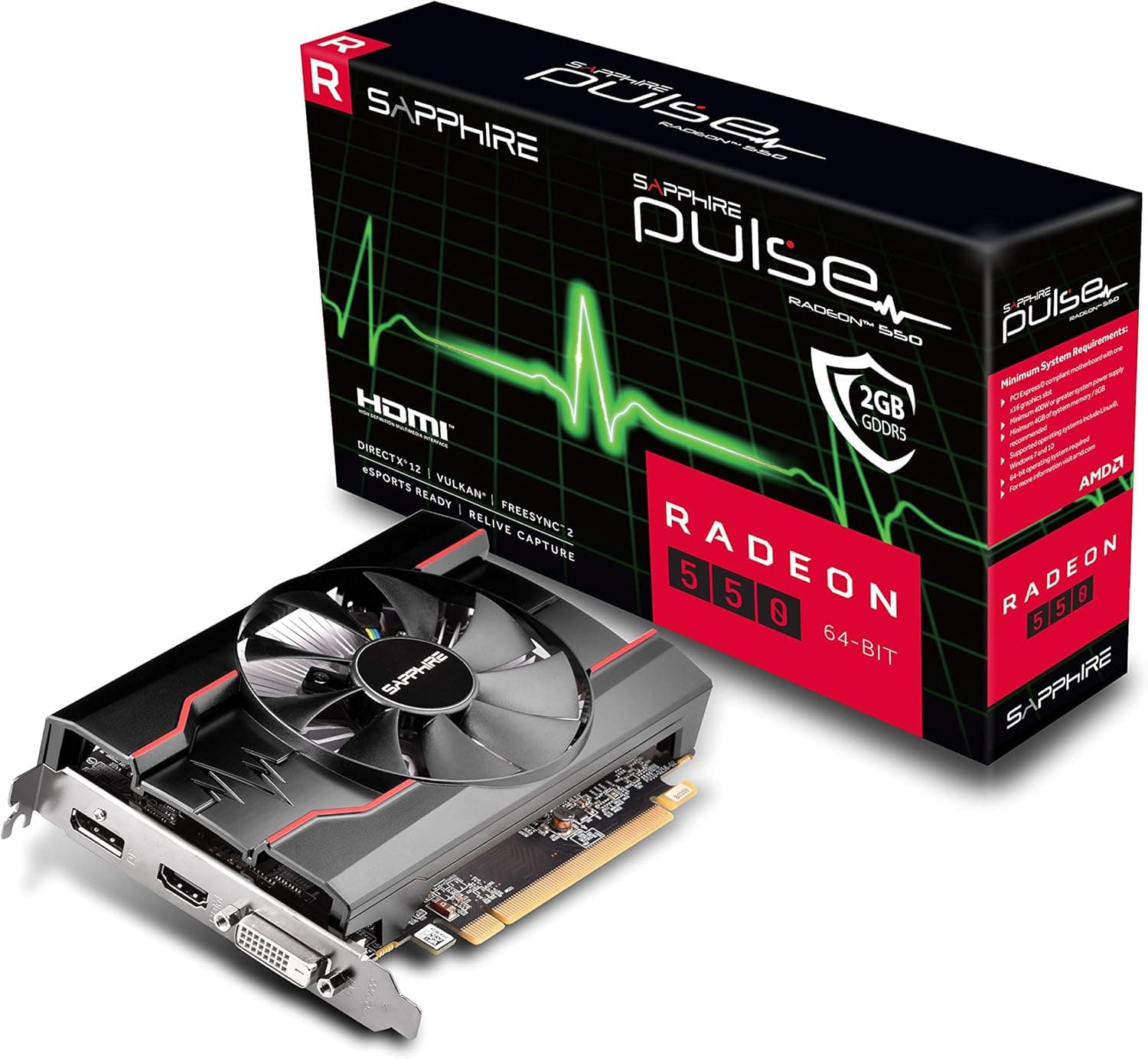
This article covers GIGABYTE Sapphire 11268-21-20G Radeon Pulse RX 550 2GB GDDR5 64ビット HDMI.
Overview
SAPPHIRE has long been a trusted name in AMD Radeon graphics cards, and the 11268-21-20G RADEON PULSE RX 550 2GB GDDR5 is one of its most affordable offerings. Powered by the AMD Radeon RX 550 GPU, this card features a boost clock of 1206MHz and 2GB of GDDR5 memory on a 64-bit interface. The card draws no more than 50W at peak, requiring no auxiliary power connectors—making it an ideal drop-in upgrade for office PCs or low-power builds. With support for PCI Express 3.0 x8, triple-display output (DisplayPort, HDMI, DVI-D), and a compact low-profile form factor (168mm length), the Pulse RX 550 is built for versatility rather than raw gaming muscle. It's meant for users who need a reliable, quiet, and efficient graphics solution for everyday computing, light gaming, or media playback. This card firmly occupies the entry-level tier. It will not run modern AAA titles at high settings, but for casual use and older or esports titles, it offers great value for the price.
Compatibility Guide
PCI Express: PCIe 3.0 x8 electrical. Works in any PCIe x16 slot (both physical and electrical) but runs at x8. No issues with PCIe 4.0 slots—backward compatible. Power Supply: TDP is only 50W, and the card gets all its power from the PCIe slot (max 75W). No 6-pin or 8-pin power connector is needed. A quality 300W PSU is sufficient. Form Factor: Low-profile card (168mm length) with a full-height bracket pre-installed. A low-profile bracket is included in the box for small-form-factor cases. Outputs: 1x DisplayPort 1.4, 1x HDMI 2.0, 1x DVI-D. Supports up to three monitors. Note: only one DisplayPort, so connecting three DisplayPort monitors will require an adapter.
Product Info
The SAPPHIRE PULSE RX 550 2GB is based on the AMD Polaris architecture (14nm process) and packs 512 stream processors. The memory runs at an effective 6.0 Gbps (1500 MHz clock) across a 64-bit bus, providing 48 GB/s of memory bandwidth. The boost clock is set to 1206 MHz, slightly above the reference specification. It sits firmly in the entry-level segment—adequate for office work, media consumption, and lightweight gaming. Warranty is typically 2 years from the manufacturer (varies by region).
Best Use Cases
- Office PC graphics upgrade: If you're stuck with integrated graphics and need smooth 4K video playback or dual-monitor output, this card is a no-brainer. No PSU upgrade required. 2. Low-power HTPC / secondary PC: For a living room media center or a quiet file server, the 50W TDP and compact size make it perfect. It stays cool even in tight spaces. 3. Budget-conscious light gamer: You can play older titles (CS2, Valorant, Minecraft) at 1080p low-medium settings. Avoid heavy AAA games like Cyberpunk 2077. ## Alternatives
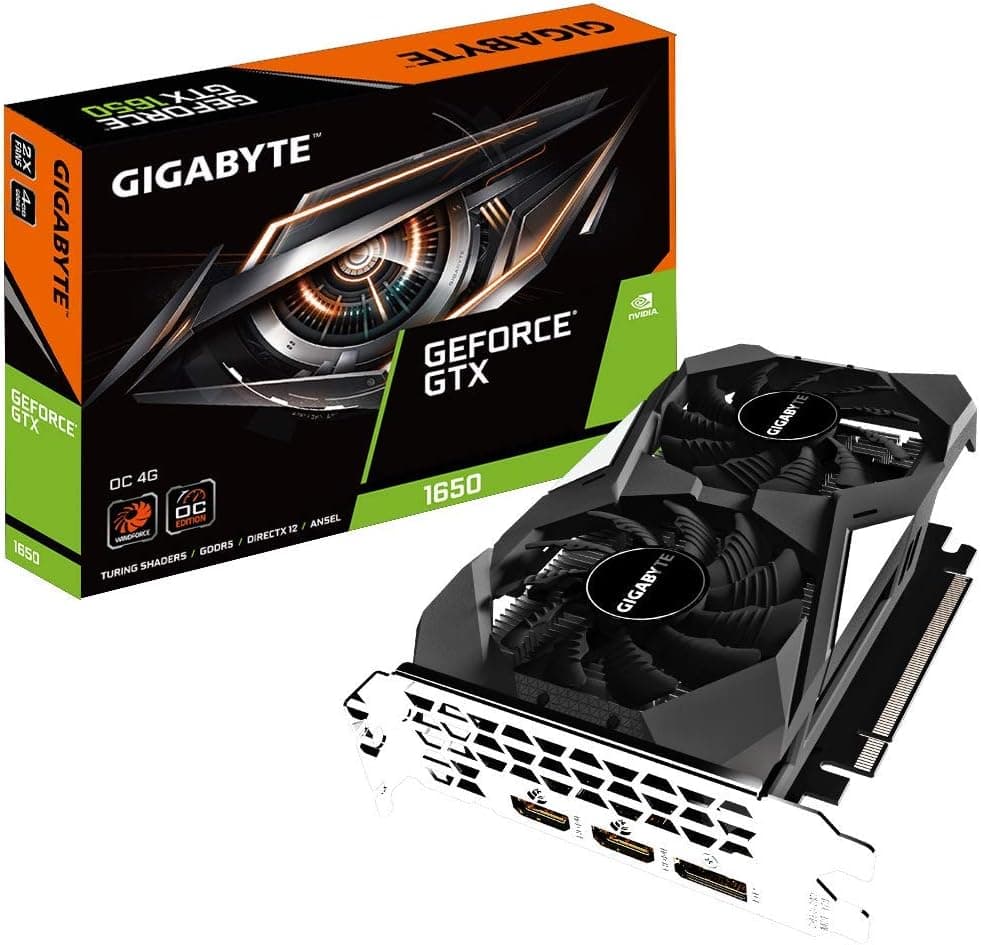
Direct competitors in the sub-$80 price bracket include the NVIDIA GeForce GT 1030 (2GB GDDR5). The RX 550 generally outperforms the GT 1030 in most gaming benchmarks thanks to its higher stream processor count. However, for CUDA-accelerated workloads (e.g., some video encoding), the GT 1030 may hold an edge. If you can stretch your budget slightly, a used GeForce GTX 1050 Ti (4GB) offers significantly better gaming performance, but buying used carries risks regarding condition and warranty. For a new, warranty-backed, low-power card, the RX 550 remains a sensible choice.
Things to Consider
This is an entry-level card—do not expect to play modern AAA games at high settings. The 2GB VRAM is a major bottleneck in recent titles that demand 4GB or more for medium textures. Additionally, the PCIe 3.0 x8 interface may become a bandwidth limitation if paired with a PCIe 4.0 system and a fast NVMe SSD, though this scenario is rare in everyday use. Always check your motherboard's BIOS version for compatibility; rare cases of boot issues have been reported with older motherboards. If your budget allows, consider saving for a RX 6400 (4GB) or a used GTX 1650 for a more future-proof build. ## FAQ Q: Can I play Apex Legends with this card? A: At 720p with all settings set to low, you can expect around 30-40 fps. Not ideal for competitive play—look at higher-tier cards for a smooth experience. Q: Does it require any extra power cables? A: No. The card draws power solely from the PCIe slot. A standard 300W PSU is sufficient. Q: How do I install it in a low-profile case? A: The card ships with a full-height bracket. A low-profile bracket is included in the box—simply swap it out to fit small-form-factor cases.
Product Disclosure (Amazon)
- Manufacturer: SAPPHIRE
- Seller: ak.apartment
- Fulfilled by: ak.apartment
- ASIN: B0877C8NVQ
- Note: This article covers a manufacturer-made product based on Amazon listing details.