This article covers Gigabyte Radeon RX 7700 XT GAMING OC 12GB グラフィックカード.
Overview
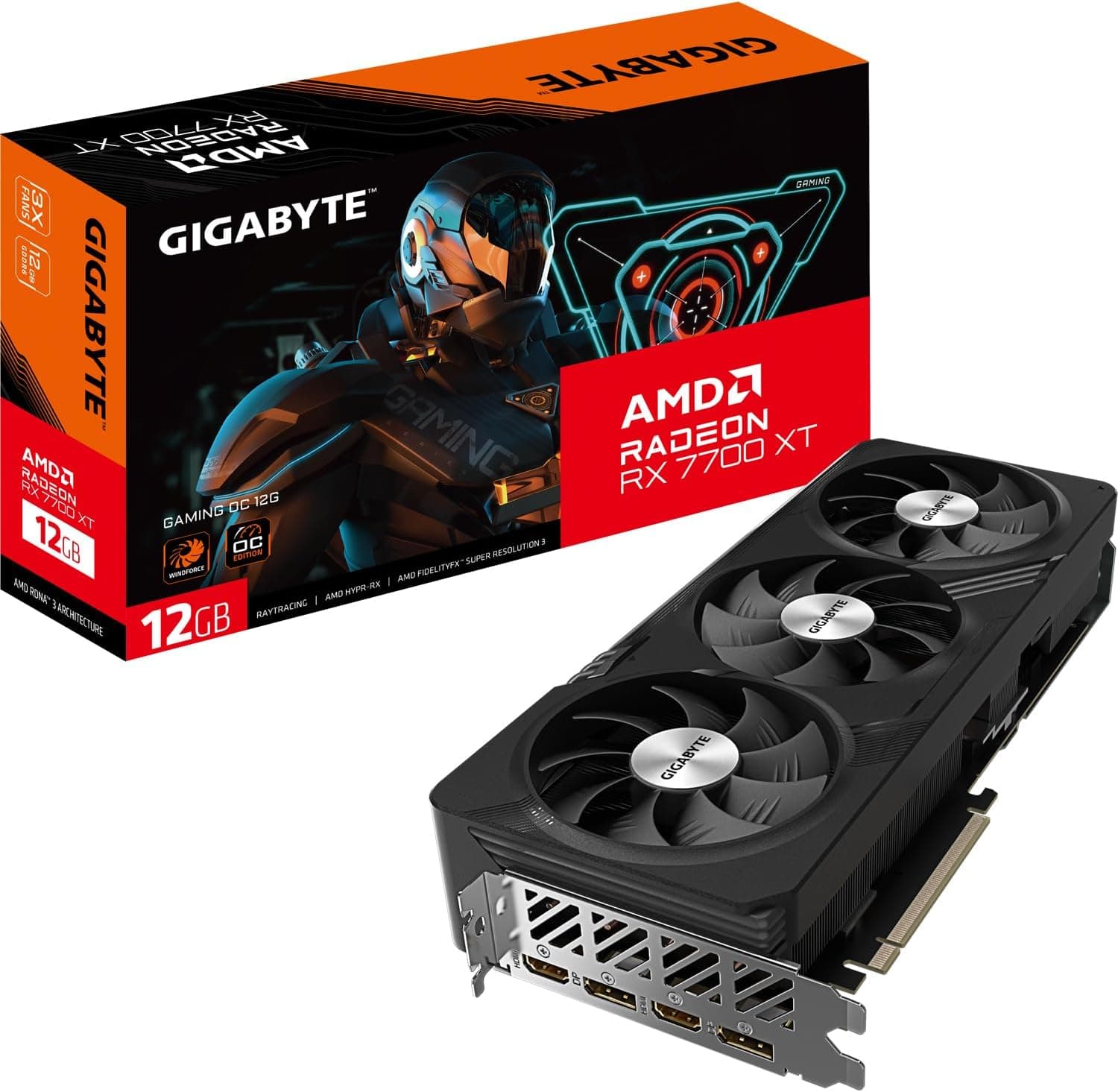
GIGABYTE's Radeon RX 7700 XT GAMING OC 12GB is a mid-high-tier graphics card built on AMD's RDNA 3 architecture. It features the AMD Radeon RX 7700 XT GPU with a base clock of 1900MHz and a boost clock of 2599MHz, coupled with 12GB of GDDR6 memory across a 192-bit bus. This card supports PCI Express 4.0 and offers modern connectivity options including DisplayPort 2.1 and HDMI 2.1. The RX 7700 XT is designed primarily for high-refresh-rate 1440p gaming, but it also handles 4K gaming at moderate settings. Compared to the previous-gen Radeon RX 6700 XT, it brings significant improvements in ray tracing performance, AI acceleration, and AV1 encoding support—making it a solid choice for streamers and content creators as well. GIGABYTE's Windforce cooling system employs three 90mm blade fans, seven composite copper heat pipes, and a large copper baseplate that makes direct contact with the GPU die. The 3D Active Fan feature stops the fans entirely under low load, keeping the card silent during desktop use or light gaming. RGB Fusion support lets you synchronize lighting with other compatible components.
Compatibility Guide
This graphics card uses a PCI Express 4.0 x16 interface and works in PCIe 3.0 slots without major bandwidth limitations for most games. However, very old motherboards (PCIe 2.0 or earlier) may bottleneck performance. The card measures roughly 30cm in length and occupies three expansion slots, so ensure your case has at least 320mm of GPU clearance and three available slot brackets. The recommended power supply rating is 700W. The card does not use a 12VHPWR connector; instead, it requires two standard 8-pin PCIe power cables. Verify that your PSU has the necessary cables and enough headroom for your CPU and other components.
Product Info
The Gigabyte Radeon RX 7700 XT GAMING OC 12GB (model GV-R77XTGAMING OC-12GD) launched in September 2023 and occupies the mid-high segment of the GPU market, competing against NVIDIA's GeForce RTX 4060 Ti and RTX 4070. Retail pricing typically falls between $400 and $500, though it varies. The card is covered by a 3-year manufacturer warranty and is available through major online retailers like . With a TDP of approximately 200W, the cooling system is well-matched to the thermal output. The factory overclocked boost clock of 2599MHz exceeds reference specifications, giving buyers extra performance out of the box.
Best Use Cases
First, this card is an excellent choice for 1440p gamers targeting high frame rates. Titles like Fortnite, Apex Legends, and Call of Duty will run smoothly at 144Hz or higher with high-to-ultra settings. Ray tracing can be enabled without dropping below playable frame rates, making it a balanced pick for visual fidelity and performance. Second, gamers looking to dip into 4K without spending flagship money will find this card capable. At 4K, medium settings can achieve 60fps in most single-player titles, and lighter competitive games can push higher frame rates. Third, content creators who edit video or do 3D modeling will benefit from the AV1 encode/decode support, which improves streaming quality and export times. Just note that if your workflow relies heavily on CUDA acceleration (e.g., certain Adobe Premiere effects), an NVIDIA card might be better suited. Who should NOT buy this card? Users who prioritize absolute silence or minimal power draw. The 200W TDP and triple-fan cooler produce noticeable noise under load, and idle fan-stop helps but isn't silent. Also, those needing top-tier 4K ray tracing performance should step up to a higher-tier card. ## Alternatives
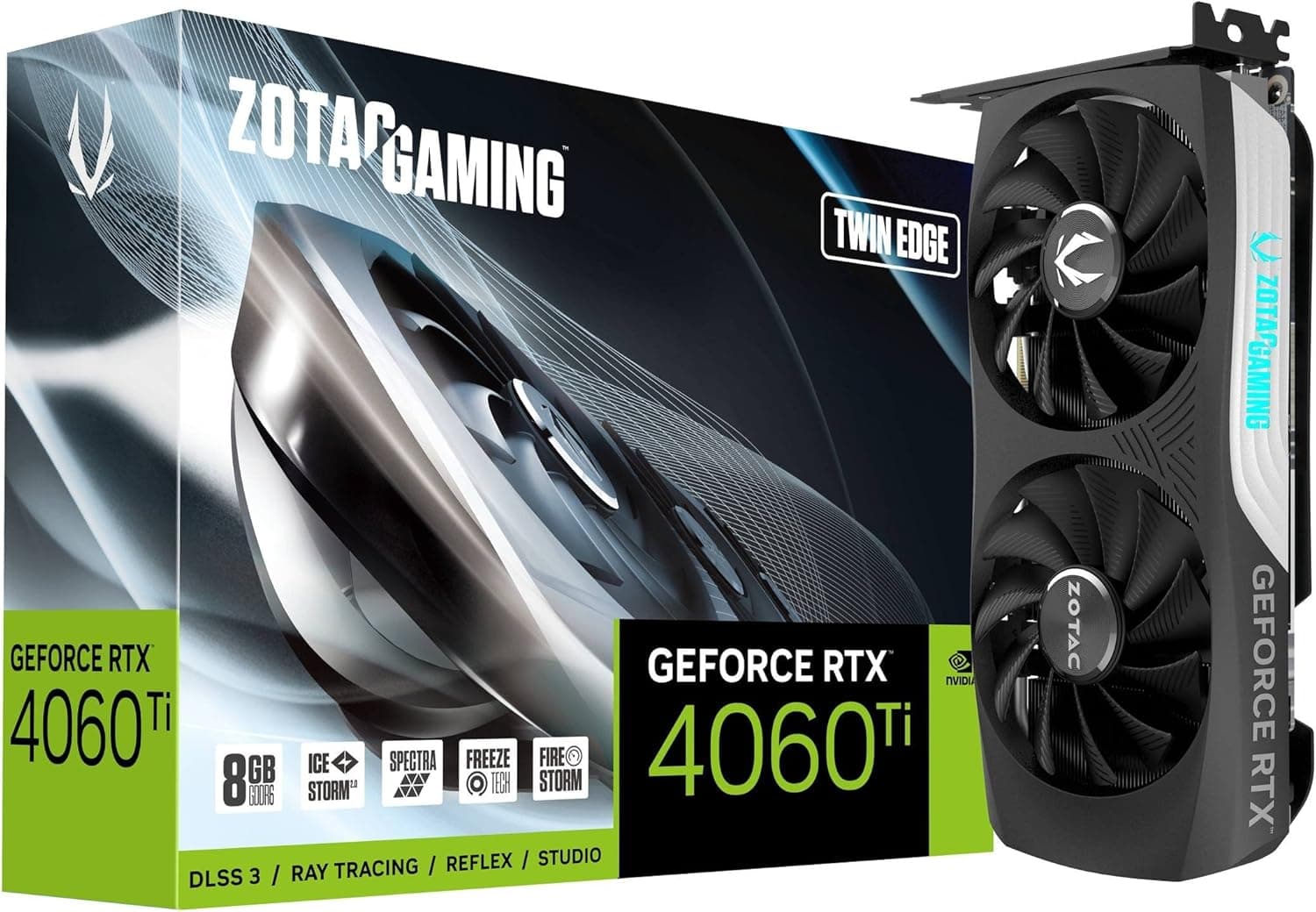
The NVIDIA GeForce RTX 4060 Ti 16GB is the most direct competitor at a similar price point. The RTX 4060 Ti consumes less power (160W TDP) and benefits from NVIDIA's mature CUDA ecosystem, DLSS 3, and slightly better ray tracing performance. However, the RX 7700 XT offers a wider 192-bit memory bus versus 128-bit, giving it an edge in memory-intensive workloads and higher resolutions. In pure rasterization, the AMD card generally wins. Another alternative is the RTX 4070. It delivers better ray tracing and DLSS 3 frame generation but costs $100–$150 more. If your budget can stretch and ray tracing is a priority, the RTX 4070 is worth the premium. But for price-to-performance and raw rasterization, the RX 7700 XT is the better value.
Things to Consider
Physical size is the biggest caveat. At roughly 30cm and triple-slot height, this card won't fit in compact cases or ITX builds without careful measurement. Always check your case's GPU max length and available slots before buying. The 700W PSU recommendation is conservative. Real-world full-system draw is typically under 500W, but accounting for aging PSUs and CPU spikes makes 700W a safe target. Ensure your PSU has two free 8-pin PCIe power cables. Compared to NVIDIA cards, AMD's ray tracing performance still trails behind, and DL
Product Disclosure (Amazon)
- Manufacturer: GIGABYTE
- Seller: PENNY LANE
- Fulfilled by: PENNY LANE
- ASIN: B0CGRN842P
- Note: This article covers a manufacturer-made product based on Amazon listing details.